


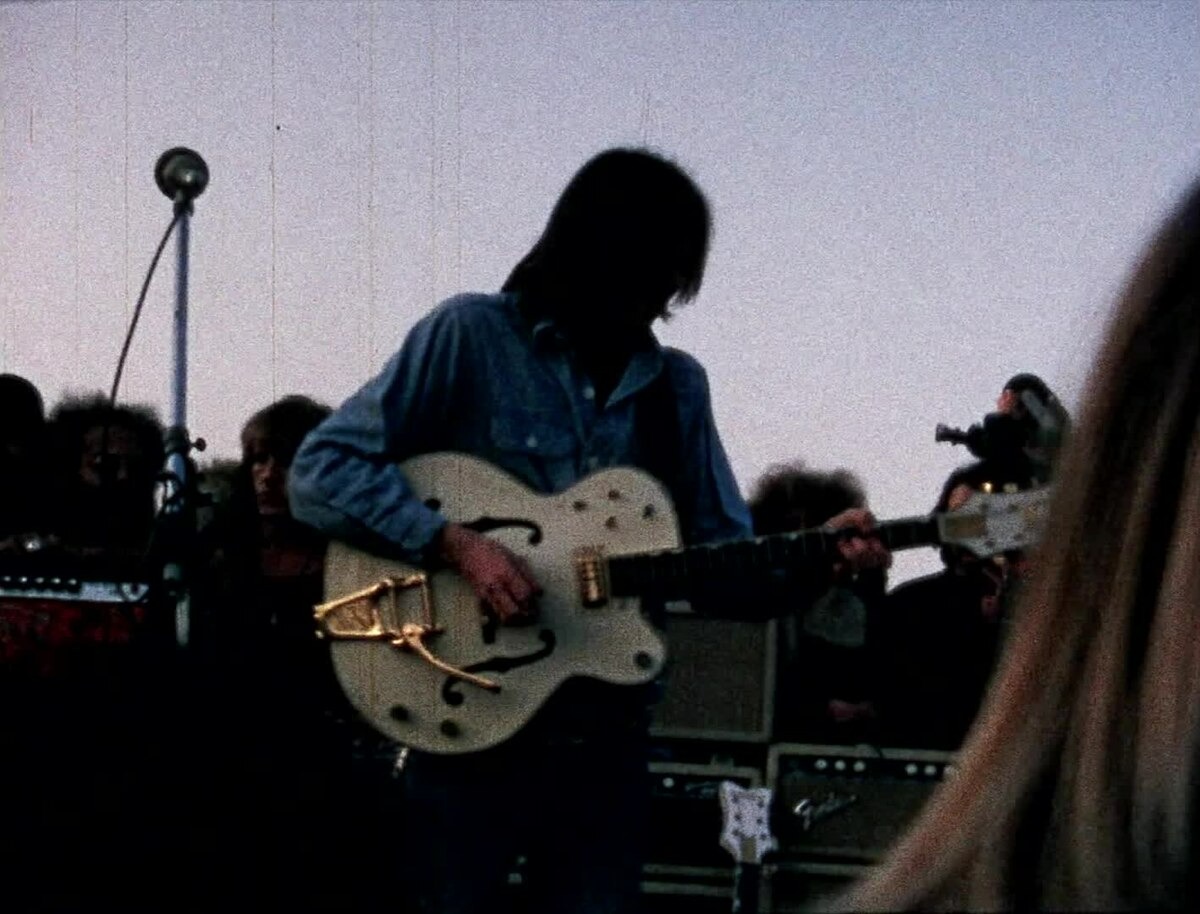
Beer-for-security seemed like a reasonable trade until the Hells Angels started swinging pool cues. The Altamont Speedway Free Festival on December 6, 1969, was supposed to be Woodstock’s West Coast sequel—300,000 people gathering for free music from The Rolling Stones, Jefferson Airplane, and Santana. Instead, it became the moment counterculture’s utopian bubble burst, leaving four dead and an industry permanently changed. Your modern festival experience—from professional security to medical tents—exists because of what went catastrophically wrong that December day.
When Good Vibes Met Bad Planning
Rushed organization and violent security turned a peace celebration into chaos.
The festival’s problems started with logistics that would make Fyre Festival organizers blush. Venue changes just two days before the event left organizers scrambling. The Rolling Stones’ management hired the Oakland Hells Angels for security, paying them in beer—a decision that seemed bohemian until the violence started.
During Jefferson Airplane’s set, singer Marty Balin was knocked unconscious by a Hells Angel while trying to stop a fight. The Angels used pool cues and fists to control crowds, creating more problems than they solved. By the time The Rolling Stones took the stage, tension had reached a breaking point.
Violence peaked during “Under My Thumb” when 18-year-old Meredith Hunter approached the stage with a revolver and was fatally stabbed by Hells Angel Alan Passaro. The Maysles brothers’ cameras captured everything for their documentary “Gimme Shelter,” preserving the moment when rock’s peace-and-love mythology collided with reality.
The Industry Reckoning
Professional concert management was born from Altamont’s ashes.
The Grateful Dead—the event’s original organizers—refused to perform once violence erupted, marking an industry turning point. Musicians realized that good intentions couldn’t override basic safety protocols. Altamont forced a complete rethinking of crowd control, emergency services, and security training.
Insurance companies began demanding professional oversight, ending the era of amateur festival organization. The disaster accelerated the shift toward corporate concert promotion, with companies like Bill Graham Presents establishing safety standards that became industry benchmarks.
What started as corporate overreach became essential infrastructure—the medical tents, professional security, and crowd barriers you take for granted at today’s festivals. Today’s festival safety protocols exist because 300,000 people learned the hard way that peace, love, and music require professional planning to survive contact with reality.