



Dropping cash on boutique pedals and rare amplifiers sounds like the fast track to killer tone. Reality check: the gear sitting in your practice space already packs the punch you need. Most guitarists blow past the real secret—smart tweaks and understanding how your existing rig actually communicates. Stop scrolling Reverb listings at 2 a.m. and start experimenting with what’s already collecting dust in your signal chain.
8. Use Less Gain
Excessive saturation murders note separation faster than a festival sound tech on their first day.
High-gain amplifiers deliver crushing distortion, but cranking preamp gain to maximum creates a muddy sonic blob that vanishes in a dense mix. Excessive amplifier gain increases saturation and reduces definition, turning articulate riffs into indistinguishable noise. The wall of distortion sounds massive in isolation but becomes a blurry mess when drums and bass arrive.
Lowering the gain on high-gain amplifiers like the Peavey 6505 MH preserves crucial articulation. Backing preamp gain down substantially makes individual notes snap into focus, offering the clarity that lets guitar cut through a band mix. Evaluate the tone in a full mix rather than solo; suddenly those riffs aren’t just loud, they’re felt.
7. Boost High-Gain Amp with Overdrive Pedal

An overdrive pedal as a front-end shaper transforms muddy low end into precision-carved aggression.
Setting an overdrive pedal’s drive control at or near zero while boosting the level control creates a front-end boost rather than additional heavy distortion. This approach tightens low frequencies, adds mild compression, and sharpens the attack hitting the amplifier’s input. The Ibanez TS9DX Turbo Tube Screamer excels here; it offers four modes—standard TS9, Plus, Hot, and Turbo—with progressively different drive and low- or mid-frequency emphasis.
Starting points vary, but keeping drive low and level high typically delivers laser-focused punch for heavy riffs without flabby bass response. Pedals like the Boss SD-1 work similarly, proving subtle adjustments deliver powerful results. Studio engineers rely on this technique to create aggressive, articulate tones that survive dense mixes.
6. Keep Sufficient Midrange in Guitar Tone
Guitar fundamentals live in the midrange, no matter what scooped-EQ metal albums suggest.
Excessive mid-scooping makes solo tone sound enormous in rehearsal but causes the guitar to disappear in a full band mix. Bass and kick drum occupy much of the low-frequency area; cymbals dominate the highs. Guitar fundamentals and musical presence exist squarely in the midrange frequencies.
Raising the amplifier’s middle control improves intelligibility, punch, and the guitar’s ability to cut through a mix. That adjustment transforms the sound from a muddy suggestion into a commanding presence. Midrange isn’t fashionable, but it’s the crucial difference between being heard and merely existing in the background noise.
5. Use Guitar’s Volume Control for Dynamic Range

Rolling guitar volume down delivers cleaner tones without touching the amplifier, like discovering a hidden menu on an old flip phone.
Reducing the guitar volume control lowers the signal hitting the amplifier’s preamp, often producing a cleaner or lower-gain sound without changing amplifier settings. Returning the control toward full restores drive for louder rhythm parts or leads. Pickup selection also changes the result; neck and single-coil settings generally produce a different, often cleaner response than a bridge humbucker.
The Peavey 6505 MH is a two-channel, all-tube 20-watt head with three power settings—20 W, 5 W, and 1 W—and separate pre- and post-gain controls per channel. Even high-gain amplifiers can produce substantial tonal variation when paired with reduced guitar volume and different pickup configurations. This overlooked knob provides more tonal versatility from existing gear than most boutique pedals ever could.
4. Double-Track Guitar Parts When Recording
Massive, layered guitar walls on rock anthems come from the unglamorous work of recording the same part twice.
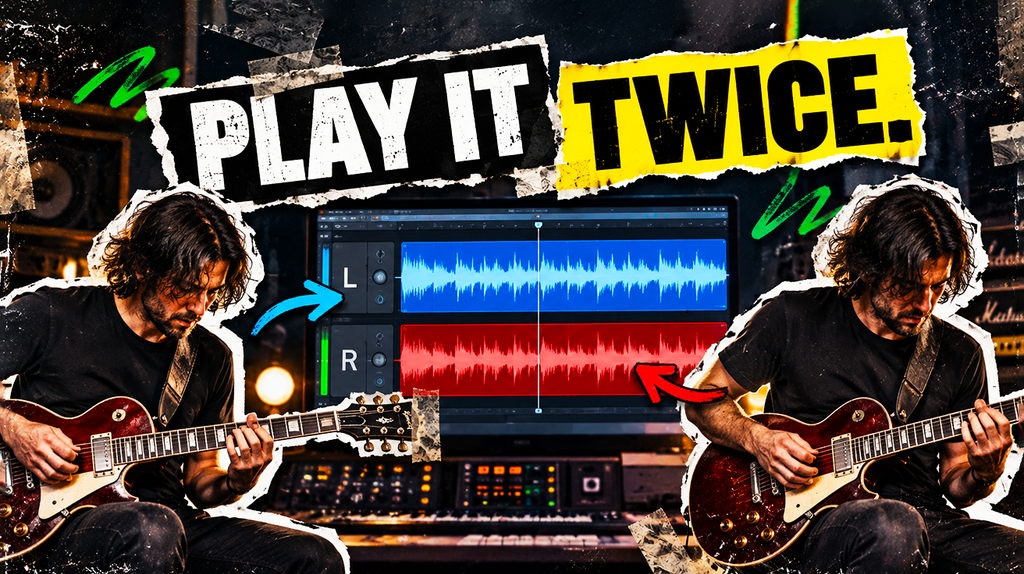
Double tracking means recording the same guitar part twice and layering the performances. Small timing and pitch differences between takes create natural width, movement, and thickness that a single guitar track cannot provide. For a larger stereo sound, dedicate one performance to the left channel and the other to the right.
Producers report that changing the guitar, amplifier, or EQ between takes adds tonal contrast, ensuring the blended sound achieves textured depth instead of a muddy mess. A short, controlled delay or doubler effect can imitate some width, but it does not fully reproduce the variation of two independently performed takes. Experiment with this technique on heavy riffs to unlock the sound that’s been missing.
3. Peavey 6505 MH Amplifier
Compact all-tube design with surprising range beyond heavy-metal assumptions.
The Peavey 6505 MH is a compact all-tube guitar amplifier head based on the high-gain 6505/5150 amplifier family. It delivers 20 watts RMS into switchable 8- or 16-ohm loads, uses three 12AX7/ECC83 preamp tubes and two EL84 power tubes, and includes two channels, a three-band EQ, effects loop, reverb, USB recording output, XLR direct output, and a power attenuator offering 20 W, 5 W, or 1 W operation.
The power attenuator reveals surprising flexibility; guitarists have reported finding warm tones at bedroom volumes that wouldn’t be expected from an amplifier with this reputation. USB recording and XLR direct outputs expand utility beyond live performance, proving the 6505 MH adapts to more genres than its high-gain heritage suggests.
2. Ibanez TS9DX Turbo Tube Screamer
Four distinct modes push this pedal’s capabilities far beyond standard overdrive territory.
The Ibanez TS9DX is an expanded Tube Screamer overdrive pedal with four modes: standard TS9, Plus, Hot, and Turbo. These modes offer progressively altered distortion and frequency response, including additional midrange or stronger low-mid emphasis. The pedal operates from a 9-volt battery or a regulated 9-volt center-negative adapter and draws approximately 8 mA.
Setting drive at or near zero while boosting the level control transforms the pedal into a clean boost and EQ shaper. This configuration preserves articulation while tightening low frequencies, giving riffs the clarity they need without muddiness. In a market overflowing with boutique pedals and fleeting trends, the TS9DX remains a reliable workhorse that delivers results without requiring a second mortgage.
1. TC Electronic Plethora X3 and Mimic Doubler Effect
Virtual second guitar parts through short delay and subtle modulation create thickness without needing another take.
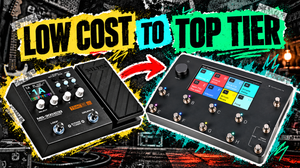
A doubler creates a virtual second part through short delay and modulation, producing thickness and a subtle chorusing effect. The TC Electronic Plethora X3 provides three configurable pedal slots and access to TC Electronic effects, making it suitable for placing a doubler or short-delay effect in a guitar signal chain.
Deploying this effect subtly thickens tracks or more extremely creates a distinct stereo image, helping mix engineers add perceived width to dry guitar tracks. While this approach doesn’t fully replicate two independently performed takes, it remains a practical technique in modern guitar production for turning single instruments into formidable sonic forces without additional recording passes.