



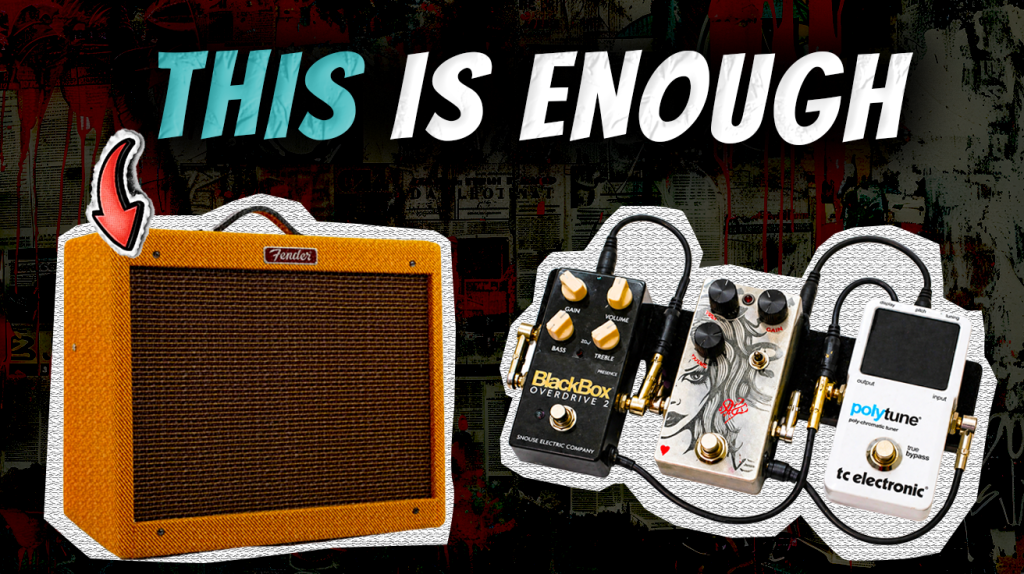
Anyone who’s survived a 90s cover band knows the brutal truth: your rig needs to morph from Kurt Cobain’s cathartic sludge to Eddie Van Halen’s dive bombs, then pivot to Sheryl Crow’s breezy blues without missing a beat. This sonic whiplash demands gear that’s as adaptable as a chameleon on a disco ball. Building the perfect setup means prioritizing clarity and analog soul over pedalboard complexity that requires an engineering degree to operate.
This content may contain affiliate links. If you wish to support us and use these links to buy something, we may earn a commission.
23. Mesa Boogie Express 525
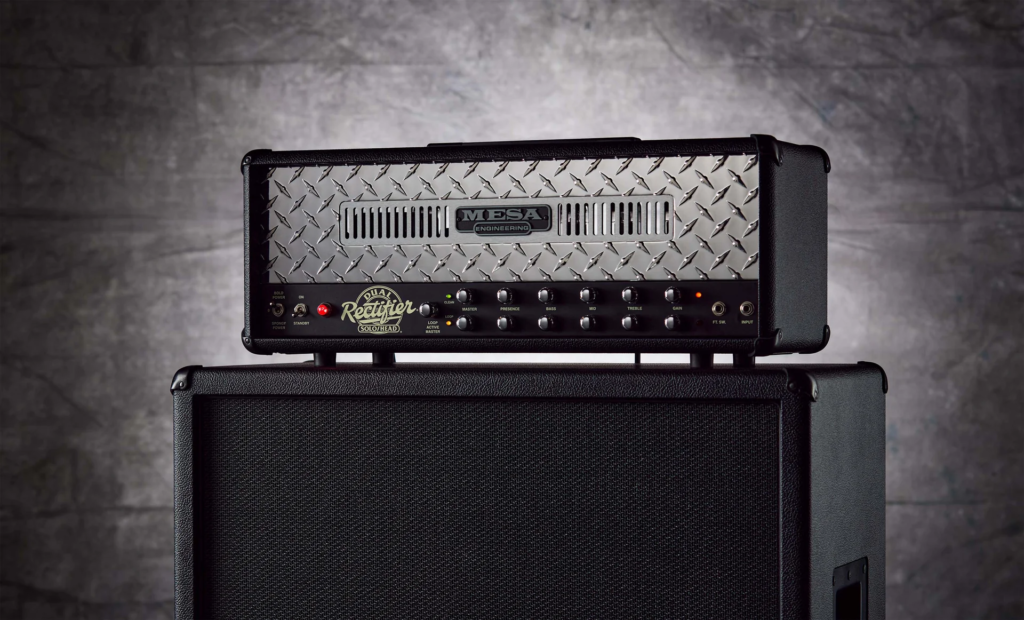
This 25-watt tube head proves that versatility doesn’t require massive power.
The Mesa/Boogie Express 525 amp head packs genuine versatility into a modest 25-watt output. This studio chameleon offers independent clean and driven channels that dial in everything from glassy shimmer to satisfyingly gritty crunch. Its switchable 25/50-watt modes adapt for both intimate gigs and larger stages.
The Express 525‘s beauty lies in its directness—no endless sub-menus or confusing digital interfaces. Straightforward EQ and gain controls for each channel, plus an effects loop, integrate your favorite stompboxes without losing tone. While some amps try replicating a dozen sounds poorly, the Express 525 focuses on delivering solid tonal foundation that lets your guitar and playing do the talking.
22. Gibson Les Paul Custom
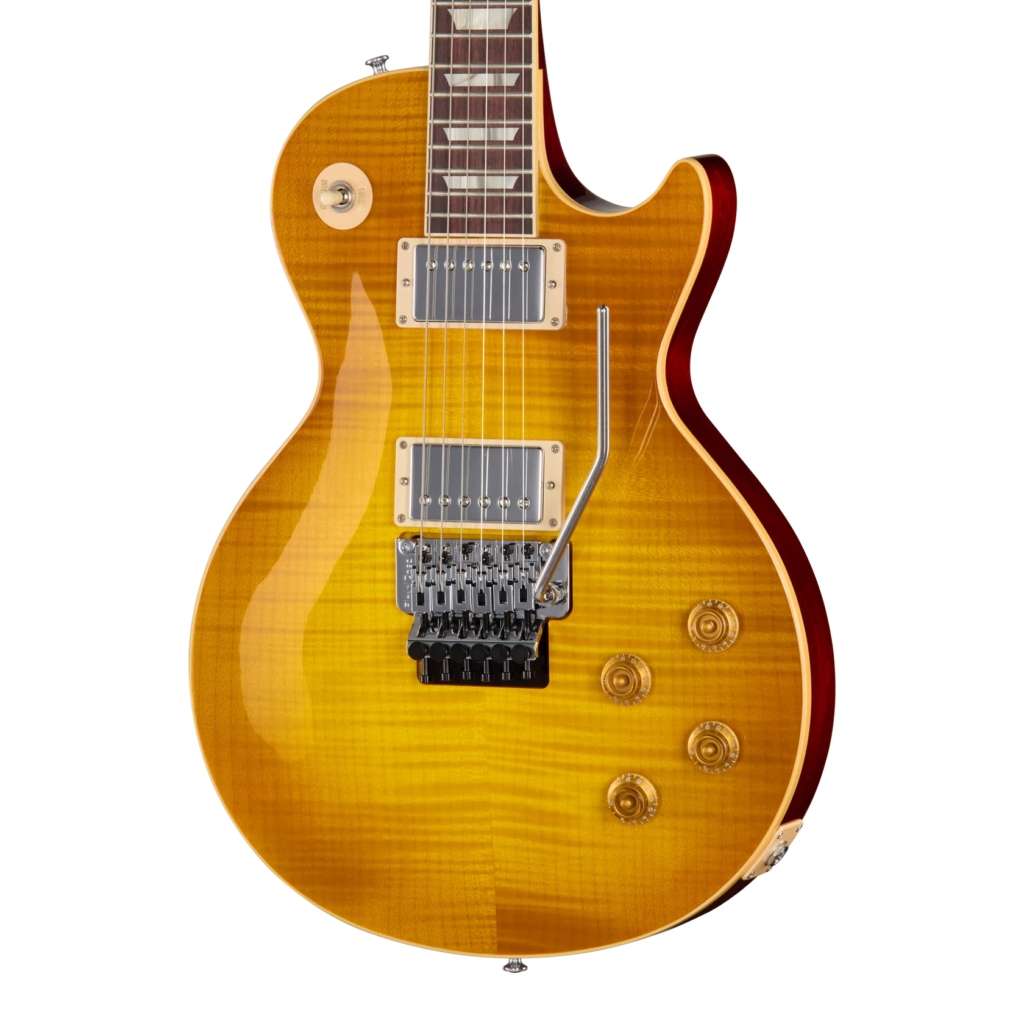
Introduced in 1953, this “Black Beauty” delivers unmatched sustain but sometimes feels overdressed for grunge duty.
The Gibson Les Paul Custom, nicknamed the “Black Beauty,” wasn’t just another guitar—it was a high-end statement. Featuring a mahogany body with ebony top and three humbucker pickups, it was built for unmatched sustain and tone as rich as a mob boss’s backstory.
While the Les Paul Custom boasts deep, resonant sound that could fill a stadium, it occasionally struggled to nail the specific, scrappier tones needed for 90s alternative. Some guitarists found its inherent sonic character less responsive to aggressive stompbox combinations that defined the era. For grittier, pedal-driven crunch, simpler alternatives often proved more adept at slicing through the mix.
21. Line 6 M9 Stompbox Modeler
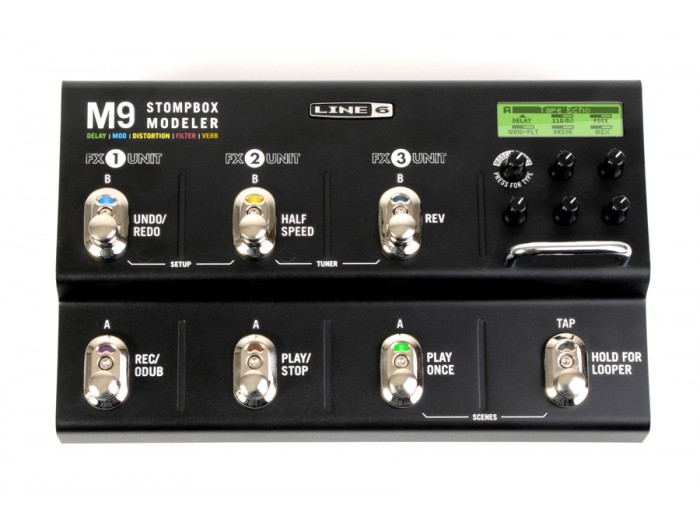
This digital arsenal packed 22 stompbox models into one unit, but menu diving mid-song could induce panic attacks.
When stage lights hit and you’ve got 30 seconds to switch from crunchy distortion to spacey delay, menu diving feels like wrestling an octopus in a phone booth. The Line 6 M9 packed 22 classic stompbox models—delays, reverbs, modulation, and drives—into a single unit, offering digital arsenal for those needing effects variety without a pedalboard the size of a small car.
With 12 user-programmable presets and MIDI sync, it streamlined complex tones into an early rig. This thing promised every sound imaginable, but for gigging musicians who weren’t computer whizzes, recalling specific settings between songs could induce more anxiety than finding a surprise polka remix on your playlist.
20. Blackstar HT Club 40
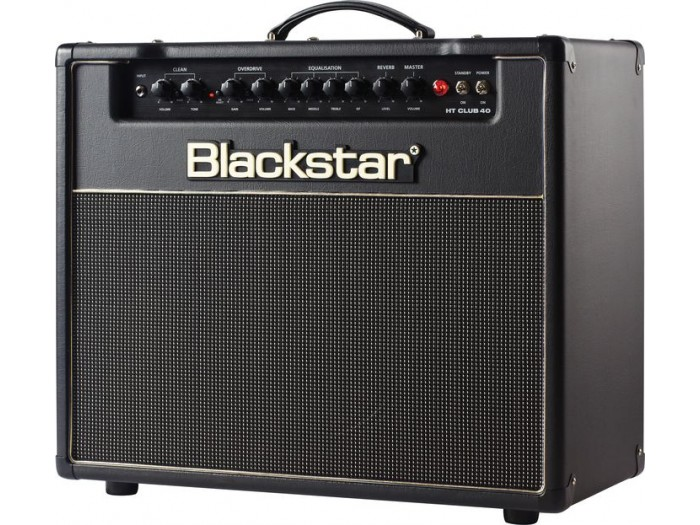
This 40-watt tube combo delivers 90% of your cover band tones without breaking the bank.
This 40-watt tube combo is a genuine contender for anyone tired of wrestling with amps that cost more than rent. It packs two distinct channels—clean and overdrive—so you can switch from shimmering chords to gritty leads without missing a beat. Digital reverb and US/UK voicing options provide nearly 90% of tones needed for grueling cover band gigs without breaking the bank.
The HT Club 40’s real magic lies in its accessible price point, a refreshing change from wallet-emptying boutique markets. Built for players who need reliability and rich, gig-ready tube tones without fuss or astronomical cost, it makes you wonder why other amps cost twice as much for half the usable sound.
19. Fender Blues Junior
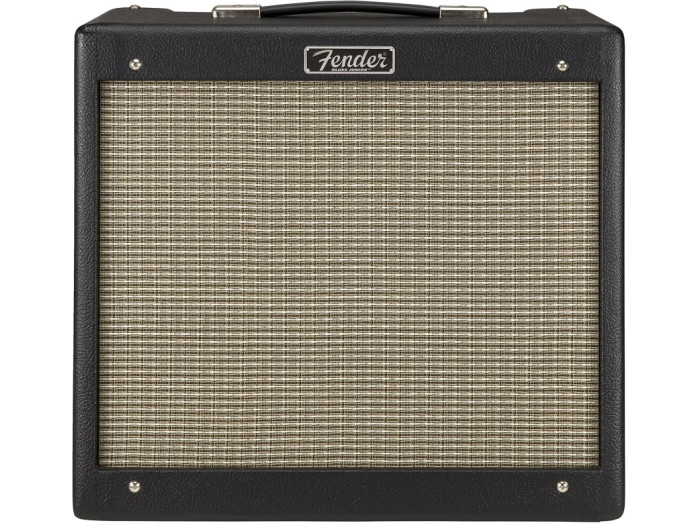
This 15-watt tube combo proves that sometimes less is more, especially when that “less” sounds this good.
The 15-watt Fender Blues Junior packs surprising punch for rock and blues players. Its modified Blackface circuit and onboard reverb deliver those classic Fender clean tones through a single 1×12″ speaker. This amp truly comes alive at gig volumes, offering touch-sensitive overdrive that responds instantly to your playing.
While bigger, more complex amps once dominated, the Blues Junior proved a turning point, showing how a simple boost could push its edge-of-breakup sounds into satisfying rock and grunge territory without needing high-gain circuits. It embodies the principle that sometimes less is more—especially when that “less” sounds this damn good.
18. Epiphone Les Paul
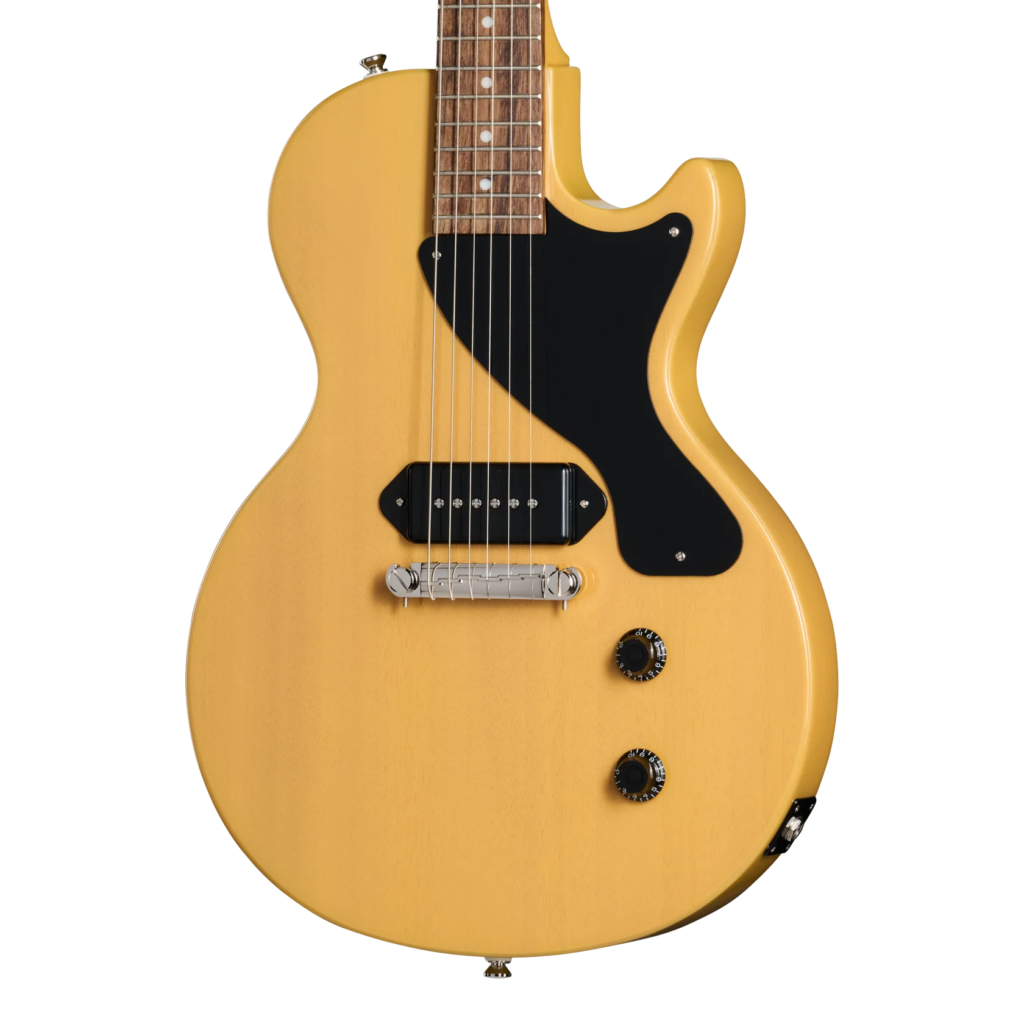
For $399, you get classic Les Paul sustain without emptying your entire savings account.
The Epiphone Les Paul Standard, armed with its mahogany body and ProBucker pickups, spits out classic Les Paul sustain and versatile tone perfect for everything from grunge covers to alt-rock anthems. For $399—a steal considering the Gibson inspiration—you get that iconic 24.75-inch scale length that delivers the goods without requiring a second mortgage.
Pair it with a Blackstar HT Club 40 or Fender Blues Junior amp, throw in a multi-effects unit, and suddenly you’ve got a setup that’s less “garage band reject” and more “ready for your first bar gig.” It’s not quite a Gibson, but it’ll get you close enough while leaving cash for crucial pedals.
17. Line 6 M5 Stompbox Modeler
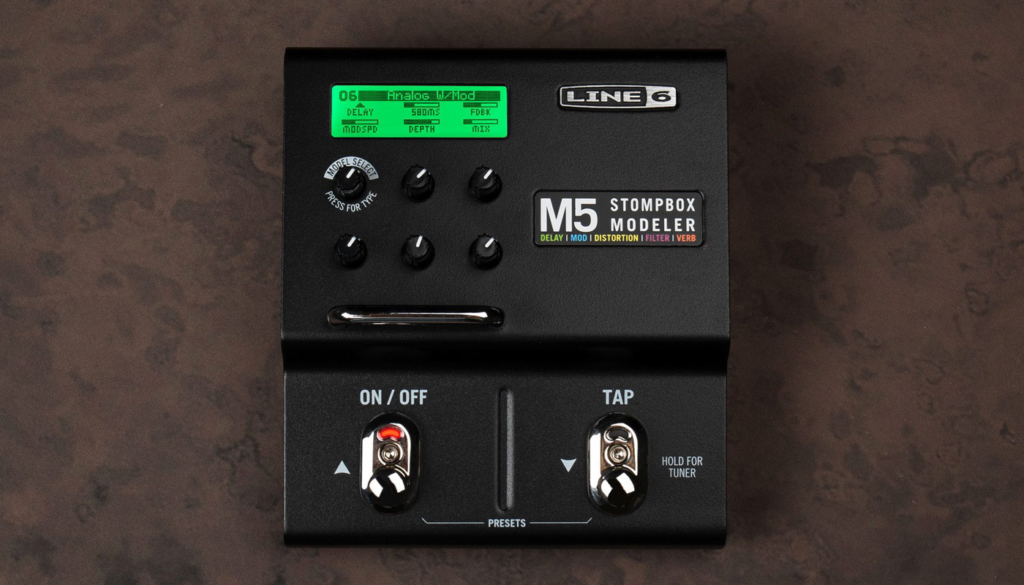
This compact Swiss Army knife offers 22 amp models and 37 stompbox effects without requiring a road case.
The Line 6 M5 Stompbox Modeler acts like a Swiss Army knife for pedalboards chasing iconic 90s cover band tones without breaking the bank. This box packs models of 22 amps and 37 distinct stompbox effects—everything from gnarly distortion and shimmering chorus to echoes that stretch into infinity.
With 8 user-programmable presets, you can dial in a whole setlist’s worth of sounds and recall them instantly. MIDI capability means syncing with other gear, making it more than just a standalone box. Forget lugging around a road case full of pedals—the M5 condenses a stadium of sonic possibilities into a unit small enough for cramped stages.
16. Fender Tone Master Twin Reverb
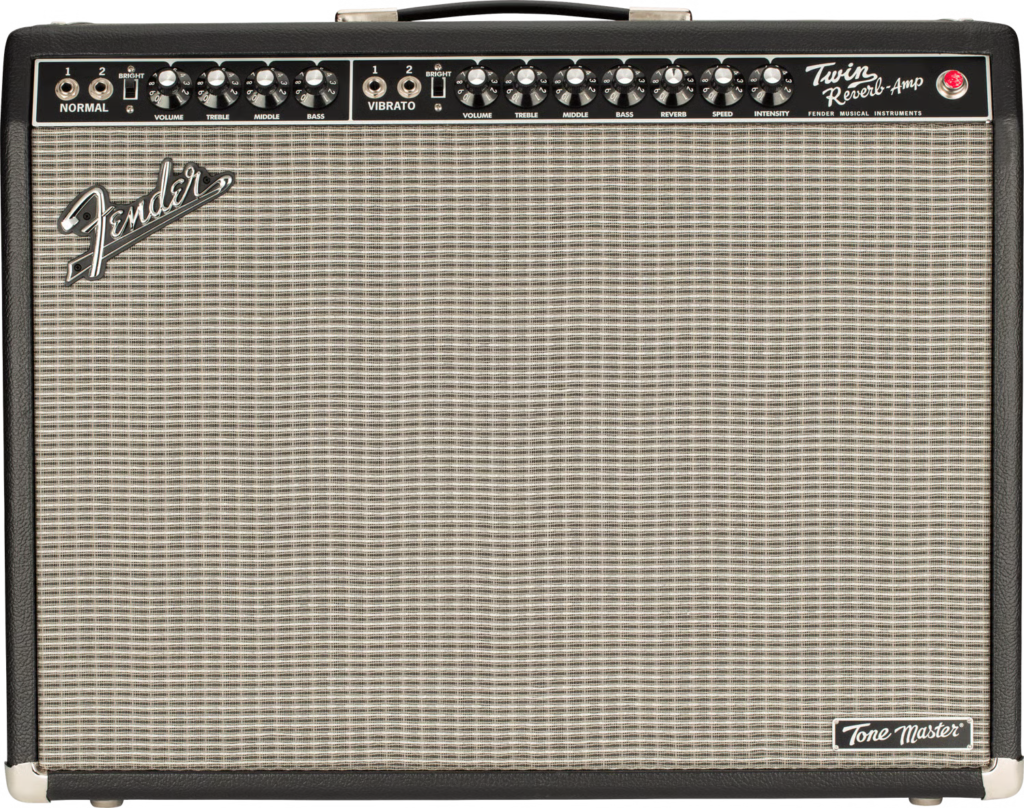
At 200 watts through 2×12″ speakers, this solid-state modeling amp exposes every flaw in your technique.
The Fender Tone Master Twin Reverb tips the scales at 34.9 lbs—impressive for a 2×12″, 200-watt solid-state modeling amp. It meticulously replicates the legendary ’65 Twin Reverb tone with pure analog Fender reverb and tremolo. This much clean power proves invaluable for larger stages, ensuring your sound cuts through without breaking a sweat.
However, wrestling with this much pristine headroom can be trial by fire. If your pedalboard isn’t dialed in perfectly, or your technique has rough edges, this amp will expose them like a reality show producer hunting for drama. Chasing brittle tones on a massive clean platform becomes a special kind of hell.
15. Fender Pro Junior IV
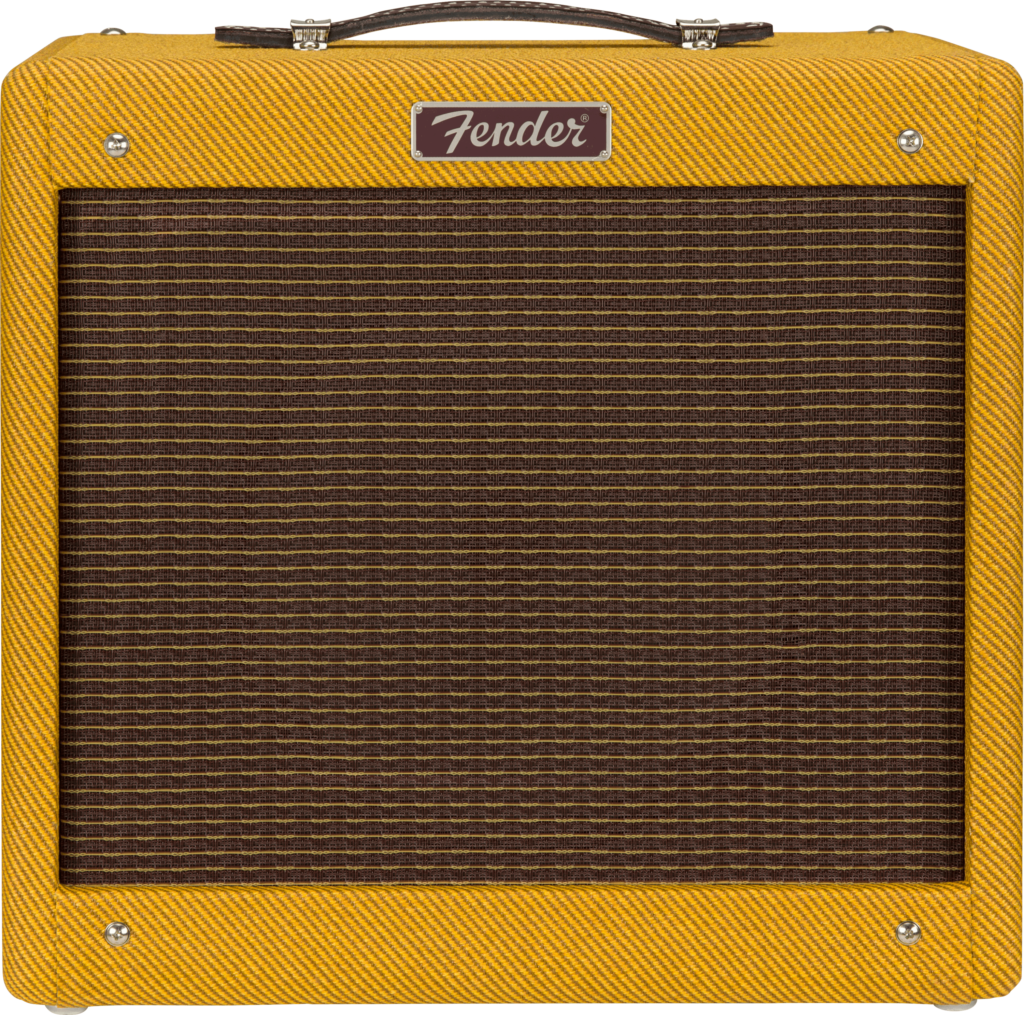
This single-channel 15-watt combo proves that pushing a clean amp often beats relying on high-gain circuits.
This 15-watt tube combo packs surprising punch for its size, proving arena-sized rigs aren’t necessary for epic rock tones. Its simple, single-channel design with 2-band EQ delivers perfectly distilled adrenaline, offering incredible edge-of-breakup sound that truly comes alive when pushed.
Crank the volume to five, six, or seven, and you’ll unleash touch-responsive, dynamic tone that feels alive under your fingers. Hitting this amp with even slight boost from a pedal like a Boss SD-1 quickly coaxes out thick, satisfying distortion, proving that pushing a clean amp often rewards more than relying solely on high-gain circuits.
14. Fender ’68 Princeton Reverb Reissue
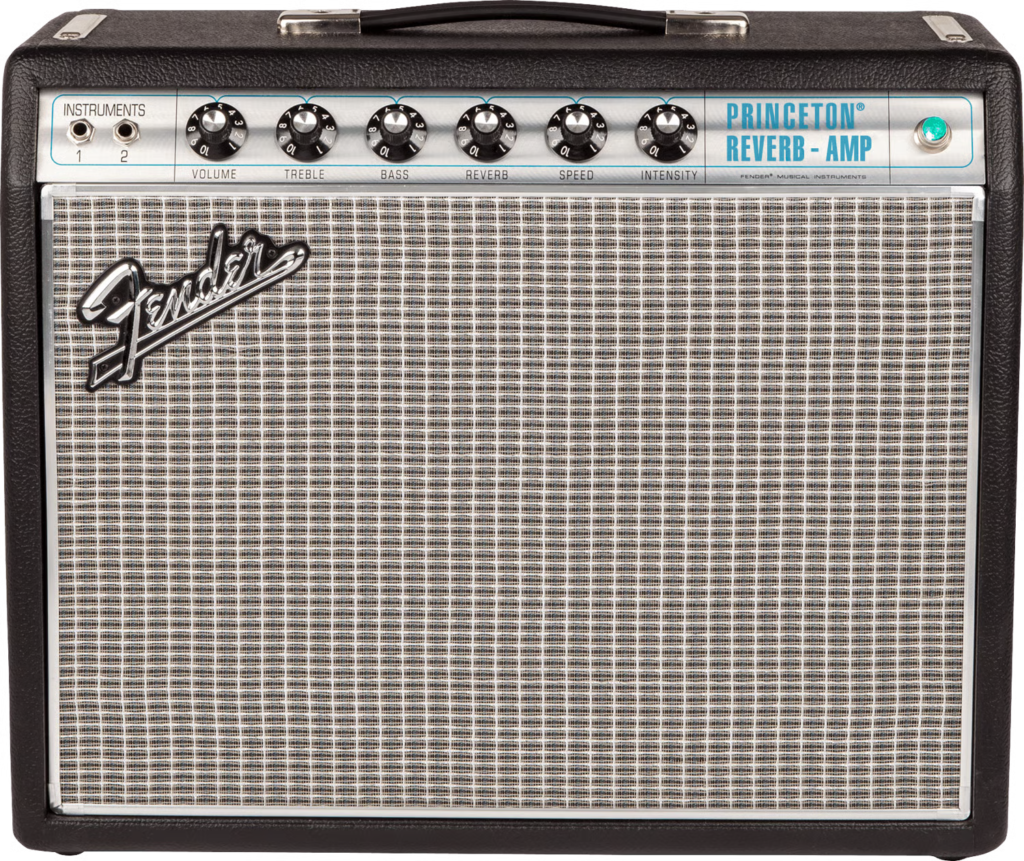
At 12 watts driving a single 12-inch speaker, it’s the sonic equivalent of a perfectly tailored suit.
This amp delivers classic Fender tone perfect for intimate club gigs or locking in that perfect practice tone. At 12 watts driving a single 12-inch speaker, it won’t win volume wars against stacks, but that’s precisely its charm. Its vintage silverface looks nod to the past, and true tube reverb and tremolo offer authentic, sought-after sound.
Many players find their sweet spot around volume five, hitting pristine clean that begs to be pushed into glorious breakup. The simplicity here is key—it’s a “set it and forget it” deal, letting you focus on playing instead of wrestling with complicated interfaces. This reissue channels that mojo so well, you might forget it’s not an original from California’s golden age.
13. Fender ’68 Deluxe Reverb Reissue
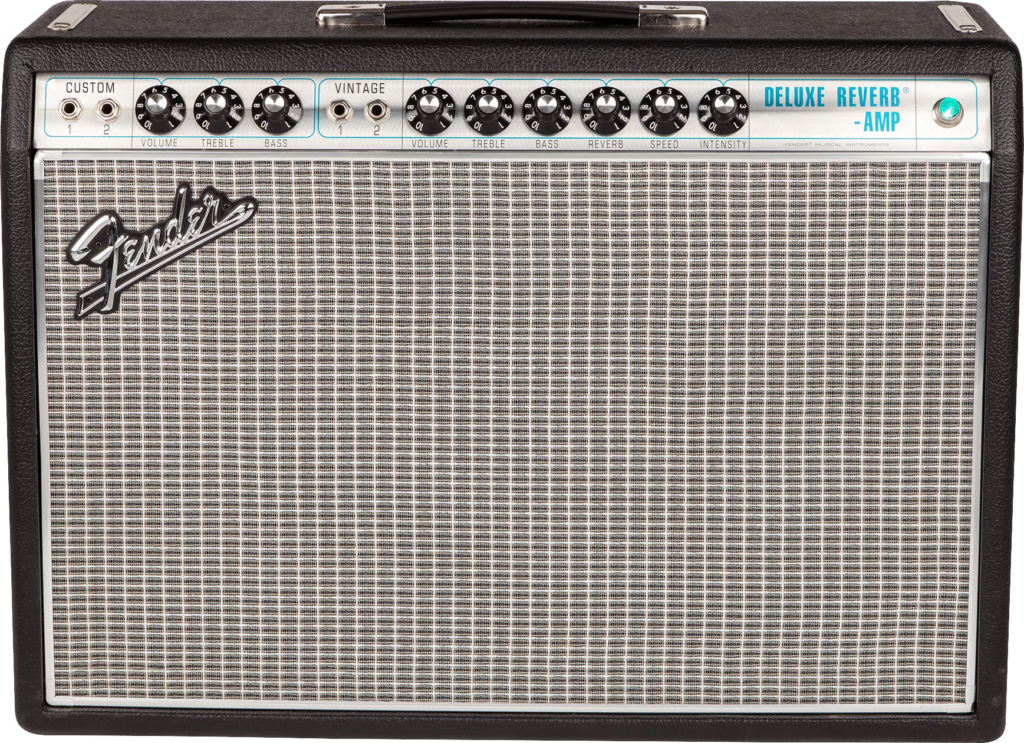
This pedal-friendly platform makes it nearly impossible to dial in a bad tone.
The Fender ’68 Custom Deluxe Reverb reissue cranks out 22 watts through its 1×12-inch speaker, stepping up the game when you need more volume and headroom than its smaller Princeton sibling. This amp’s modified blackface circuit, tube reverb, and vibrato create signature sparkly clean tones guitarists crave.
What really sets this reissue apart is how damn easy it is to get great sound. Forget wrestling with knobs to find the sweet spot—you’d be hard-pressed to dial in a bad tone. This amp prioritizes making you sound good, cutting through the mix without demanding a degree in amplifier engineering.
12. Boss SD-1 Super OverDrive
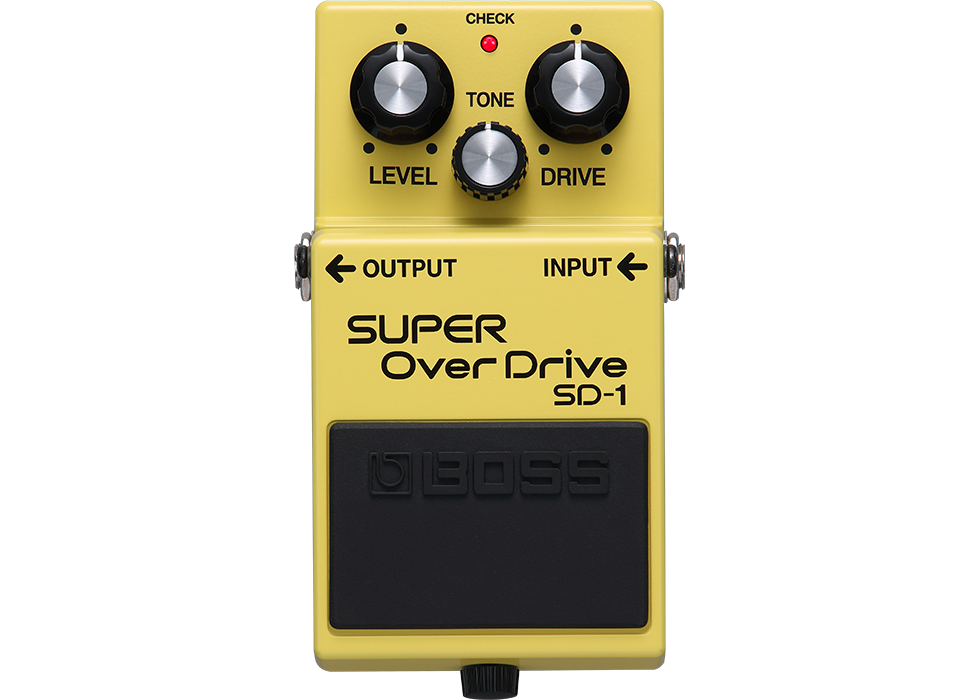
This yellow box has been the secret weapon for cutting through dense mixes since 1981.
The Boss SD-1 Super OverDrive, a staple since its 1981 debut, offers classic Tube Screamer-style mid-boost perfect for shoving your amp into delicious breakup or stretching out solos. Its dual-gang gain pot provides smooth sweep, and familiar level and tone controls are straightforward enough for anyone to dial in.
Set to unity gain, it’s a subtle beast, matching your clean volume when engaged while adding crucial grit. For anyone trying to carve out solos in dense 90s alt-rock arrangements, the SD-1 proved essential for adding crucial cut without sounding like a buzzing mosquito.
11. Pro Co RAT Distortion
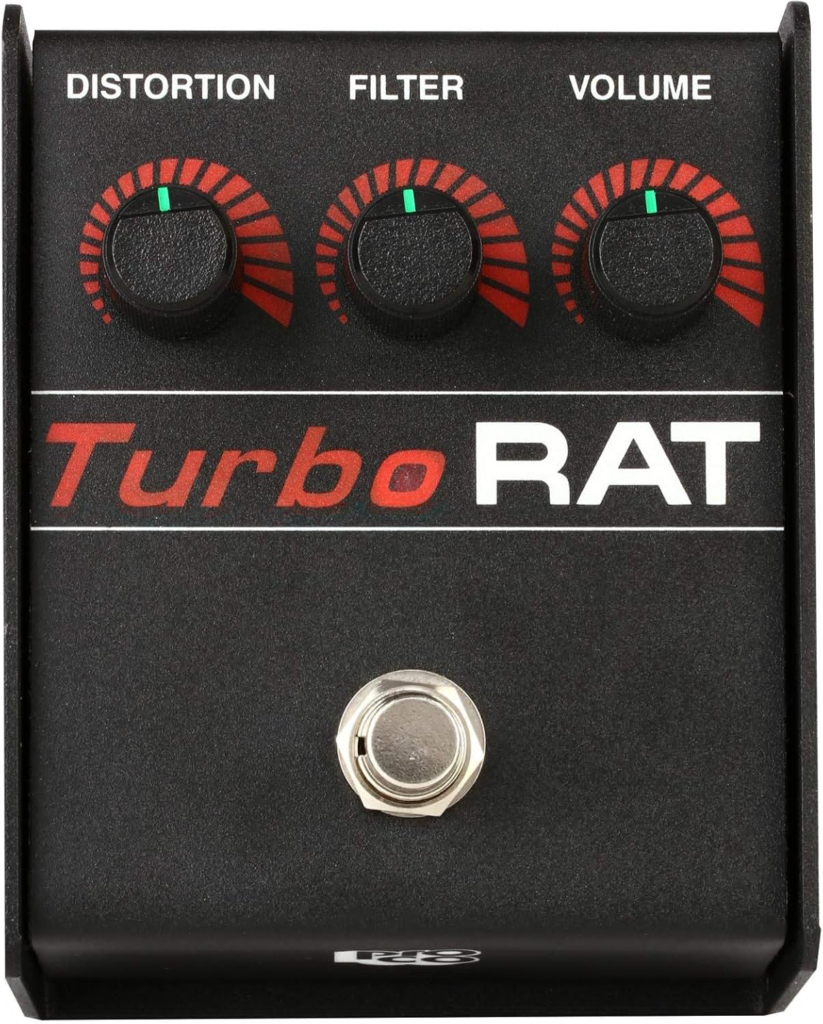
Launched in 1978, this sonic weapon delivers raw, fuzzy aggression perfect for grunge anthems.
The Pro Co RAT distortion pedal is less an effect and more a sonic weapon for anyone chasing grunge or alternative rock sound. Its simple trio of controls—Distortion, Filter, and Volume—offers surprisingly wide palette, from gritty edge that makes your amp snarl to full-blown fuzz that could level a small club.
Even with the gain knob nudged just past 11:00, you get saturation worthy of any self-respecting slacker anthem. This pedal was a secret handshake among guitarists, often the magic ingredient layered with clean amps that gave those riffs their undeniable punch.
10. Ibanez Tube Screamer
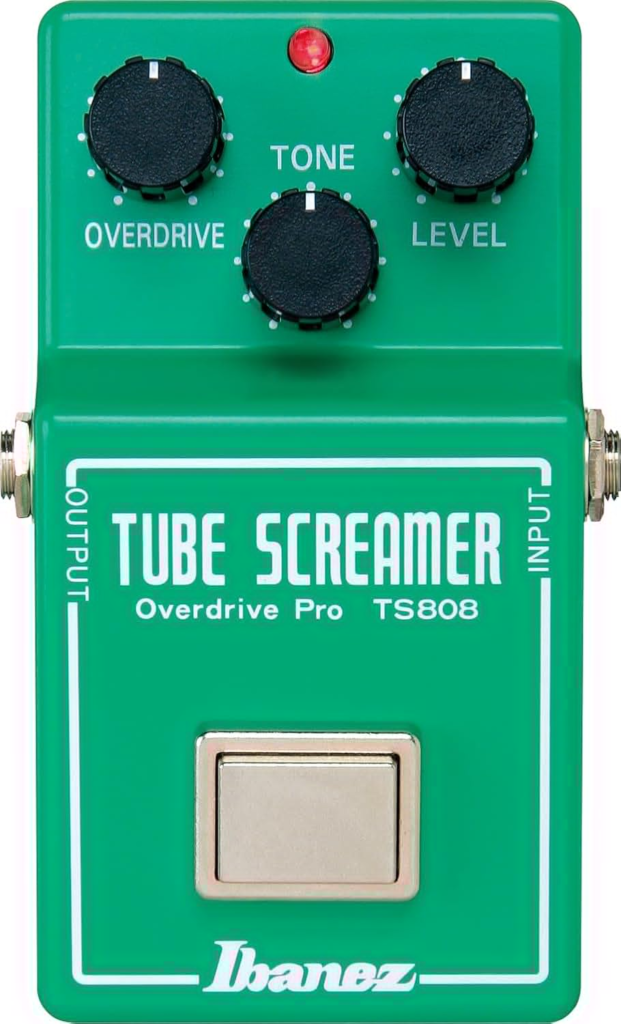
With its iconic JRC4558 op-amp, this pedal makes solos slice through the mix like a laser.
The Ibanez Tube Screamer delivers distinct mid-humped boost with its iconic JRC4558 op-amp, ensuring lead lines slice through the mix. Set for a 3 to 5 dB boost at unity gain, it makes solos pop without sounding ridiculously loud—a feat many pedals struggle to achieve without sounding like cheap alarms.
Anyone who’s tried being heard over a thrashing rhythm section knows this isn’t just gear; it’s survival. The TS808 and TS9 models have graced countless pedalboards, proving that sometimes less is more, especially when that “less” is perfectly tuned mid-range magic.
9. MXR Phase 100
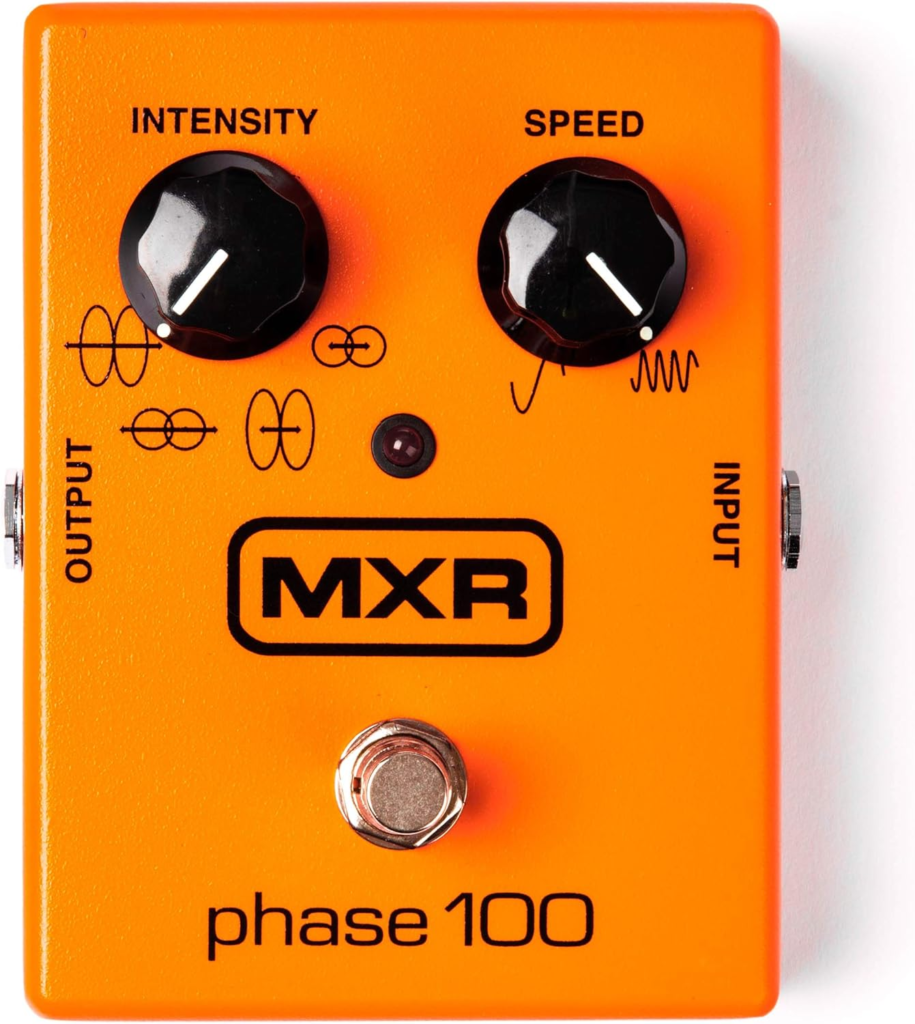
This 4-stage phaser offers deeper sweeps than its Phase 90 sibling, channeling vintage script logo aesthetics.
This pedal offers more versatile and deeper phase sweep than its Phase 90 sibling, channeling vintage script logo aesthetics. With dedicated speed control, it produces a range of modulation effects, from subtle shimmers to sounds reminiscent of Uni-Vibe or rotary speakers.
The MXR Phase 100 became key in analog modulation sections of rigs aiming for 90s tones, allowing for expressive, swirl-like effects. It’s like capturing the exact vibe of vintage chorus effects but with precision of modern processing.
8. Beetronics Crawl Bomb
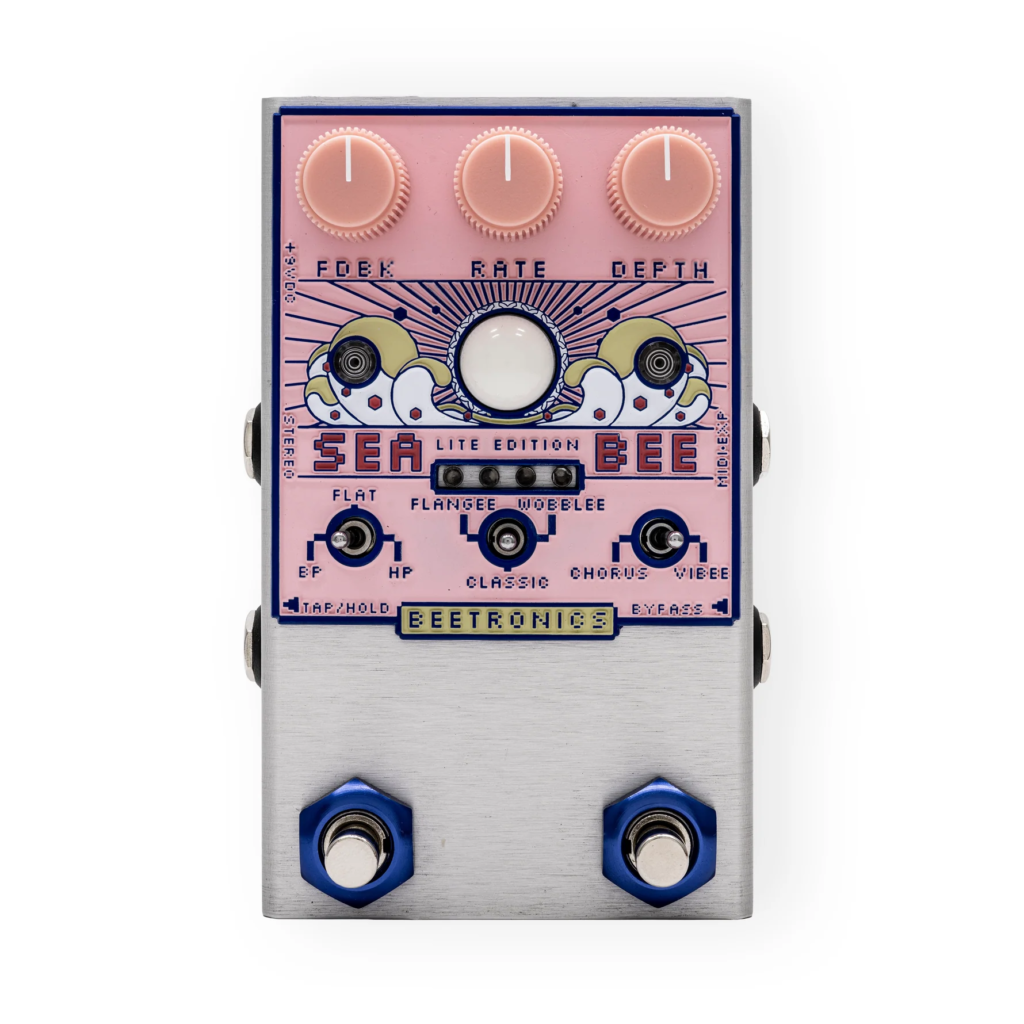
This analog chorus pedal offers 8 presets that save gigs and prevent resorting to beat-up old phasers.
The Beetronics Crawl Bomb proves analog chorus can do more than add vague shimmery haze. This pedal offers 8 distinct presets—a godsend when nailing both subtle swirl in Sheryl Crow tracks and denser sonic textures Nirvana was known for.
With controls for rate, depth, and mix, you can navigate between iconic 90s cover band sounds faster than you can say “smells like teen spirit.” Its rotary simulation adds authentic movement that makes your guitar sound like it’s breathing.
7. Beetronics BBD Delay
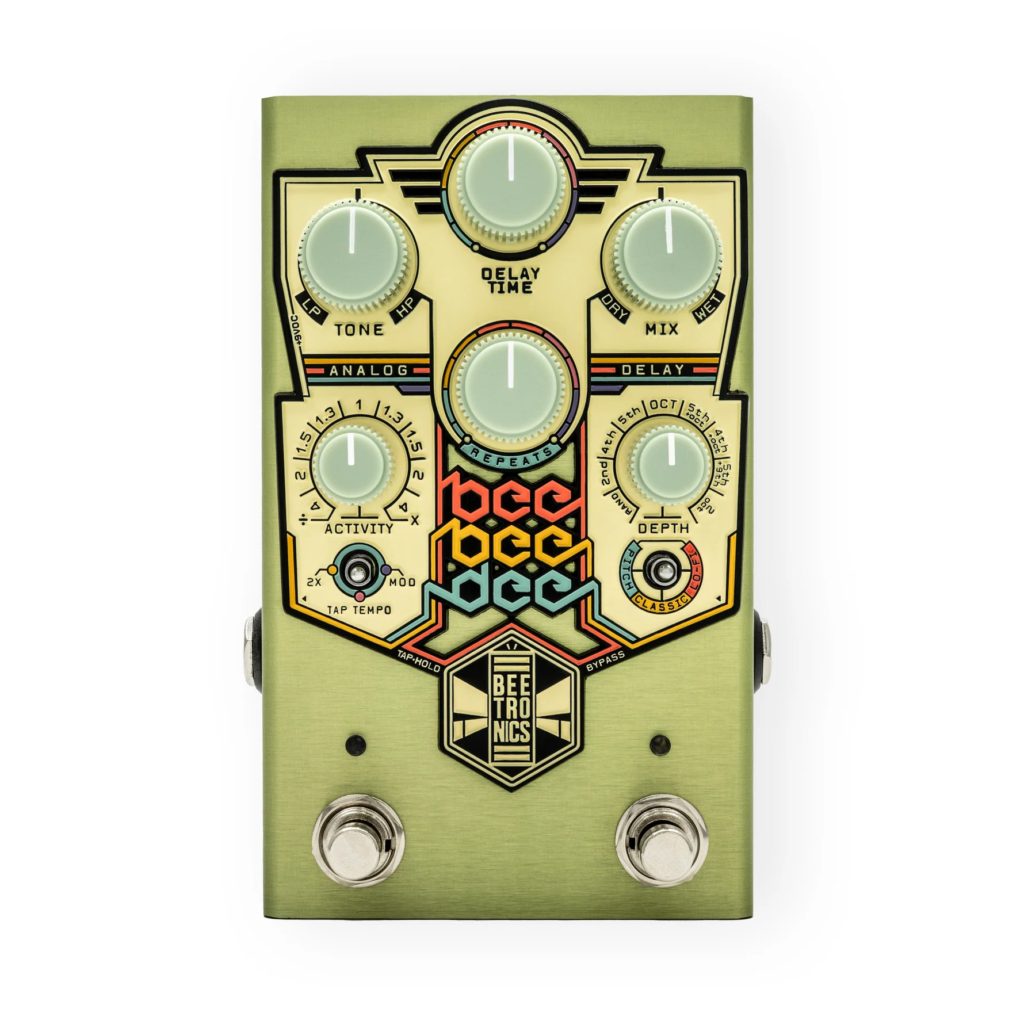
This bucket-brigade delay transforms simple echoes into swirling, psychedelic washes.
This pedal boasts up to 1 second of delay time using bucket-brigade (BBD) circuit—basically an analog memory chip that gives repeats that warm, slightly degraded, tape-echo vibe. You can fine-tune echo character with tone control, and tap tempo keeps everything locked in for complex rhythms while playing blistering solos.
Adjusting rate and depth of modulation transforms simple echo into swirling, psychedelic wash, turning your guitar into a vintage synth-progression machine. It’s the kind of pedal that makes you want to dive headfirst into soundscapes, reminiscent of how early shoegaze bands turned simple delays into walls of ethereal sound.
6. Dunlop Cry Baby Wah
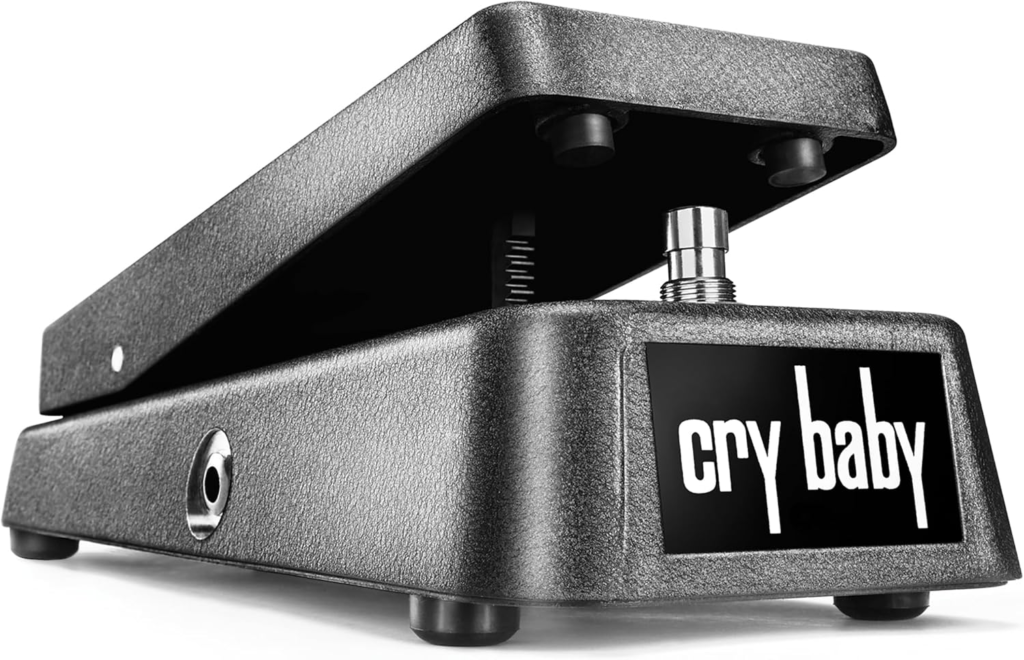
The original 1967 design remains the gold standard for that iconic squelching sound.
The original 1967 design for the Dunlop Cry Baby Wah (GCB95) remains the gold standard for that iconic squelching sound. This isn’t just a pedal; it’s meticulously engineered rock history that lets you add expressive, vocal-like sweeps to your guitar.
This pedal’s adjustable rocker bias and variable Q shape prove crucial for funky rhythm chops and soaring rock leads. Higher Q means narrower, more focused sweep, while lower Q broadens it out. Without that specific tonal character, certain songs would sound naked—like trying to serve pizza without cheese.
5. Boss XS-1
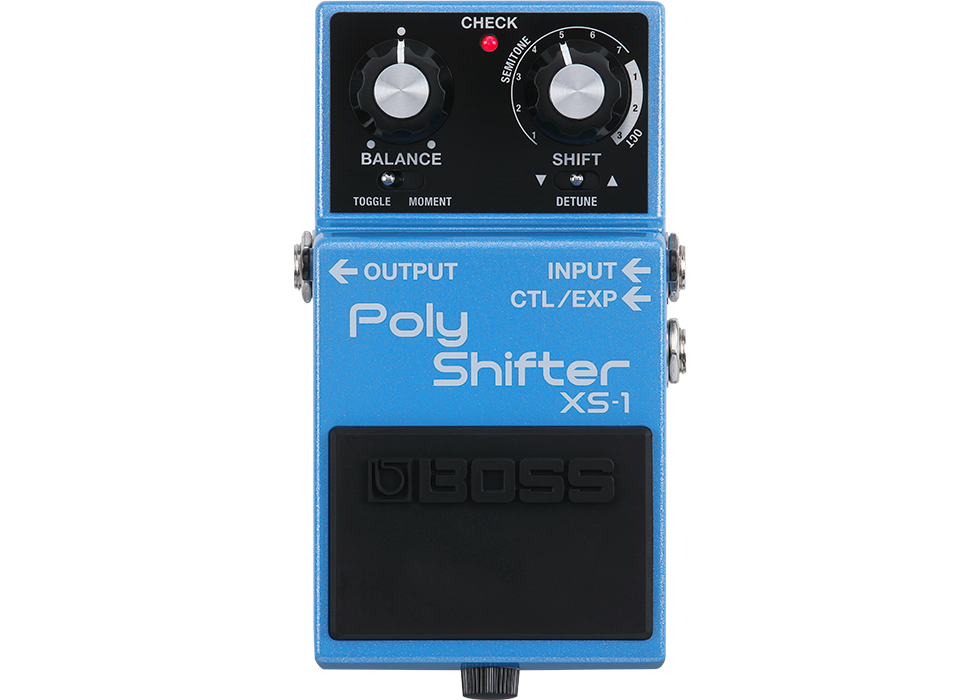
When your setlist demands key changes faster than TikTok dance trends, this polyphonic pitch shifter becomes your secret weapon.
When bands’ setlists demand key changes faster than TikTok dance trends, the Boss XS-1 polyphonic pitch shifter becomes your secret weapon. This pedal shifts across three octaves up or down, tosses in harmony modes, or nudges things by half-steps.
It’s the ultimate cheat code for switching tunings or detuning for specific songs without full guitar swaps. Think of it like having a magical DJ booth for your instrument, letting you instantly adjust your sound when singers suddenly request different keys mid-set.
4. Line 6 HX Stomp
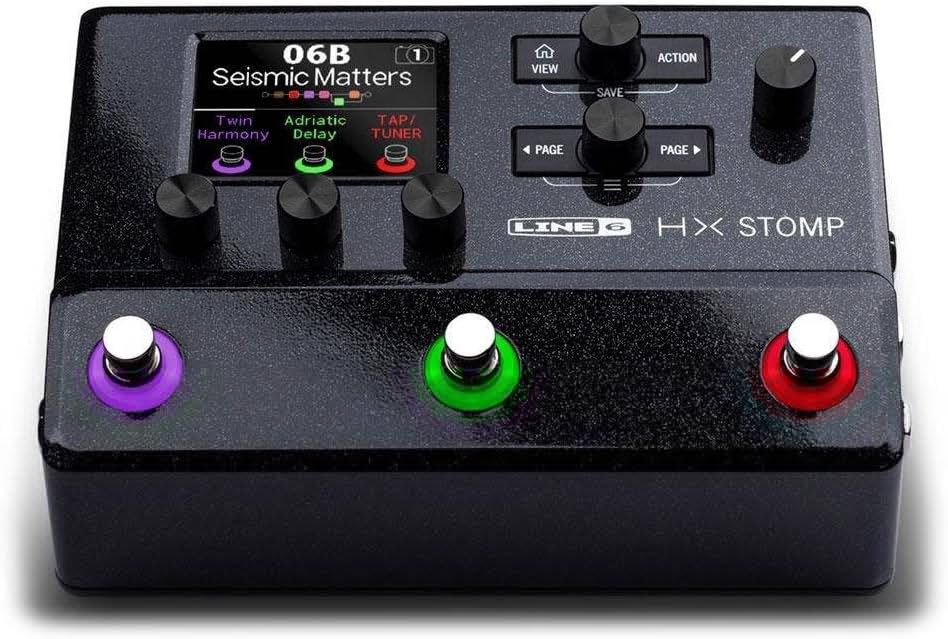
This compact digital Swiss Army knife packs over 300 amps, cabs, and effects into a small chassis.
With over 300 amps, cabs, and effects packed into its compact chassis, the Line 6 HX Stomp is less a pedal and more a digital Swiss Army knife. This little box, boasting 126 presets and built-in looper, offers a universe of sounds rendered through its acclaimed Helix modeling engine.
While not the star for core analog setups, the HX Stomp becomes indispensable for specific gigs. Worship services demanding expansive, ethereal reverbs find their match here, and practice sessions transform with its integrated looper—building arrangements layer by layer.
3. Squier Classic Vibe Stratocaster
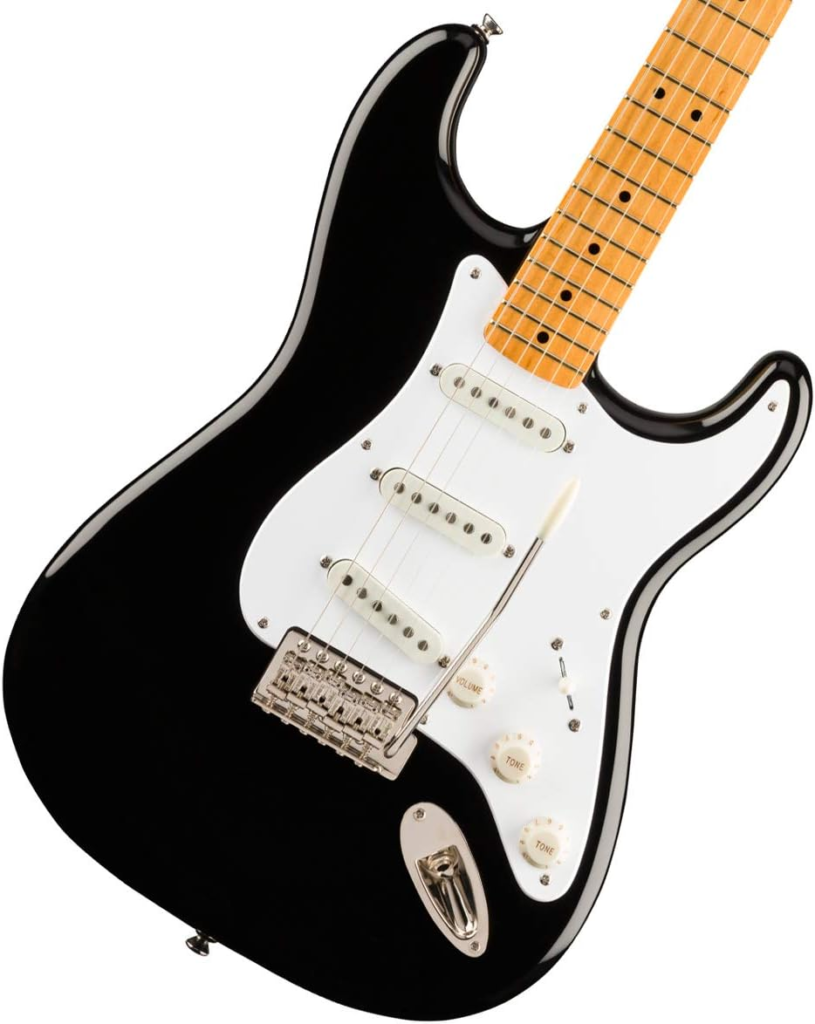
These axes nail vintage Fender vibes with alnico pickups and necks tinted like vintage Polaroids.
For rigs that don’t require selling kidneys, the Squier Classic Vibe Stratocaster series nails ’50s and ’70s Fender vibes with alnico single-coil pickups that hum with authentic Strat tones. Necks tinted like vintage Polaroids complete the package.
It’s the guitar equivalent of finding a flawless Nirvana bootleg at a dusty record store—pure gold without rockstar price tags. Combine one with a used Blackstar Club 40 or Fender Hot Rod Deluxe, and you’ve got gig-worthy setup for under $1000.
2. Fender Hot Rod Deluxe
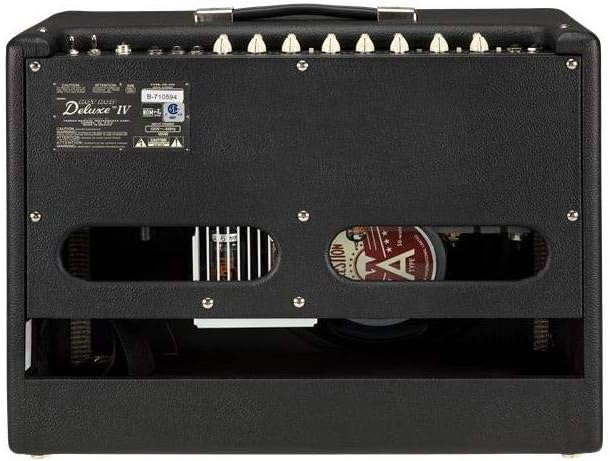
This 40-watt workhorse transforms from clean platform to gritty rock machine without breaking the bank.
This amp pumps out 40 watts of pure tube tone through its 1×12-inch speaker, delivering enough headroom to keep up with most bands without sounding like a dying kazoo. Two channels—pristine normal channel and drive channel that actually sounds good—plus onboard reverb and effects loop create a canvas begging for pedals.
The Hot Rod Deluxe doesn’t brag but just gets the job done, readily available for around $300-$350 on used markets. It takes overdrive and distortion pedals like a champ, easily transforming from clean platform to gritty rock machine for nailing everything from Eagles riffs to Stevie Ray Vaughan licks.
1. JHS East River Drive
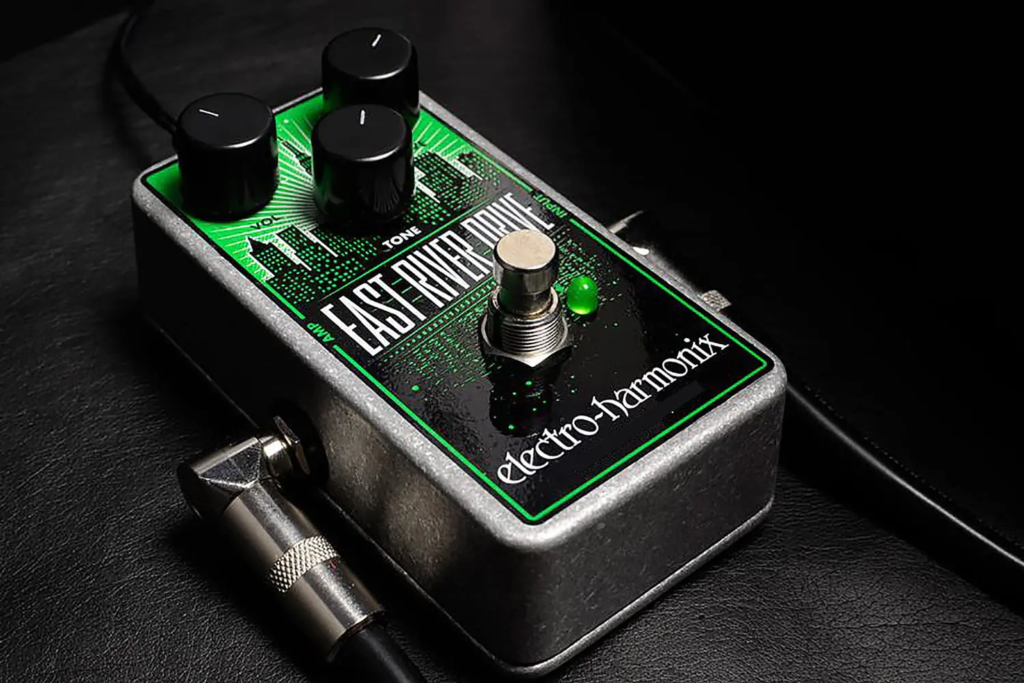
This budget-friendly Tube Screamer alternative packs the same JRC4558 chip for $40-$50 used.
Often snagged used for mere $40-$50, the JHS East River Drive is basically a budget-friendly handshake with the legendary Ibanez Tube Screamer. This pedal packs the same JRC4558 chip, delivering warm, thick tone that sounds like vintage amps finally exhaling.
It’s your secret weapon for pushing clean amps into glorious snarl or giving solos that extra sustain and punch without breaking the bank. Its hard clipping gives signals more edge and definition, making solos soar with clarity—proving that sometimes the most effective tools aren’t the ones with flashiest marketing budgets.