


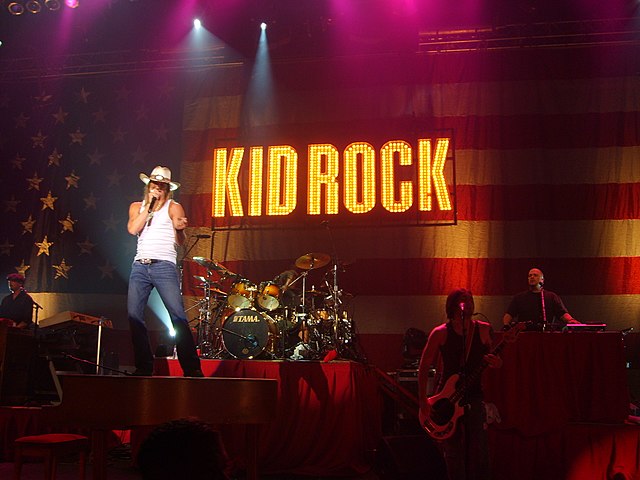
Political trolling just leveled up with AI-generated imagery, and Kid Rock walked straight into California Governor Gavin Newsom’s digital trap. On August 18—exactly one year after Trump’s infamous Taylor Swift “endorsement” post—Newsom’s team dropped an AI-created image of Kid Rock dressed as Uncle Sam, complete with a fake endorsement slogan.
The timing wasn’t coincidental. This calculated provocation reveals how political theater now operates in the space between genuine communication and elaborate performance art.
The Meme War Playbook
Social media trolling follows predictable patterns, and Kid Rock delivered exactly what Newsom expected.
Newsom’s press office posted the Uncle Sam image with Trump’s signature bombastic style: “I ACCEPT! — GCN.” Kid Rock responded with internet culture’s most reliable comeback: “The only support Gavin Newsom will ever get out of me is from DEEZ NUTZ.” Classic meme culture meets political discourse.
Newsom’s team continued the performance, posting “I HATE KID ROCK !!! — GCN” and channeling Trump’s petty grievances: “HAS ANYONE NOTICED THAT SINCE I SAID ‘I HATE KID ROCK’ HE’S NO LONGER ‘HOT?’”
The exchange perfectly mimicked Trump’s Taylor Swift saga from 2024—when he posted AI-generated “Swifties for Trump” imagery, then threw public tantrums after Swift endorsed his opponent. Newsom essentially turned that playbook into political satire, complete with the anniversary timing that suggests his team understands viral mechanics better than most music marketers.
When Reality Becomes Performance Art
AI-generated content blurs the lines between genuine political engagement and elaborate pranks.
This incident captures something larger about how celebrities navigate political spaces today. Kid Rock’s response—mixing conservative talking points with internet slang—demonstrates how political authenticity gets performed rather than expressed. His fans expect outspoken commentary, and he delivered it through meme culture rather than policy discussion.
They created content designed to generate predictable responses, knowing Kid Rock’s brand requires him to take the bait. Social media platforms reward this kind of performative conflict, turning political disagreement into content creation.
The real story isn’t the fake endorsement—it’s how quickly everyone recognized the game being played. Fans immediately understood this was political theater, not genuine confusion about Kid Rock’s allegiances. When the boundaries between trolling, satire, and authentic communication disappear completely, even obvious pranks become legitimate cultural moments worth dissecting.