




Most guitarists practice religiously but still sound like they’re wrestling a wounded animal. Mastering fundamental techniques isn’t about playing faster—it’s about creating a sound so clean and tight that even your neighbors will stop complaining and start requesting encores. These aren’t random tips; they’re the building blocks to making any guitar, even that garage-sale special, sound professional. Get ready to finally nail those solos and chord changes with techniques that separate bedroom noodlers from gigging pros.
1. Minimal Pressure Fretting

The lightest touch creates the clearest tone.
Beginner guitarists often strangle the neck like they’re trying to choke the life out of it. Lay off. Instead, lightly fret a note—try the 5th fret on the high E string—and pick it while experimenting with finger pressure. Find that “sweet spot” where the note rings clear as a bell with minimal effort.
This isn’t just some Zen koan for guitar players. Picture yourself at a dimly lit open mic night, trying to impress someone special in the corner. If you’re crushing the strings, all they’ll hear is fret buzz and frustration. But ease up, find the right balance, and your notes will sing. Your index finger becomes a ninja, not a sledgehammer, leading to effortless playability that sounds like money.
2. Chord Change Precision

Master the pivot, master the transition.
Ever wonder why some guitarists sound like they’re wrestling an alligator during chord changes? Smooth transitions make or break musical flow. Practice finger pivots by moving from G to Em, keeping your index finger planted on fret 2 of the A string.
Move all fingers simultaneously like you’re conducting a tiny orchestra, dialing the speed down to a snail’s pace. You’re aiming for clean transitions, not setting speed records. Anyone who’s ever seen a guitarist flub a stadium riff knows you build speed from clean reps. Master this fundamental, and you’ll sound professional without smoke, mirrors, or expensive gear.
3. Muting Techniques

Control of sound separates amateurs from pros.
Don’t let rogue vibrations sabotage your riffs. Let your fretting hand do double duty by lightly touching unused strings. This cleans up your act by eliminating unwanted noise, so you sound less like a cat fight and more like that expensive axe should.
Palm muting with your picking hand near the bridge gives you tight, staccato rhythms that define everything from metal chugging to country twang. Controlled dynamics and the ability to stop notes dead separates TikTok bedroom shredders from gigging musicians. It’s like the difference between a scalpel and a butter knife—precision matters.
4. Metronome Integration
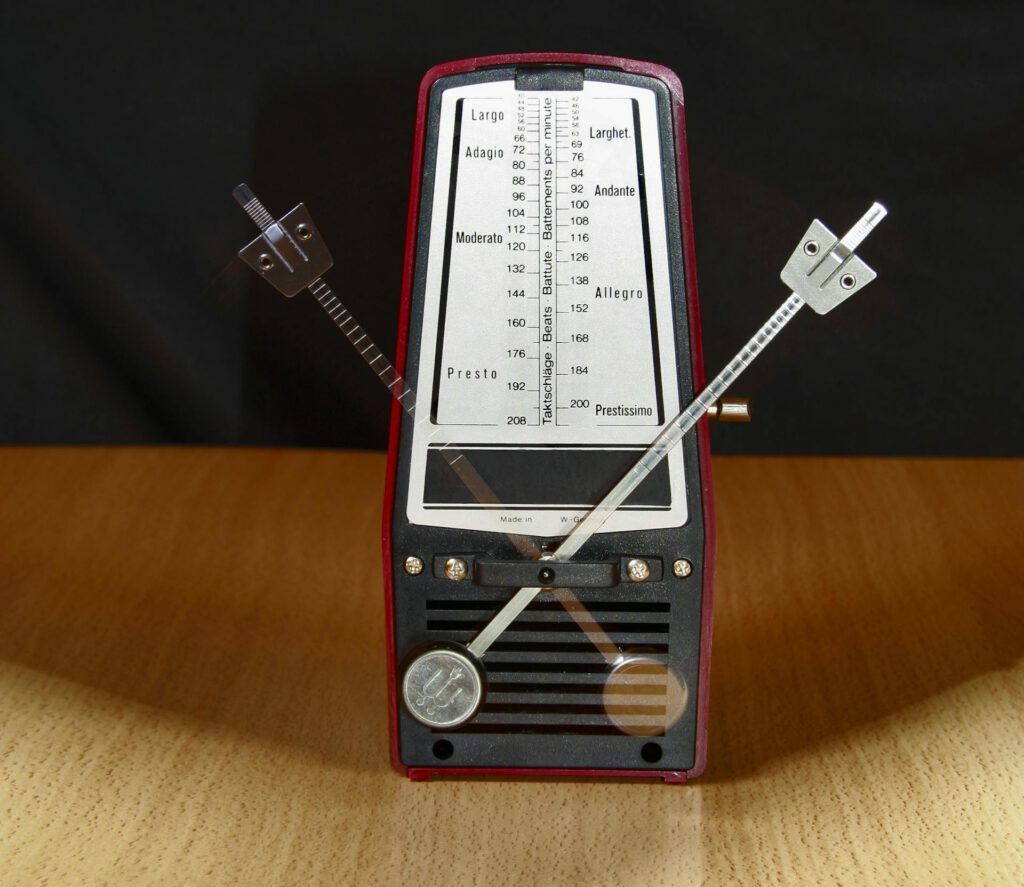
Rhythm separates basement noodlers from stadium gods.
Start by dialing that metronome down to 50-60 BPM for scales, chords, or riffs—the sonic equivalent of toddler steps. This isn’t about shredding; it’s about locking down accuracy. Gradually bump the speed in tiny increments of 5-10 BPM as you get cleaner.
Anyone who’s ever tried to learn a Metallica solo knows rushing comes standard with every guitar ego. Instead, treat the metronome like your drill sergeant, ensuring fretting fingers and picking wrist move in lockstep. Think of building speed like muscle development: small reps lead to bigger gains without sacrificing technique.
5. Fingerpicking Patterns
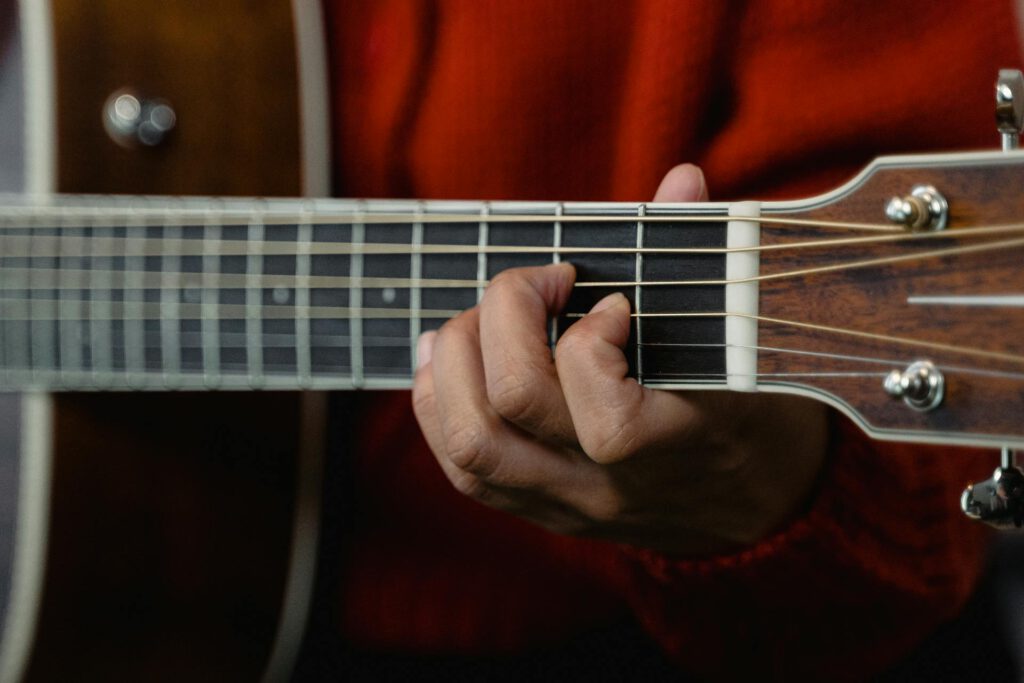
Turn a single guitar into a whole damn orchestra.
Fingerpicking lets you play melody, harmony, and rhythm simultaneously, adding depth that makes basic strumming sound like amateur hour. Think of your right hand as a finely tuned machine: thumb handling the low E string, index finger hitting the G string, middle finger on the B string, and ring finger plucking that high E.
Apply this to a simple G chord, and suddenly you’re crafting delicate arpeggios where notes cascade like water. Like a jazz drummer comping behind a soloist, you’re creating entirely new dimensions. This technique transforms bedroom acoustics into concert hall sophistication.
6. Chromatic/Spider Exercises

Technique trumps speed every single time.
Chromatic exercises are your slow-burn ticket to shred city. Practicing these patterns—each finger taking a fret in order—grooves pathways in your brain for fluid transitions. If you’re struggling with riffs or your fingers feel like they’re fighting each other, chromatic drills build the synchronization that smooths out rough spots.
After consistent practice, scales feel easier and solos flow faster. Chromatic exercises aren’t just finger aerobics; they’re rewiring your muscle map. They’re like that boring cardio everyone skips—until they realize it unlocks the cheat code to everything else. Your fret hand transforms from clumsy toddler to well-oiled machine.