



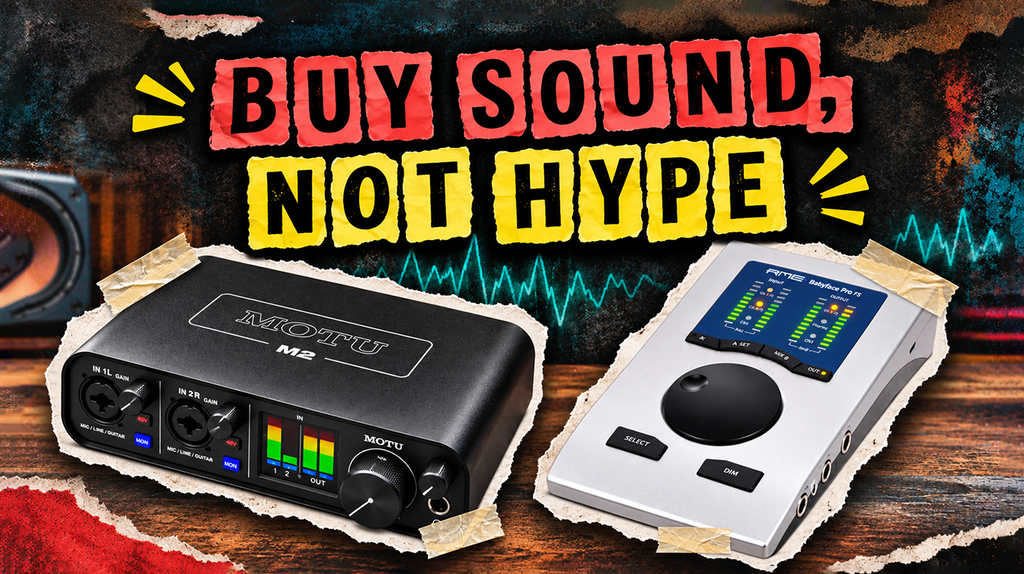
Musicians drop cash on gear promising “studio-quality” sound, only to find recordings that could have been tracked on a tin-can telephone. Separating genuine audio engineering from marketing markup in interfaces feels like hunting for vintage treasure in a fast-fashion warehouse. Your interface is the crucial conduit; when it’s a bottleneck, tracks sound muddier than a budget indie film score. This guide cuts through the hype, identifying hardware that delivers sonic integrity and giving your music the clarity it deserves—impact instead of the hollow echo of a forgotten SoundCloud demo.
This content may contain affiliate links. If you wish to support us and use these links to buy something, we may earn a commission.
9. PreSonus AudioBox 96 / Studio 24c
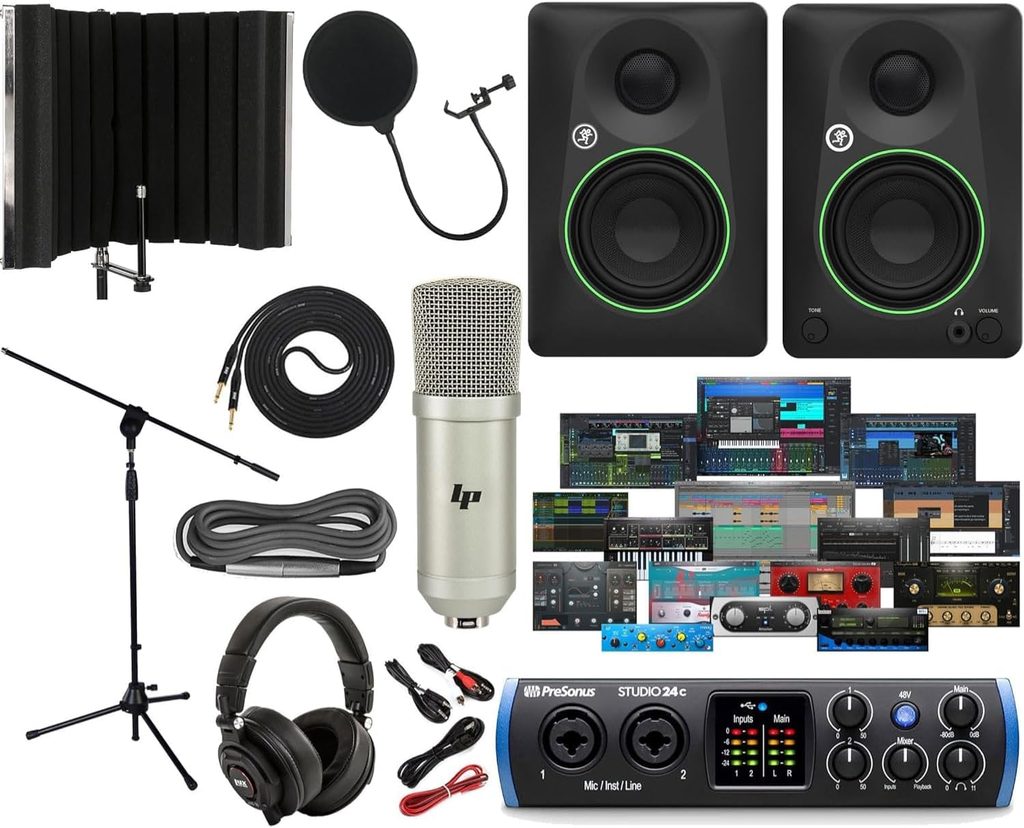
Budget bundles promise easy entry, but compromise follows you from take one.
Starter packs bundling the PreSonus AudioBox 96 or the Studio 24c commonly retail around $150–$250. This accessible price, often including Studio One software, opens the door to home recording. The Studio 24c offers 24-bit/192 kHz conversion with USB-C connectivity and two XMAX microphone preamps.
However, these interfaces can feel like budget airlines. They get you there, but don’t expect legroom. The supplied research materials note that specific oscillator, headphone-impedance, clipping, potentiometer, and phantom-power fault claims require independent laboratory measurements. Without supporting test documentation, these alleged issues should not be presented as established facts. The Studio 24c product page describes a high-power headphone output supporting impedances from 32–300 Ω, which contradicts certain unsupported claims about poor headphone performance.
8. Focusrite Scarlett 2i2 (Generations 3 & 4)
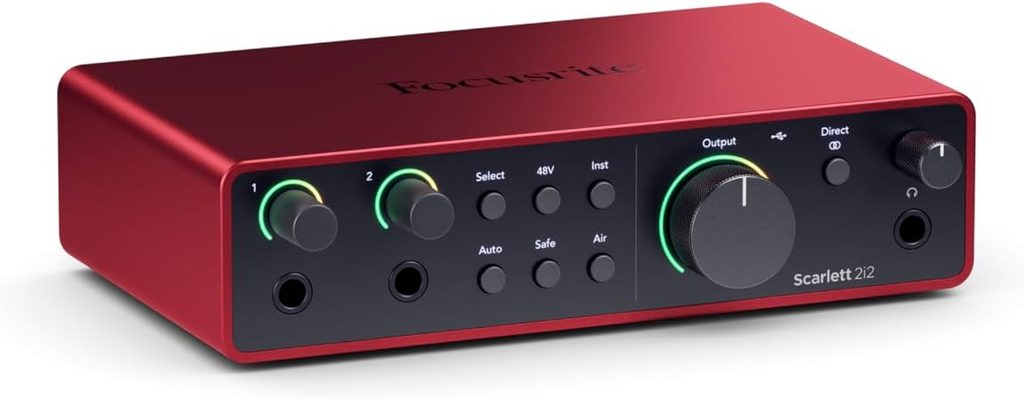
The bedroom-studio staple has evolved, though not every promise lands as advertised.
The Focusrite Scarlett 2i2, typically around $180, appears in nearly every aspiring home studio. The fourth-generation model achieves 24-bit operation up to 192 kHz with 120 dB line-output dynamic range, a significant jump from earlier generations. Focusrite specifies 116 dB A-weighted microphone-input dynamic range and provides two preamps with up to 69 dB of gain.
The fourth-generation headphone output impedance is specified at 50 Ω, not below 1 Ω as some sources suggest. This still represents an improvement for critical listening compared to previous generations. The Air mode offers a selectable high-frequency enhancement intended to provide brighter character. Official specifications do not document the exact circuit implementation; without schematic evidence, detailed component claims remain unverified. The rear USB-C jack and overall construction reflect typical entry-level design constraints.
7. Apogee Duet 3
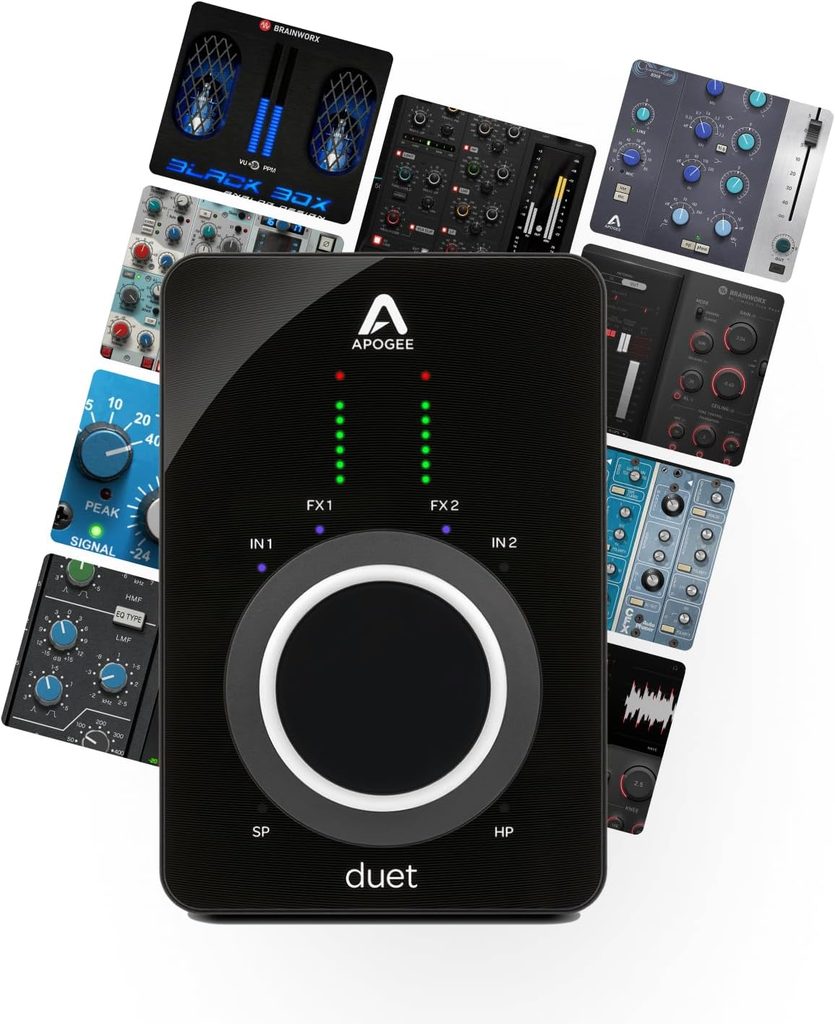
Premium portability comes with proprietary compromises that road warriors need to consider.
The Apogee Duet 3, priced around $650, targets mobile recording and project studios. This compact USB-C interface combines microphone, line, and instrument inputs with high-resolution conversion and onboard hardware DSP for Symphony ECS Channel Strip processing. Its touchscreen-style control and breakout-cable system distinguish it from conventional interfaces.
The proprietary multi-pin breakout cable creates a potential liability for gigging musicians. Heavy studio leads can stress these connections, risking pin fatigue and intermittent dropouts—unwelcome surprises mid-take. When that proprietary connection fails, replacement cables add cost. Apogee’s product information emphasizes the unit’s mobile-focused design, yet the breakout approach trades conventional ruggedness for portability. Specific converter identification and performance comparisons require independent teardown or bench evidence not provided in official specifications.
6. Apogee Symphony Desktop
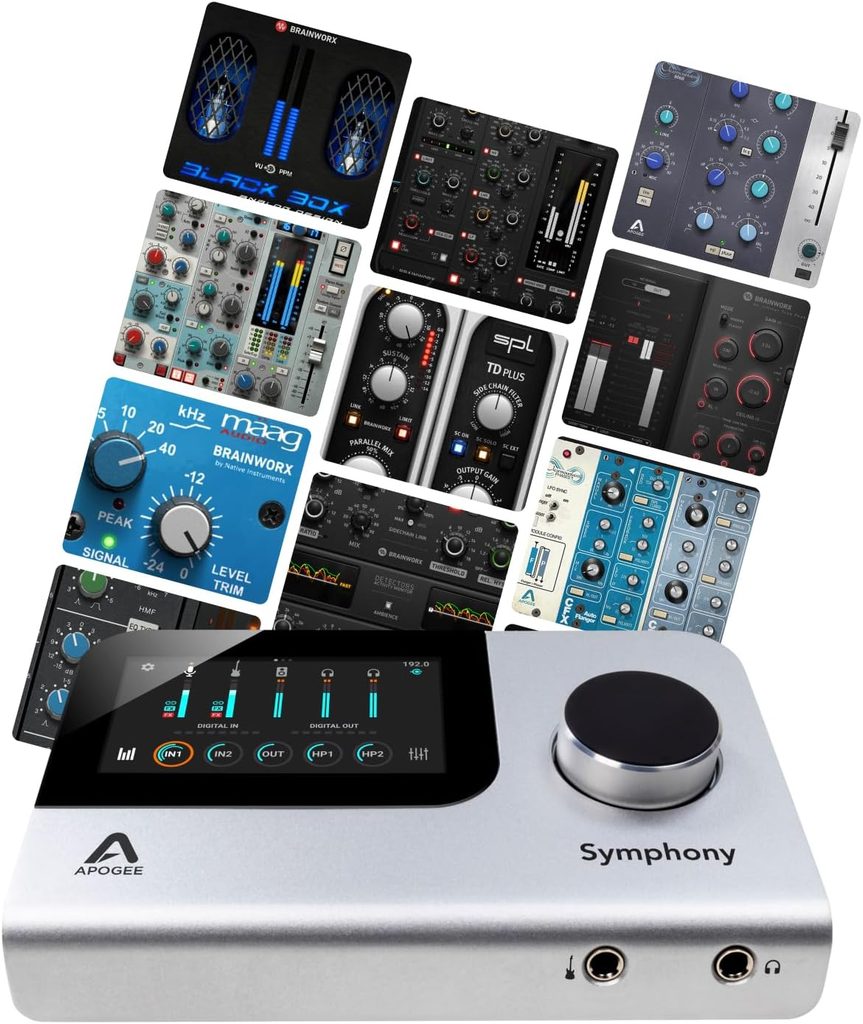
Sophisticated features meet questions about long-term platform support and thermal management.
The Apogee Symphony Desktop commands $1,500 for a two-channel premium USB interface. It offers Symphony preamps, high-resolution AD/DA conversion, onboard DSP processing, and touchscreen control for low-latency monitoring. These features aim to support desktop recording and mixing workflows.
Historical compatibility concerns deserve consideration. Past Apogee hardware, including FireWire-era models, faced driver-support challenges during Apple platform transitions. While this may be historically verifiable, dated compatibility statements are needed before generalizing to current products. The compact unibody design prioritizes desk space, though questions about thermal stress on internal components during extended sessions require documented testing rather than speculation. Touchscreen integration and hardware processing remain the main distinguishing features in Apogee’s desktop lineup.
5. Antelope Audio Zen Tour / Orion Interfaces
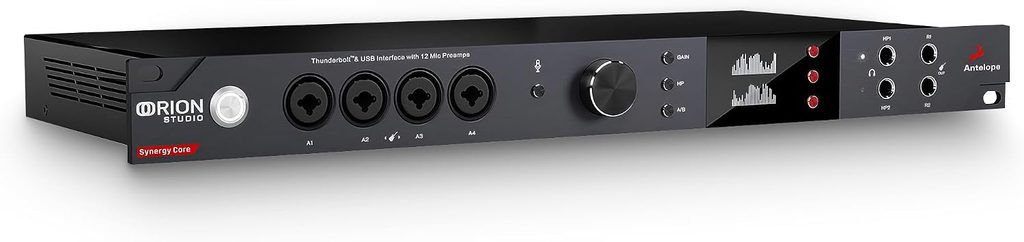
Professional specs meet operational complexity that demands careful evaluation.
Antelope Audio’s Zen Tour and Orion families offer high-channel-count connectivity, FPGA-based onboard processing, extensive digital routing, and the company’s Acoustically Focused Clocking technology. Depending on the model, features include Thunderbolt and USB connectivity, ADAT and other digital expansion formats, plus large software-controlled routing matrices.
Antelope emphasizes proprietary processing and routing capabilities. User-experience reports mention authentication requirements and firmware sensitivity, though specific claims about mandatory server checks, unbootable firmware failures, and kernel panics should be treated as allegations unless supported by dated support records or reproducible testing. Professional interfaces demand operational stability; evaluating any system’s reliability requires examining documented support history and real-world deployment experience, not unverified anecdotes.
4. Universal Audio Apollo Twin X (Duo/Quad)
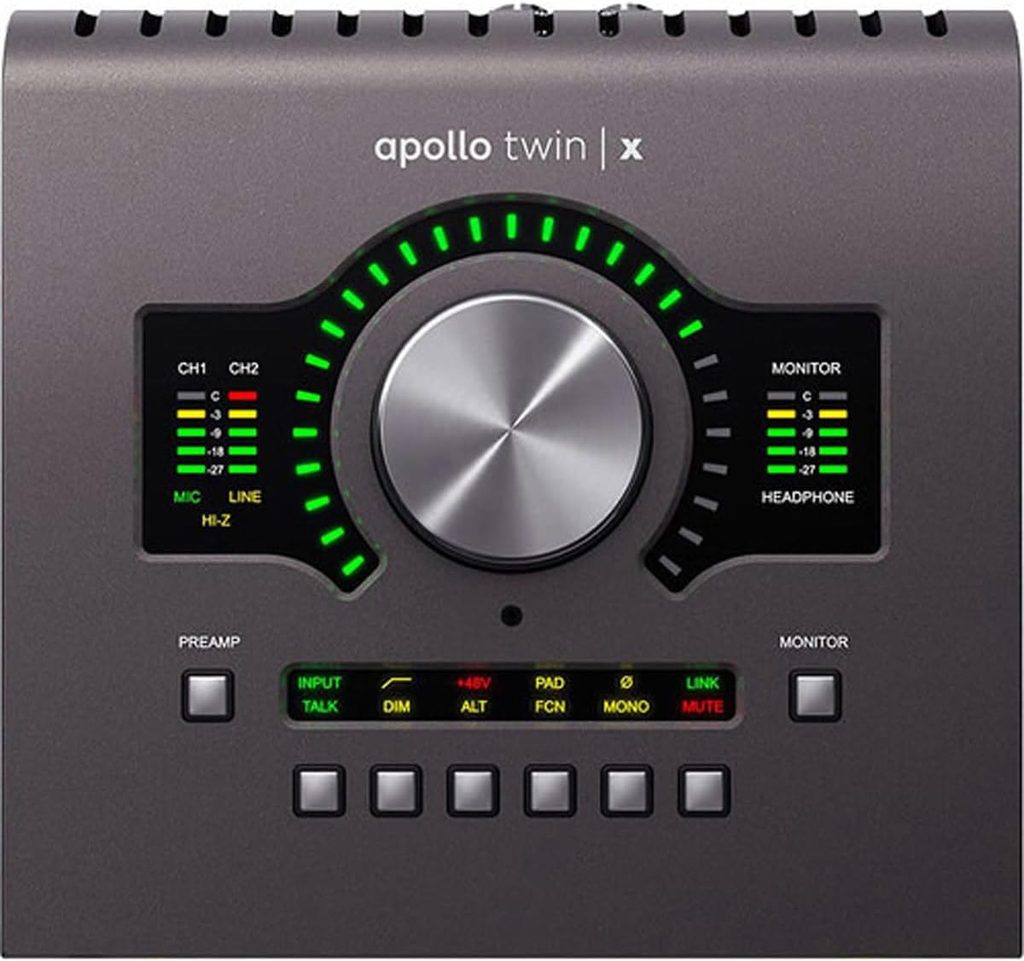
Unison preamp technology anchors a platform where hardware DSP meets evolving native alternatives.
The Apollo Twin X is a compact Thunderbolt interface built around Universal Audio’s Unison microphone preamps, onboard UAD-2 DSP, and integration with UAD Console software. The Twin X comes in Duo and Quad versions, distinguished by the amount of onboard DSP available for running UAD plug-ins. Pricing typically starts around $1,100 for the Duo.
Unison technology genuinely changes the preamp’s input impedance and gain behavior through software-controlled hardware interaction—a differentiating feature for tracking. The system adjusts input impedance to emulate classic microphone preamps, providing authentic signal-path characteristics. UAD native plug-ins now run on host processors, which shifts the value proposition toward Console-based low-latency monitoring and Unison tracking. The exact markup between Duo and Quad versions reflects DSP capacity differences, though bill-of-materials analysis requires documentation beyond official specifications. The hardware remains relevant for users prioritizing Apollo’s specific tracking workflow and plug-in ecosystem.
3. RME Audio Interfaces
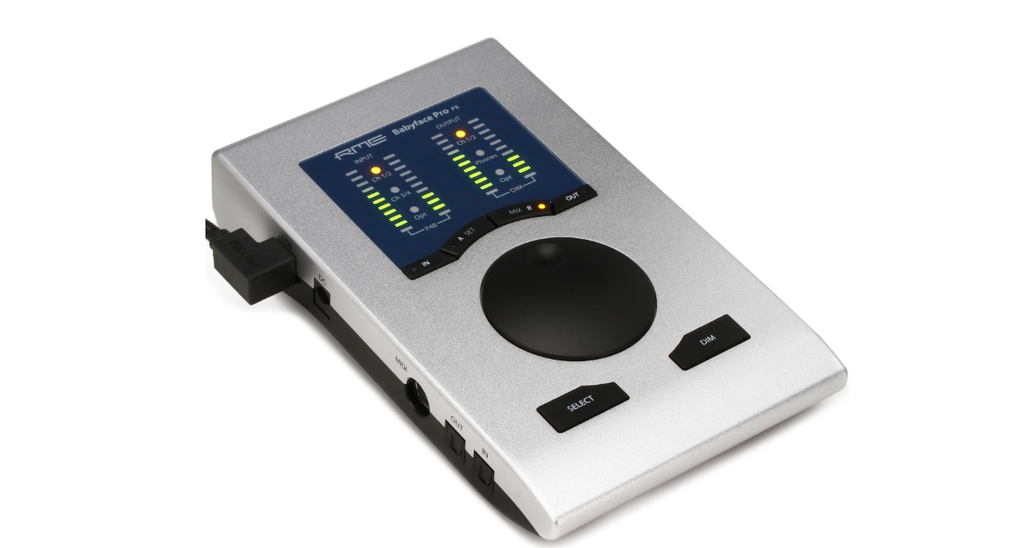
Precision engineering and long-term driver support define the RME approach to professional audio.
RME builds interfaces like the Babyface Pro FS, Fireface UCX II, and Fireface 802 FS with emphasis on TotalMix FX routing, SteadyClock FS clocking, and consistent driver support across Windows and macOS. The company’s interface range covers portable USB devices, rackmount systems, and models with ADAT, MADI, and other digital expansion options.
Latency performance depends on sample rate, buffer size, driver mode, computer hardware, and measurement method. Specific round-trip figures should not be generalized across every RME product. TotalMix FX provides comprehensive routing and DSP mixing capabilities, functioning as a digital Swiss Army knife for signal management. RME’s reputation for extended driver support and stable operation across OS updates reflects genuine engineering commitment. SteadyClock FS addresses jitter concerns, though no clocking technology can guarantee decades of OS compatibility. RME’s focus on driver longevity and stable operation distinguishes the brand in professional contexts.
2. MOTU M2
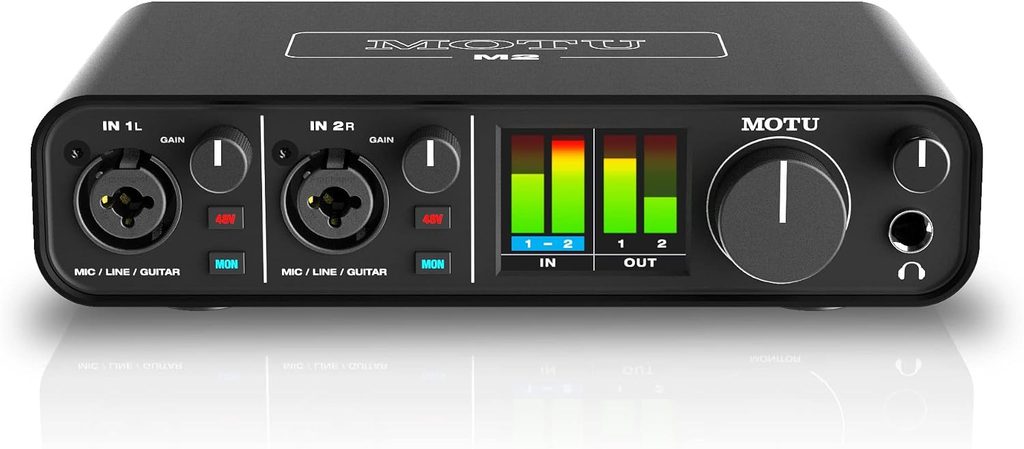
High-end conversion technology meets accessible pricing in a compact workhorse.
The MOTU M2, retailing around $200, integrates ESS Sabre32 Ultra DAC technology typically found in more expensive studio gear. MOTU specifies up to 192 kHz operation and 120 dB dynamic range for the main outputs. This performance level would have demanded thousands of dollars a decade ago; finding it at this price point changes expectations for affordable interfaces.
Functionality extends beyond pristine conversion. The M2 features two microphone/instrument/line inputs, MIDI I/O, loopback functionality for streaming and podcasting, and a color LCD meter display. Balanced DC-coupled outputs can support control-voltage applications when used with compatible modular-synthesis equipment, adding versatility beyond conventional audio-only interfaces. Direct monitoring keeps latency in check during tracking. MOTU has delivered pro-level fidelity at a price that democratizes high-quality recording, proving smart engineering beats marketing spin.
1. Audient iD Series
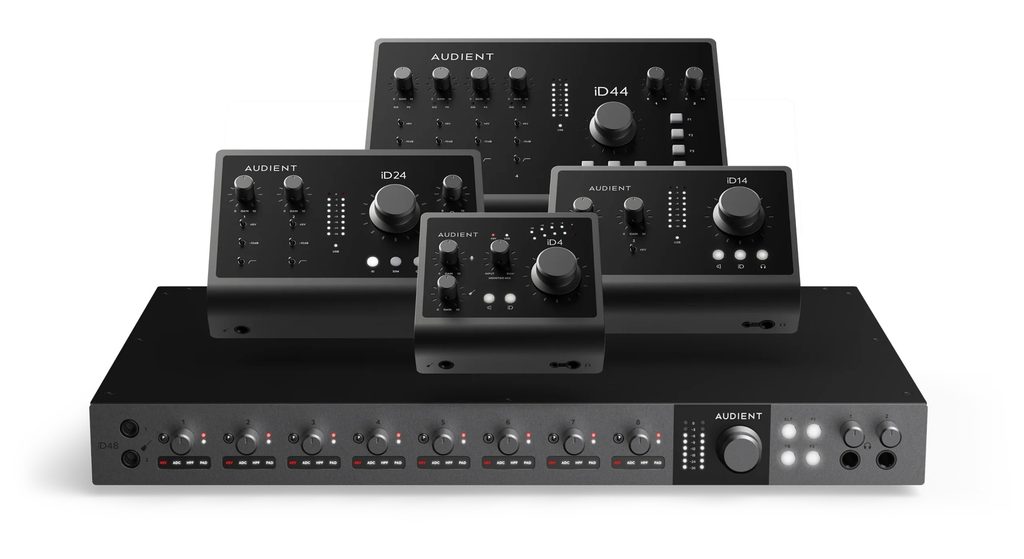
Console-derived preamps and expansion options build a foundation that grows with your studio.
Audient’s iD series includes compact USB interfaces like the iD4, iD14, and iD24, distinguished by console-derived microphone preamps, JFET instrument inputs, and monitor-control features. The iD14 and iD24 can add external microphone preamps through ADAT optical expansion, allowing studios to expand input count without replacing the base interface.
All-metal construction provides durability you’d expect from professional gear. Audient describes its microphone preamps as console-style designs, bringing transparency and headroom from larger-format console experience. The JFET input provides amplifier-like response for electric-guitar and bass signals, capturing the bite players expect. ADAT expansion means your initial investment remains relevant as your studio grows. Adding external preamps scales your setup without forcing complete gear overhauls every time you add microphones. Audient designs these units to empower studios that evolve, offering pro-level signal paths without prohibitive price tags.