


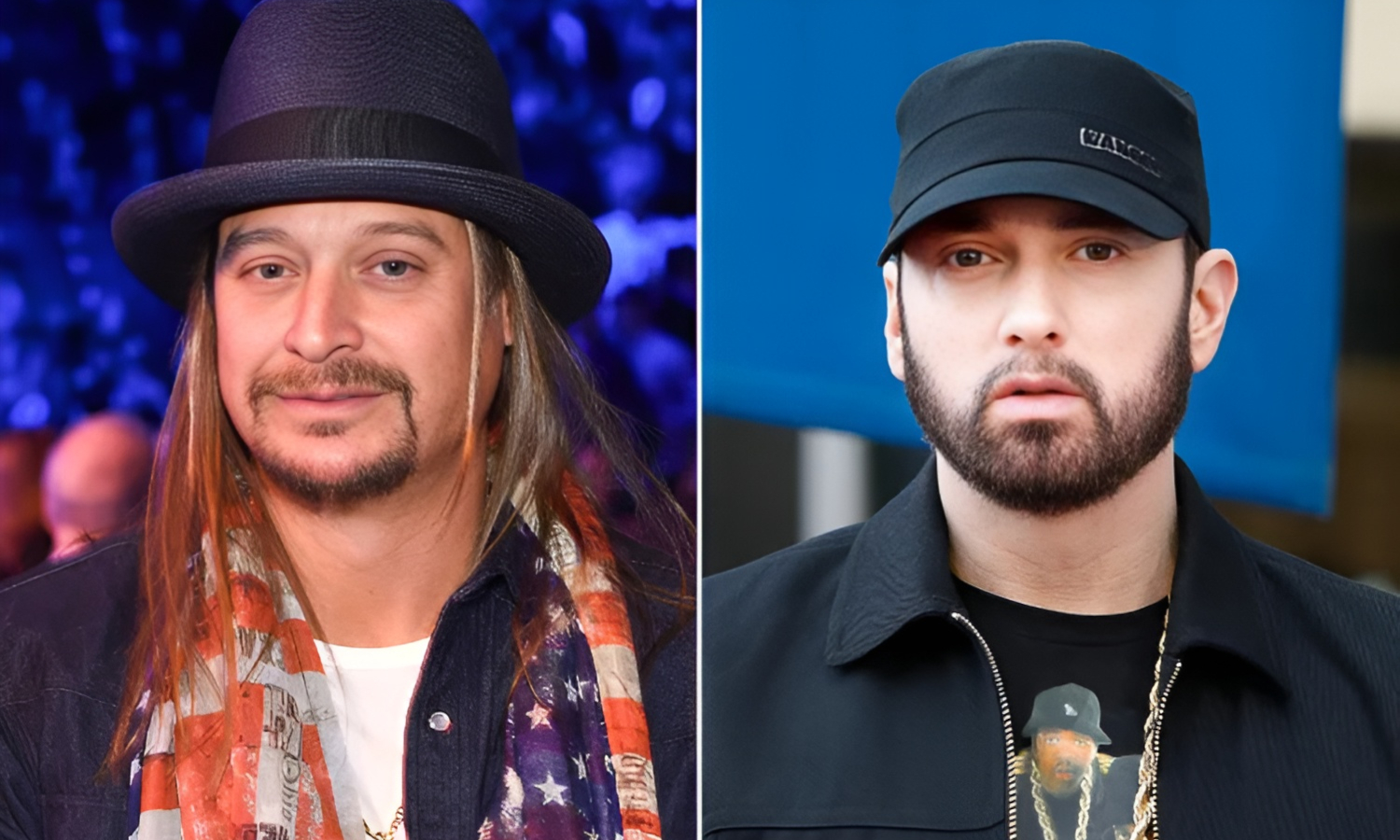
Two artists on opposite ends of the political spectrum. Same studio. Neither budging on their beliefs. When Eminem appeared on “Heal My Faith” from Kid Rock‘s October 17 faith-based album Halfway 2 Jesus, fan backlash arrived fast. Eminem’s response was deliberate: the collaboration was “not about choosing sides” but about making music with “my old friend.” He closed with “Praying for all of us.” In an era where every collaboration doubles as a cultural referendum, that’s either a brave statement or a complicated one — probably both.
A 40-Year Detroit Bond That Predates the Culture War
Their friendship has documented receipts, and those receipts predate any culture-war talking point by decades.
Kid Rock cameo’d in the “Berzerk” music video. Both contributed to Trick Trick’s “From the D” remix. Kid Rock told Billboard their friendship spans roughly 40 years — his words, “like 40 years,” not an exact count. Eminem’s verse on “Heal My Faith” reportedly revisits that shared ground, according to People — the Oakwood Apartments, Kid Rock attending an early Eminem set. Kid Rock said the verse summarized their history and reinforced how much the bond means to him. This is a friendship with a paper trail longer than most careers.
What You Need to Know About the Collaboration:
- “Heal My Faith” appears on Halfway 2 Jesus, Kid Rock’s 13th album, released October 17
- Eminem was initially linked to a different track, “7 Sins”; Lil Wayne ultimately filled that slot after a pre-release track change
- Kid Rock told Billboard the album centers on forgiveness, second chances, and healing division in the country
- Eminem’s verse calls Kid Rock his “brother, not my political enemy” — a lyric, per People, that addresses the controversy directly inside the music itself
- Kid Rock said he did not want to pull Eminem into his political world, and that the two discuss politics only occasionally
Eminem endorsed Kamala Harris at a 2024 Detroit rally and has publicly criticized Trump. That record is exactly why the collaboration generated friction. His verse draws the line clearly: artistic friendship and political alignment are different categories, and honoring one doesn’t require abandoning the other.
Kid Rock’s Pivot to Faith — and Why Eminem Fits the Narrative
Halfway 2 Jesus isn’t Bad Reputation — and that difference is the entire point.*
Halfway 2 Jesus marks a tonal departure from Kid Rock’s politically charged 2022 record Bad Reputation, shifting toward religious reflection and reconciliation. An album built around forgiveness and second chances gives Eminem’s appearance a thematic logic that extends beyond personal loyalty. Think of it less like a political co-sign and more like showing up to a faith-based album performance — you’re there for the person, not necessarily the sermon. Kid Rock confirmed to Billboard that the record was designed to address division in the country. Eminem’s presence, framed around brotherhood rather than ideology, fits that stated mission directly.
“There’s a lot of stuff we agree on, and we can have a laugh about what [we don’t].” — Kid Rock, per Billboard
The collaboration doesn’t resolve whether art and politics can ever be cleanly separated. It just shows two people willing to test that idea publicly — and stake their reputations on the answer. Whether the music itself holds up is a separate question. One worth asking.