


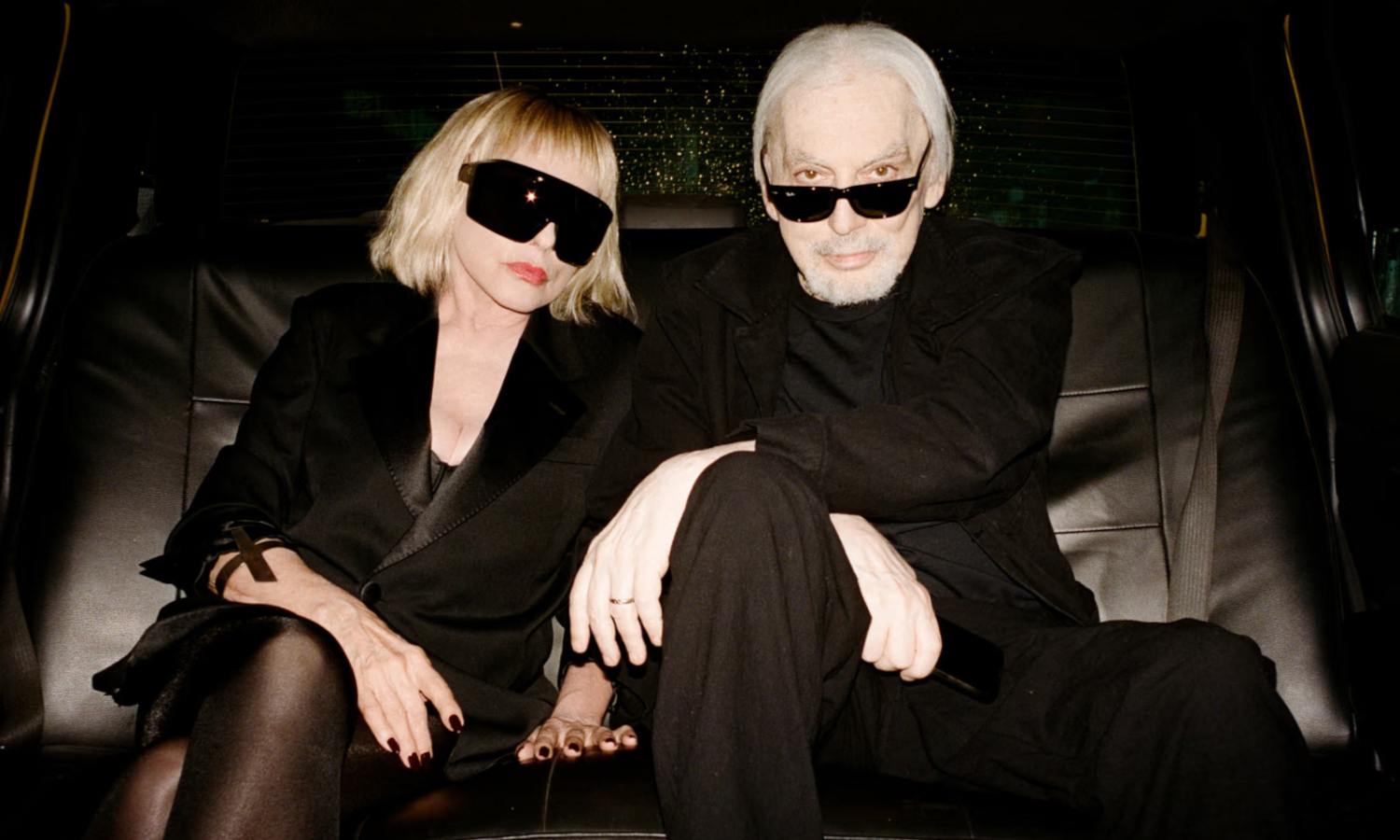
Making driving, jangly new-wave pop while carrying the weight of a bandmate’s illness takes a particular kind of defiance. That tension sits at the center of High Noon, Blondie’s 12th studio album — nine years after Pollinator, and the final record to feature Clem Burke, who died in 2025. Recording was underway before his death, and Burke’s presence is audible throughout. The music kept going. Burke kept playing. That matters more than any press release could say.
Spectral Eyes: The Smiths’ Architect Meets the Queen of CBGB
Johnny Marr wrote and performs on the lead single — an unlikely pairing that works exactly because nobody saw it coming.
“Spectral Eyes,” the album opener and first single, is built around Marr’s shimmering, jangly guitar work — the kind of melodic architecture that signals immediately where his instincts live. Burke’s drumming drives the track forward with the muscle that defined Blondie’s best moments, while Harry’s vocals land clean on a chorus that feels both instantly familiar and genuinely alive. According to Louder Sound, Harry described the record as “classic Blondie — an amalgamation of all our different influences and eras into something new.” “Spectral Eyes” earns that description without coasting on it. Marr also contributes backing vocals, adding another layer to what is already one of the band’s most compelling opening statements in years.
The Last Beat
High Noon carries Burke’s final recorded contributions, but Blondie refuses to let grief be the only story told here.
The collaborator list tells you everything about how Blondie still operates:
- Glen Matlock of the Sex Pistols wrote “Sleepwalking”
- Zach Condon of Beirut appears on the record
- Lucius members Jess Wolfe and Holly Laessig contribute alongside them
The band pulls from punk, new wave, dance, and Latin influences — the same cross-genre restlessness that put “Rapture” on pop radio in 1981 without a second thought. Producer John Congleton, who helmed Pollinator, returned for sessions in New York.
Chris Stein has expressed genuine uncertainty about future recordings following Burke’s death, according to Louder Sound. That ambiguity hangs over High Noon without suffocating it — making this album feel like both a creative arrival and a closing chapter. Start with “Spectral Eyes.” Burke’s final beat is exactly where this story begins, and it deserves to be heard in full.