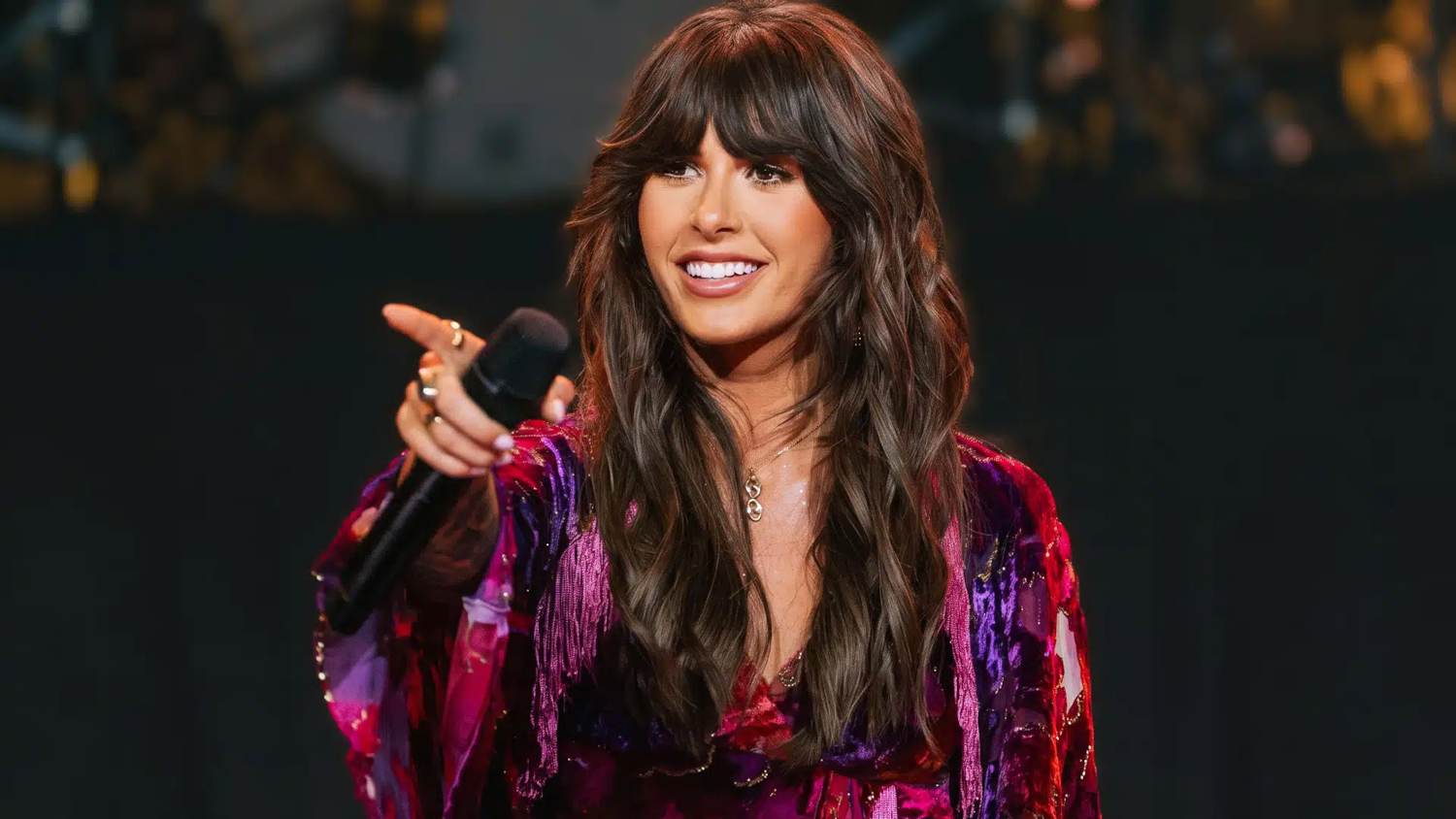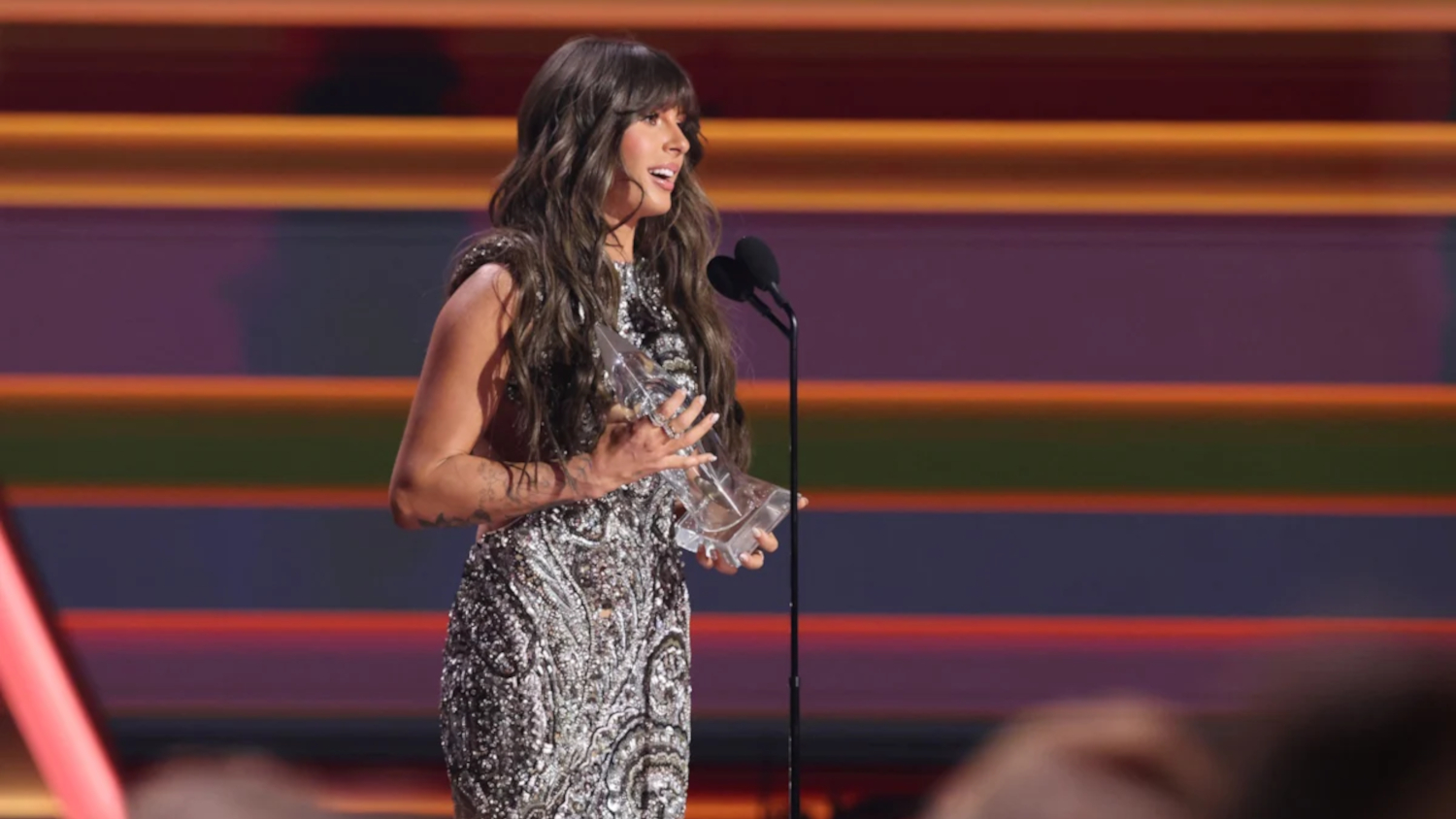



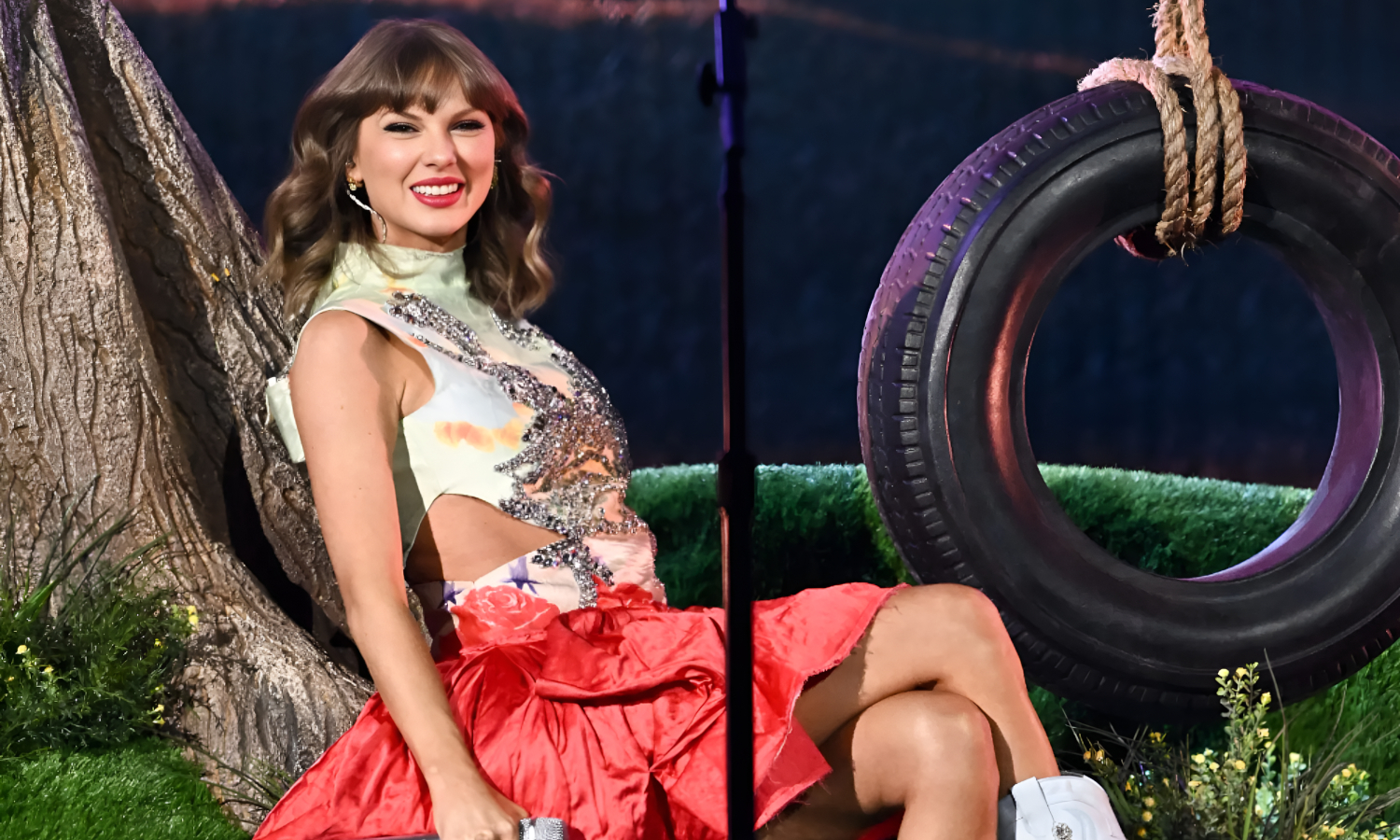
Thirteen years is a long time in country music. Careers launch, peak, and quietly fold. Nashville moves on. Then Taylor Swift walked out onto the CMA Awards stage on November 18, 2026 — her first performance there since 2013 — cradling a sky-blue jeweled guitar under a set built around a tire swing and a tree, bridging two decades of her career in a single medley. Keith Urban joined her on a ganjo (a six-string banjo hybrid, per Variety), and suddenly the room understood this wasn’t a nostalgia cameo. It was an argument.
Two No. 1s, One Stage, Zero Nostalgia
The staging read less like a setlist and more like a deliberate thesis statement about where Swift began and where she stands now.
Swift moved between “I Knew It, I Knew You,” her contribution to the Toy Story 5 soundtrack that reached No. 1 on country radio in 2026 according to People, and “Our Song,” her first-ever No. 1 country-radio hit, lifted from her 2006 self-titled debut. Those two songs are roughly twenty years apart. Putting them back-to-back wasn’t a walk down memory lane. It was a statement that the lane never closed.
A few facts worth having in one place:
- Swift’s 2026 CMA performance was her first at the ceremony since 2013 — a 13-year gap
- “I Knew It, I Knew You” originated as her Toy Story 5 soundtrack contribution
- The song received a CMA Single of the Year nomination; Ella Langley‘s “Choosin’ Texas” won the category
- Keith Urban joined Swift on ganjo during the medley, according to Variety
- Swift also presented the Willie Nelson Lifetime Achievement Award to Brooks & Dunn at the same ceremony
The Argument the Medley Was Making
Beyond the performance itself, the awards-circuit context surrounding “I Knew It, I Knew You” suggests Swift’s country return is anything but a one-off.
Consider the Grammy picture. According to Grammy.com, “I Knew It, I Knew You” — credited to Swift and Jack Antonoff — earned Grammy recognition alongside The Life of a Showgirl‘s Album of the Year nomination. The same song occupies country radio and mainstream awards prestige simultaneously. That’s not a genre pivot. That’s range.
Whether Swift ever truly left Nashville is a matter of perspective. What isn’t up for debate: her return arrived with a country music No. 1, Grammy nominations, and a performance that treated her entire catalog as one continuous story — not a sequence of reinventions.
For country music, the more interesting question isn’t whether Swift is back. It’s whether she ever really left.