



The 1990s neo-noir movement produced films like One False Move on budgets as low as $2.5 million, proving grit didn’t require CGI. These cinematic deep cuts challenged the decade’s glossy facade, delivering narratives as sharp and unpredictable as a forgotten B-side that hits harder than the A-list single. These selections weren’t studio darlings, but rather a collection of directors who saw through the noise, crafting twisted tales that still resonate. Think of it as finding that rare vinyl gem while everyone else is streaming algorithmic playlists. We’ve unearthed the essential films that defied expectations; prepare to recalibrate your internal compass, because this isn’t the nostalgia trip anyone expected.
10. One False Move (1992)
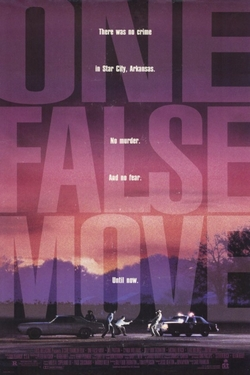
When Siskel and Ebert’s championing rescued a nearly-shelved thriller from video-bin obscurity.
Carl Franklin directed this neo-noir thriller, with Janusz Kamiński’s cinematography capturing its gritty atmosphere using natural light and handheld cameras for key road sequences, all on a modest $2.5 million budget. Kamiński’s talent, like an underground track going viral years later, was undeniable; within a year, he was shooting Steven Spielberg’s Schindler’s List.
Critics Gene Siskel and Roger Ebert championed it relentlessly, securing a limited theatrical run. Box office receipts barely cracked $1.6 million, but its enduring legacy proves that true value isn’t measured in ticket sales. It’s the kind of quiet, gut-punching power that sticks with you long after the credits roll.
9. Bound (1996)
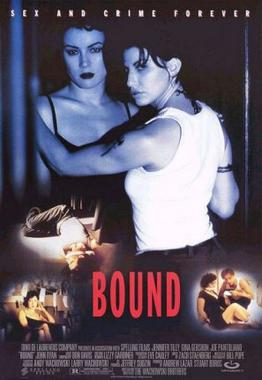
The Wachowskis rejected studio demands to gender-swap their lesbian lead, gambling on integrity over budget.
Directors Lana and Lilly Wachowski made it independently for about $6 million after studios insisted on changing Corky to a male character. Violet (Jennifer Tilly) and ex-con plumber Corky (Gina Gershon) conspire to steal $2 million in mob cash, their chemistry crackling through every frame.
Gershon fired her representatives for advising against the role; Tilly deliberately modulated her voice—”baby” tones with men, grounded register with Corky—to deepen Violet’s layered character. The film served as their ‘audition piece’ for The Matrix, proving stylized queer storytelling could deliver both artistry and commercial potential.
8. Light Sleeper (1992)
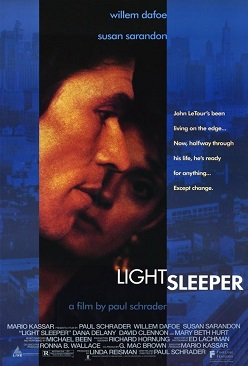
A New York film industry lockout accidentally gave Schrader studio-level crew at bargain rates.
Paul Schrader’s $5 million neo-noir follows John LeTour, a middle-aged drug courier navigating upscale clients for a boss transitioning from illicit drugs to legal cosmetics. His insomniac life unravels after reconnecting with troubled ex-girlfriend Marianne, pulling him deeper into Manhattan’s underbelly.
Schrader shot almost entirely at night, using empty streets, neon glow, and long static takes to mirror LeTour’s spiritual drift. An industry lockout allowed him to hire high-end crew—some fresh off The Godfather Part III—at reduced union rates, giving the film studio polish despite its $1 million box office return. Critics initially overlooked it, but it now stands as a vital entry in Schrader’s catalog of lost souls.
7. Deep Cover (1992)
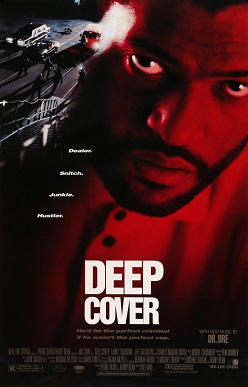
Originally conceived for a white lead, then repositioned for “niche” marketing—and accidentally became a hip-hop landmark.
Laurence Fishburne plays cop Russell Stevens Jr., whose undercover DEA work fractures his identity in ways director Bill Duke’s harsh lighting and tight framing emphasize. Though the film grossed around $16.2 million, its true legacy exploded from the title track: Dr. Dre’s first solo release post-N.W.A, introducing Snoop Doggy Dogg.
That single launched Death Row Records, building momentum for The Chronic and cementing West Coast hip hop’s foundation. The studio’s “niche” bet on a Black protagonist accidentally created one of the era’s most culturally significant neo-noirs.
6. Hard Eight (1996)
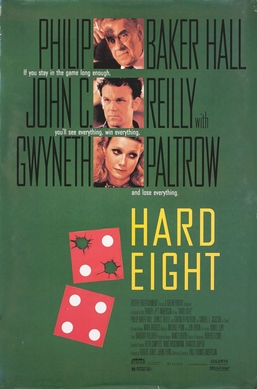
Anderson financed his own cut with credit cards after producers butchered his debut—then forced them to release it.
Paul Thomas Anderson’s original cut, titled Sydney, faced re-editing by producers who found its pacing too slow—a creative betrayal akin to watching a perfectly composed track get chopped into a jingle. Veteran gambler Sydney (Philip Baker Hall) mentors down-on-his-luck John (John C. Reilly) in casino hustles; their surrogate father-son bond shatters when Clementine (Gwyneth Paltrow) enters the picture.
Anderson captured gritty authenticity in real Reno casinos, using Super 35 film on a $2–3 million budget during a 28-day shoot. He then self-financed his own cut with credit cards, screened it at Cannes, and ultimately forced the studio to release his version, renamed Hard Eight. This tenacity launched Philip Baker Hall’s late-career prominence and secured Anderson’s artistic control for future projects.
5. After Dark, My Sweet (1990)
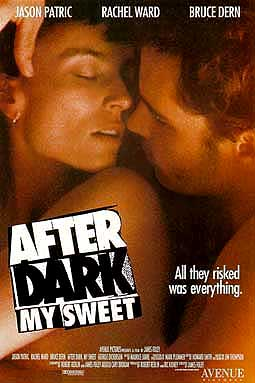
Roger Ebert declared it a masterpiece despite its $2.7 million box office flop.
James Foley’s 1990 adaptation of Jim Thompson’s novel follows Kevin “Kid” Collins, a mentally fragile ex-boxer and escaped mental patient who drifts into a kidnapping scheme in the California desert. Foley’s visuals, drenched in oppressive heat and stark natural light, feel like psychological weight—bleaching out the landscape and underscoring the characters’ inevitable self-destruction.
Jason Patric reportedly stayed semi-withdrawn throughout production to embody Collins’s profound isolation. The filmmakers’ refusal to compromise Thompson’s nihilistic vision with a tacked-on happy ending, a decision as stark as a desert highway, secured its enduring cult reputation despite grossing only $2.7 million against its $6 million budget.
4. The Grifters (1990)
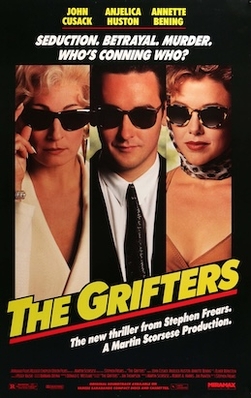
Huston spent hours in aging makeup to play a character as bleached and damaged as the film’s moral landscape.
Stephen Frears, with Martin Scorsese producing Jim Thompson’s novel adaptation, centered on veteran con artist Lily Dillon (Anjelica Huston), her estranged son Roy (John Cusack), and his manipulative girlfriend Myra (Annette Bening). Frears used tight close-ups to magnify the disturbing, quasi-incestuous tension between Lily and Roy, creating an unusually uncomfortable tone for its time.
Huston pushed for a bleached, haggard look, spending hours in makeup to appear older—earning an Academy Award nomination for Best Actress. Annette Bening’s audition as Myra was so aggressive and dangerous that Frears cast her immediately, rocketing her to stardom and an Oscar nod. Despite four Oscar nominations, the film’s $13 million budget was a gamble on nihilistic noir that Hollywood rarely takes.
3. A Simple Plan (1998)
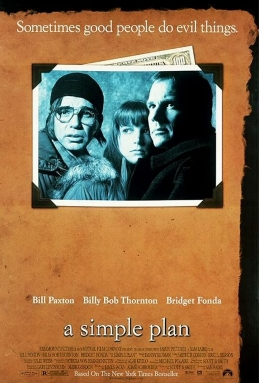
Raimi’s 55-day shoot in sub-freezing temperatures turned snow into a visual metaphor for moral rot.
Two brothers and a friend discover a crashed plane with $4.4 million in cash in Sam Raimi’s neo-noir thriller, based on Scott Smith’s novel. Their plan to hide the money until spring in rural Minnesota dissolves into paranoia and murder. Raimi uses bleak, snow-covered landscapes and increasingly blood-stained whiteness as visual metaphors for decay, trapping characters in their guilt.
The 55-day shoot in brutal, sub-freezing Minnesota and Wisconsin conditions cemented the film’s chilling authenticity. Billy Bob Thornton’s physical transformation for Jacob—neglecting hygiene and diet—delivers a visceral portrait of desperation. Despite near-universal acclaim and two Academy Award nominations, it grossed about $16.3 million against a $17 million budget.
2. The Last Seduction (1994)
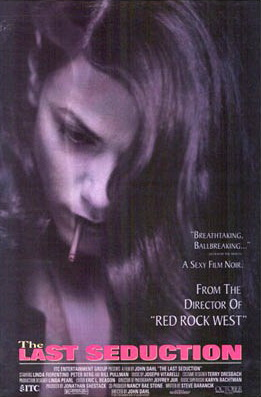
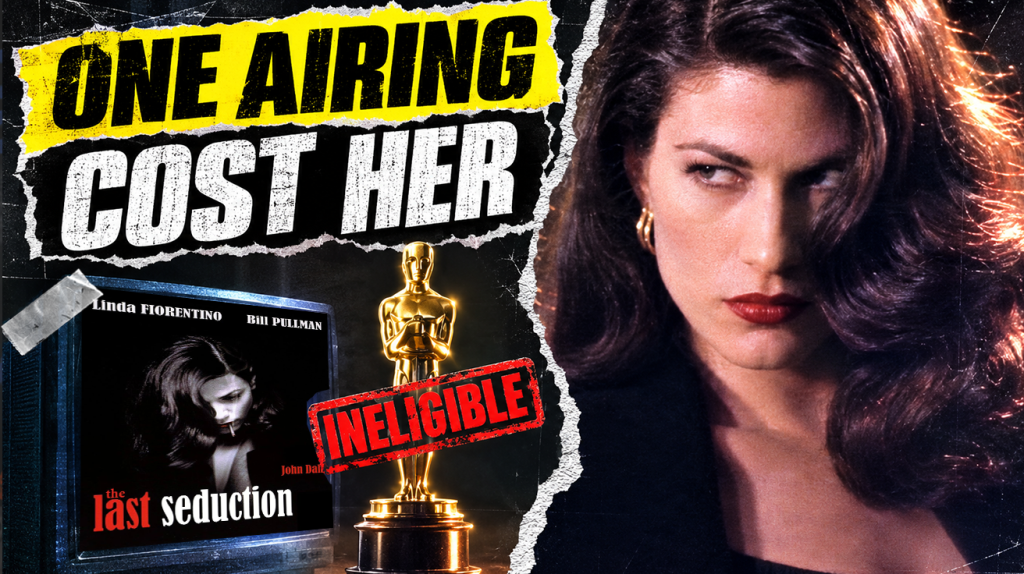
HBO’s early cable airing triggered an Oscar technicality that blocked Fiorentino’s expected nomination.
Linda Fiorentino plays Bridget Gregory, a ruthless femme fatale who steals $700,000 in drug money from her husband, flees to a small town, and manipulates naive local Mike into becoming her pawn. Director John Dahl uses classic noir visuals—harsh shadows, low angles—to portray Bridget as predatory while making the small town itself feel like a claustrophobic trap.
Despite Fiorentino’s New York Film Critics Circle Award win, the Academy ruled the film ineligible for Oscars because it aired on HBO months before its theatrical release. The technicality and subsequent failed lawsuit are often cited as having harmed Fiorentino’s career trajectory, overshadowing the film’s theatrical gross of roughly $5.8 million against its $2.5 million budget.
1. Exotica (1994)
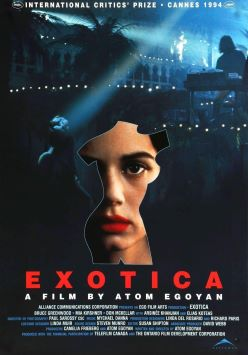
Miramax marketed Egoyan’s grief-soaked psychological drama as a steamy thriller—audience confusion ensued.
Atom Egoyan’s psychological neo-noir premiered at the 1994 Cannes Film Festival, triggering an international bidding war. Tax auditor Eric (Bruce Greenwood) regularly watches dancer Christina (Mia Kirshner) perform in a schoolgirl uniform under strict no-touch rules, gradually revealing a backstory rooted in grief and child loss.
Egoyan treats the Toronto strip club as a psychological landscape rather than a realistic sex venue, using soft, dreamlike lighting and long takes to emphasize voyeuristic distance. Miramax acquired U.S. rights and marketed it as a steamy erotic thriller, creating severe audience misalignment with its somber themes. Produced for about CAD $1.5–2 million with Canadian government grants, it grossed over $5 million in North America and is now regarded as a landmark of Canadian cinema.