



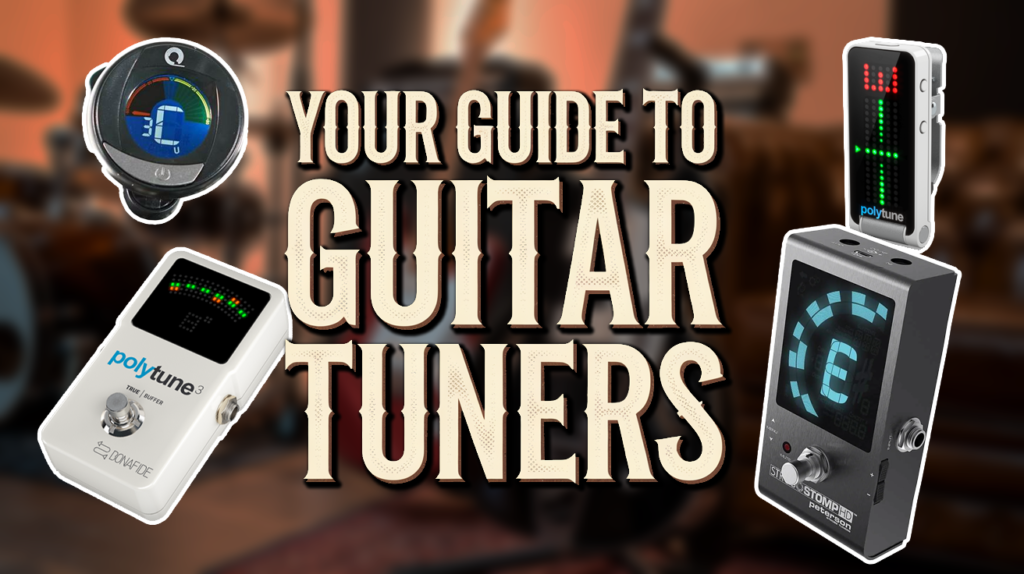
Keeping your guitar in tune is non-negotiable, whether you’re a beginner learning your first chords or a pro hitting the stage. But with so many options available, finding the right tuner can feel overwhelming. To make choosing easier, we’ve highlighted five popular types of guitar tuners, along with their features, pros, and cons.
This content may contain affiliate links. If you wish to support us and use these links to buy something, we may earn a commission.
5. Clip-On Tuners: Ordo A-T01
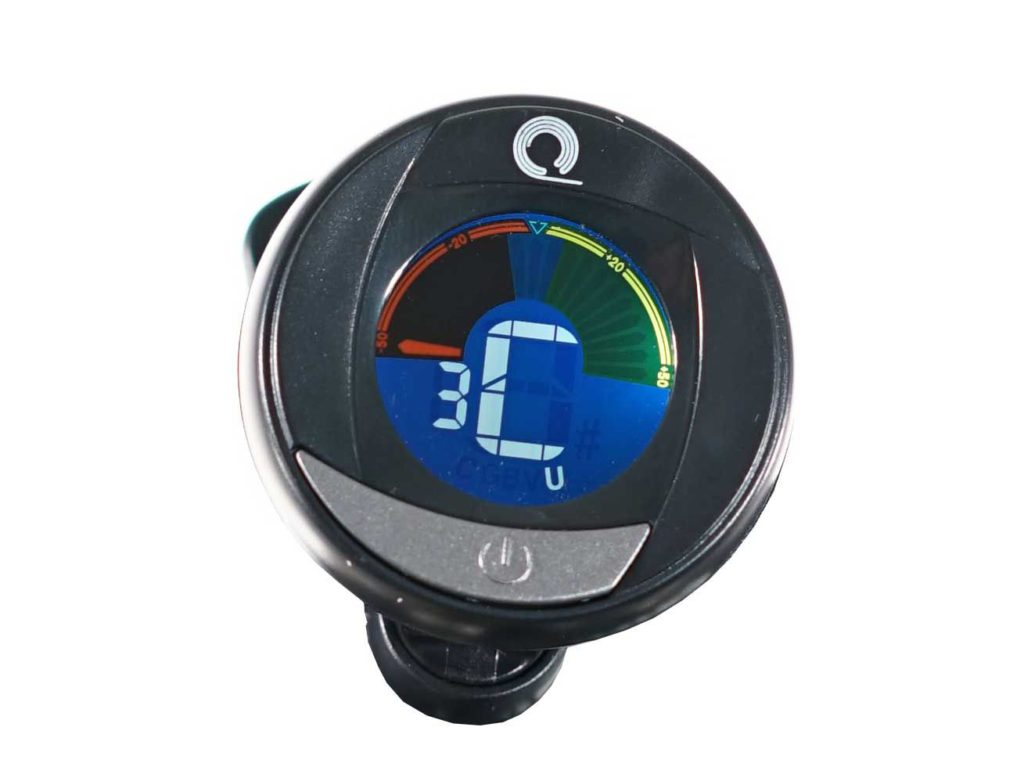
If simplicity and affordability are your priorities, clip-on tuners are an excellent starting point, and the Ordo A-T01 is a standout example. Priced at just $9.99, this tuner clips onto your guitar’s headstock, reading vibrations directly from the instrument. Its colorful display indicates whether your pitch is flat, sharp, or perfectly in tune. With both chromatic and guitar-specific modes, it’s versatile enough for standard tuning or exploring other notes on the chromatic scale.
Pros: Inexpensive, portable, and easy to use.
Cons: Limited features compared to more advanced models.
4. Advanced Clip-On Tuners: TC Electronic PolyTune
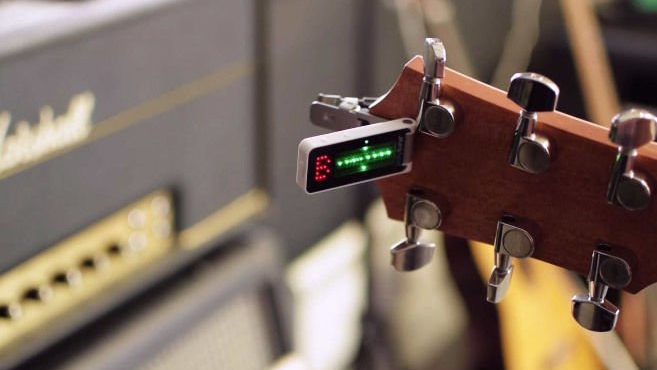
For guitarists ready to step up their game, the TC Electronic PolyTune Clip-On offers advanced features like polyphonic tuning. This means you can strum all six strings and instantly see which ones need adjustment—a huge time saver during setups. The bright display is easy to read, even in dim settings, and it supports alternative tunings and a strobe mode for precision. Priced around $40, it’s a solid upgrade from basic models.
Pros: Multi-string tuning, bright display, alternative tuning modes.
Cons: Costs more than entry-level clip-on tuners.
3. Pedal Tuners: Boss TU-3
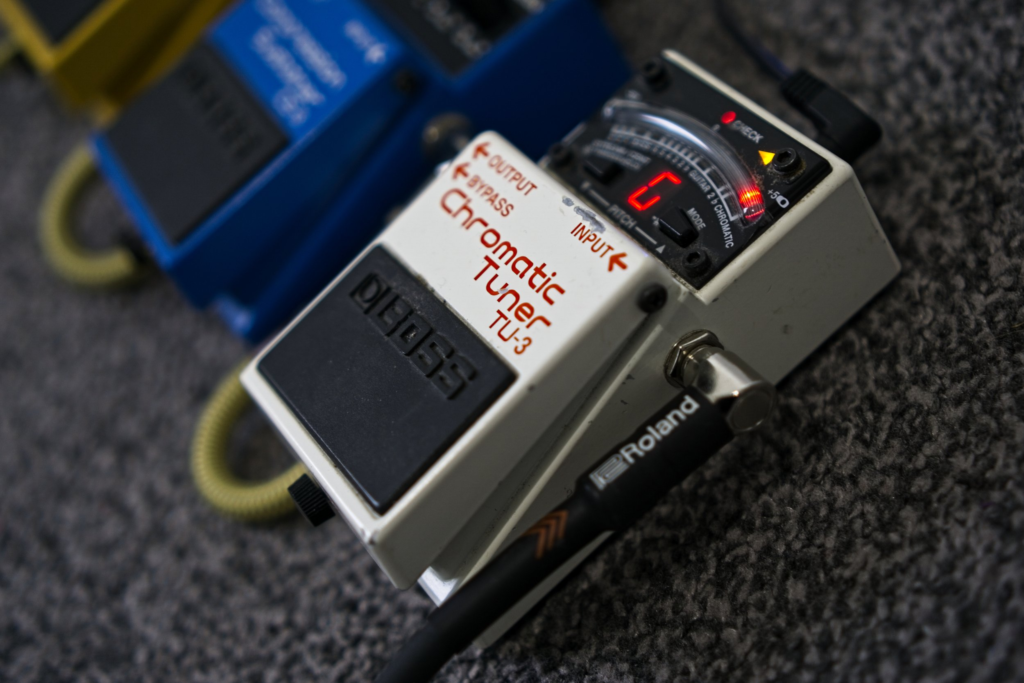
If you play live or have a pedalboard, the Boss TU-3 is a classic choice for pedal tuners. Renowned for its durability, it’s built to handle the wear and tear of touring. The TU-3 offers a clear display for quick tuning adjustments and features a mute function, so you can tune silently during performances. It’s compatible with both guitar and bass, making it a versatile addition to your rig. At around $40–$50, it balances performance with affordability.
Pros: Built like a tank, easy to use, mute function for quiet tuning.
Cons: Lacks advanced features like polyphonic tuning.
2. Advanced Pedal Tuners: TC Electronic PolyTune Pedal
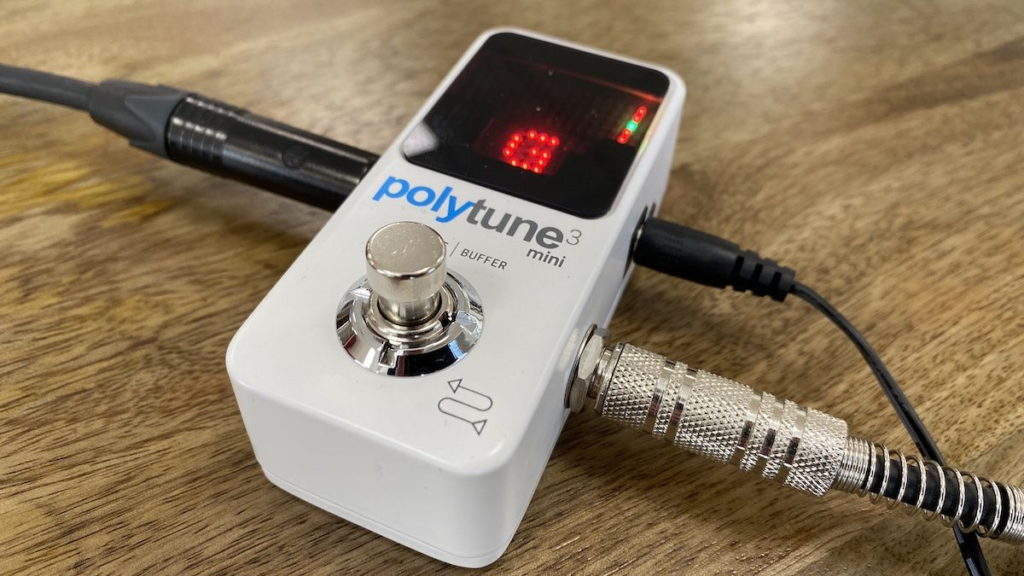
Bringing polyphonic tuning to the pedalboard, the TC Electronic PolyTune Pedal is a stage-ready solution for serious musicians. Like the clip-on version, it lets you check all six strings at once, but it’s optimized for live settings with a bright display and durable design. Additional features like a buffer switch and mute functionality make it even more versatile. At approximately $80, it’s a worthwhile investment for players who value speed and accuracy.
Pros: Polyphonic tuning, stage-friendly design, buffer switch.
Cons: Higher price compared to simpler pedal tuners.
1. The Ultimate Pedal Tuner: Peterson StroboStomp HD
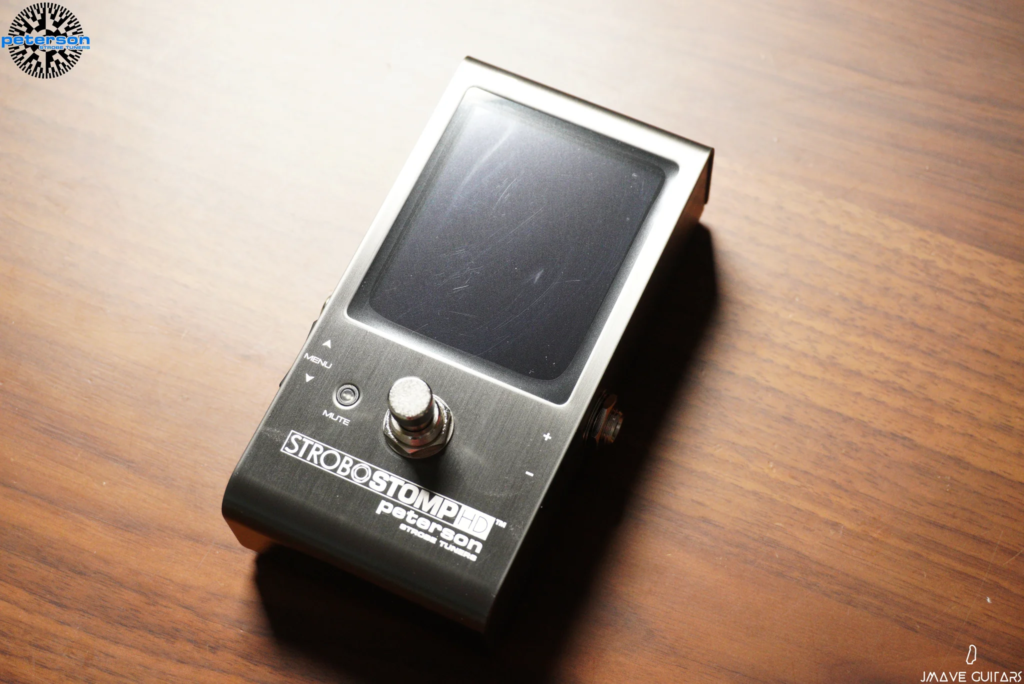
When only the highest level of accuracy will do, the Peterson StroboStomp HD is in a league of its own. Priced at $150, this tuner uses a rotating strobe display to indicate pitch deviations with unmatched precision. The strobe moves faster or slower depending on how out of tune you are, allowing for micro-adjustments. With multiple tuning modes and a large, highly visible display, it’s a favorite among professionals. While it may be overkill for casual players, its precision is invaluable for studio work and live performances.
Pros: Unrivaled precision, large display, multiple tuning modes.
Cons: Expensive and may exceed the needs of beginners.