



Digital piano shopping feels like scrolling through a particularly bad Instagram ad feed; all flash, no substance. Inflated bundles masquerade as deals while hiding mediocre instruments under piles of cheap accessories. The budget market splits cleanly into two camps: legitimate instruments that deliver genuine value, and elaborate packaging schemes designed to separate beginners from their money. This guide exposes the traps and highlights the real contenders, ensuring your first keyboard investment builds skills instead of regret.
This content may contain affiliate links. If you wish to support us and use these links to buy something, we may earn a commission.
Skip These
1. The ONE Smart Piano
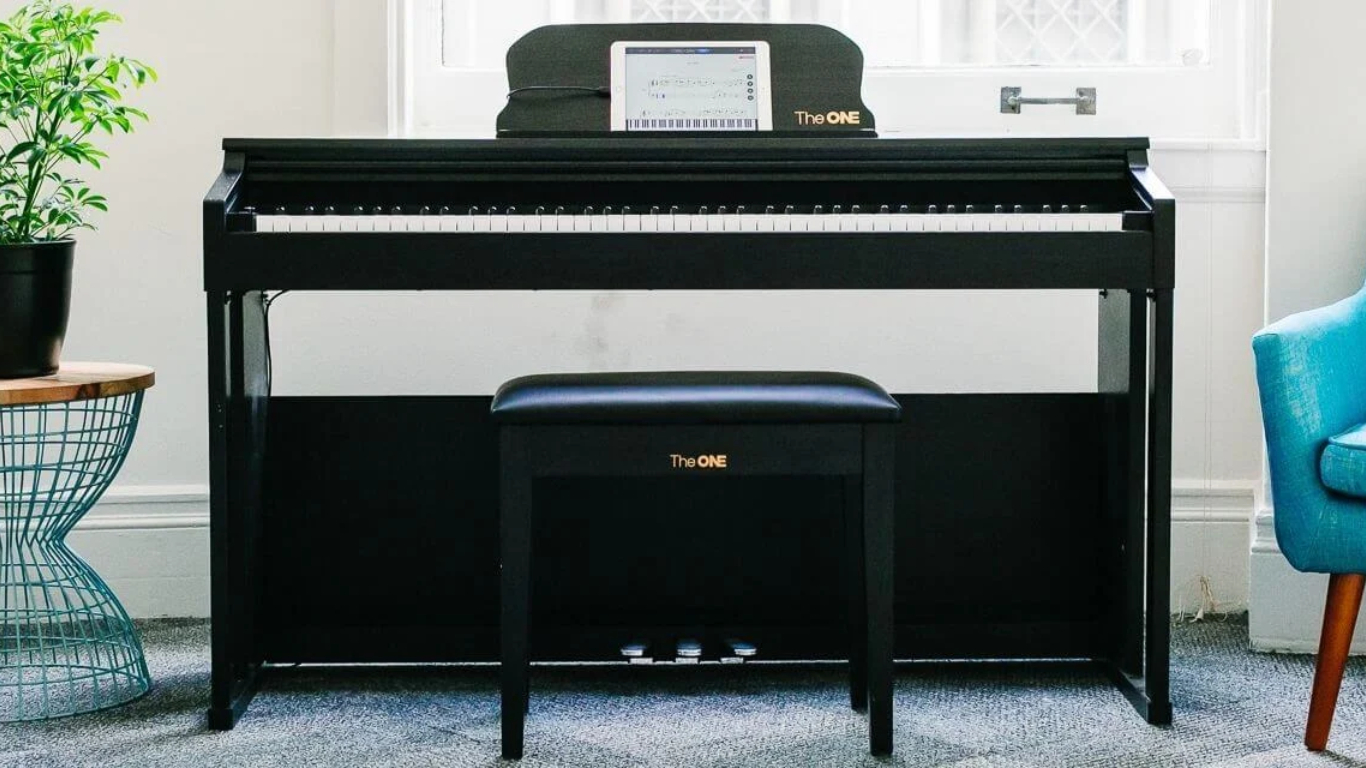
Keys light up, but technique stays dark.
The ONE is an 88-key digital piano built around illuminated keys and a companion app that gamifies practice. Keys glow to show which notes to play, turning sheet music into a high-tech version of Simon Says. Learning to cook by only microwaving pre-made meals gets you fed, but you never master knife skills or flavor balance. The same logic applies here: hitting lit buttons skips the foundational work of reading music, understanding rhythm, and building real technique. The ONE Music Group markets this visual-guidance system as a learning tool, though the approach prioritizes immediate note-hitting over long-term skill development. The instrument typically sells for approximately $799, a premium that reflects the app integration and LED system rather than superior piano mechanics.
2. Yamaha Arius Digital Piano Series
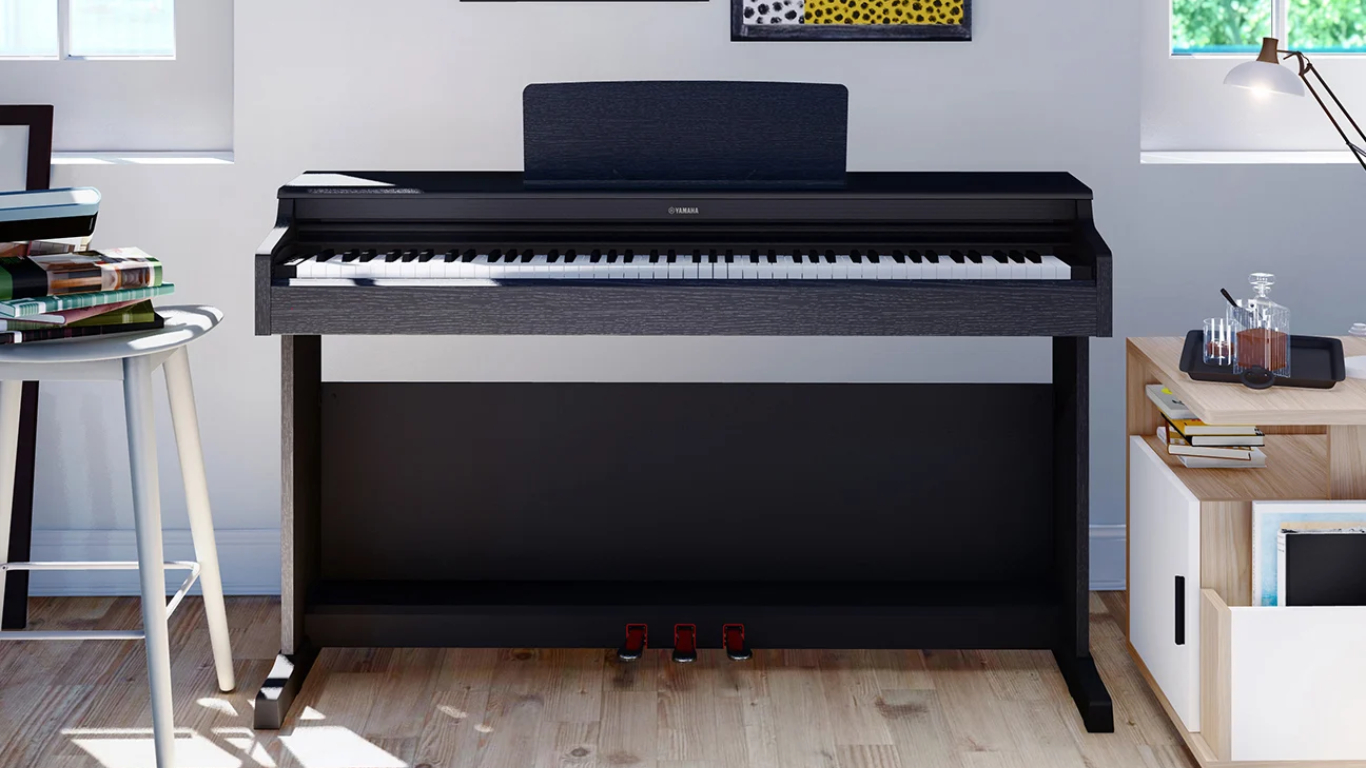
Furniture-style packaging adds cost, not capability.
The Arius line resembles upright pianos with fixed cabinets and built-in pedal assemblies, delivering visual permanence that portable instruments cannot match. That aesthetic comes at a premium; furniture-style Arius models commonly retail between $900 and $1,000, adding $400–$500 over comparable portable Yamaha instruments. Some Arius models use Yamaha’s entry-level action systems despite the higher price, meaning buyers pay primarily for the cabinet and integrated pedals rather than superior playing mechanics. The cabinet increases size, weight, and cost while the instrument’s core specifications remain similar to less-expensive portable alternatives. For players prioritizing performance over appearance, portable models with optional furniture stands deliver equivalent playability at lower total cost. The Arius line serves buyers who value visual integration in home decor, but it extracts a significant furniture tax from anyone focused purely on piano capability.
3. Strich 88-Key Weighted Digital Pianos
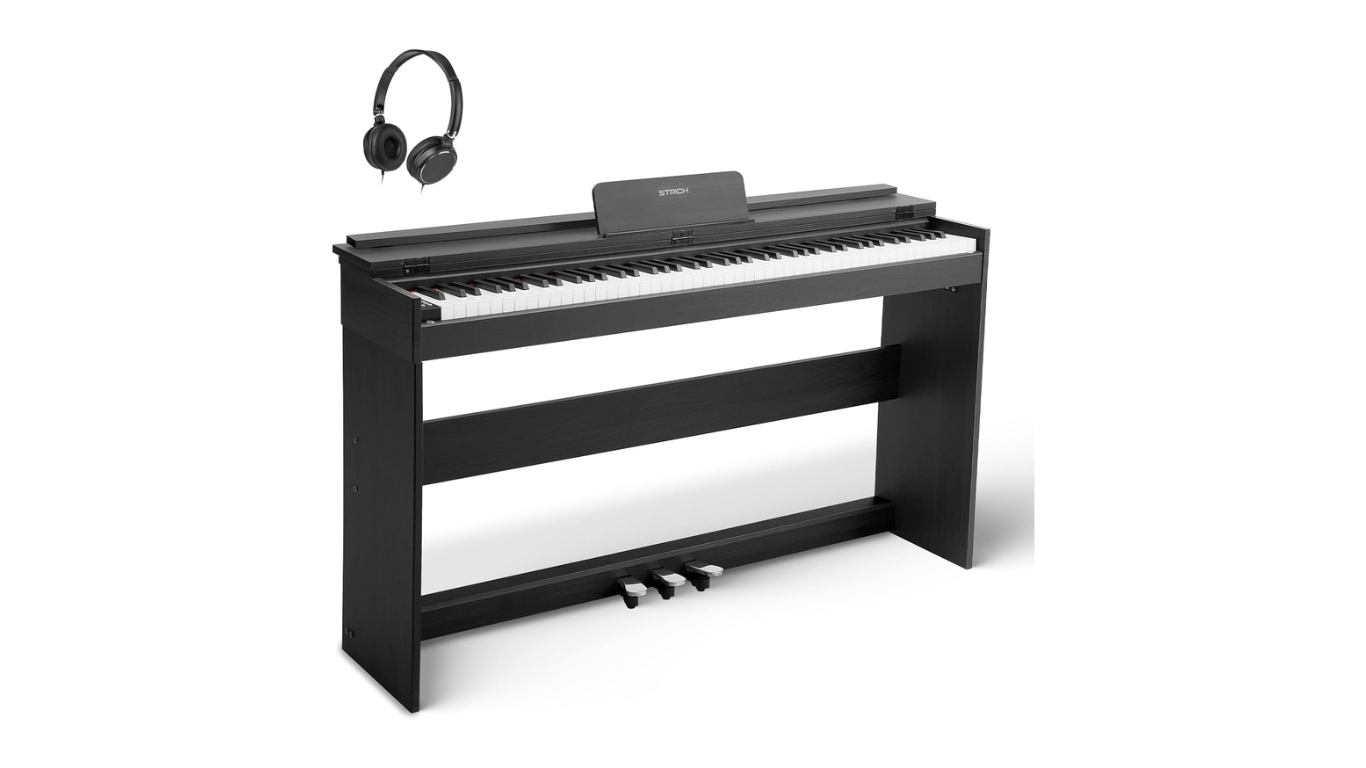
Bundles hide cheap instruments under accessory piles.
Marketplace listings for Strich 88-key digital pianos commonly include cabinets, triple pedals, benches, and headphones at prices between $280 and $400. The packages advertise “fully weighted” or “hammer action” keyboards, yet the generic mechanisms inside deliver stiff, uneven resistance that fails to mimic acoustic touch. Basic sound chips produce thin tone lacking the harmonic complexity of even mid-tier digital pianos. The accessories create visual bulk that suggests value, but stripping away the stand, bench, and pedals reveals an instrument worth significantly less than the bundle price. Specifications, warranty coverage, and after-sales support vary by listing, making it impossible to treat all Strich models as equivalent. Buyers drawn to complete packages should verify return policies and test the actual piano action before committing, because the attractive bundle pricing often masks underpowered core components.
4. Glarry 88-Key Weighted Digital Pianos
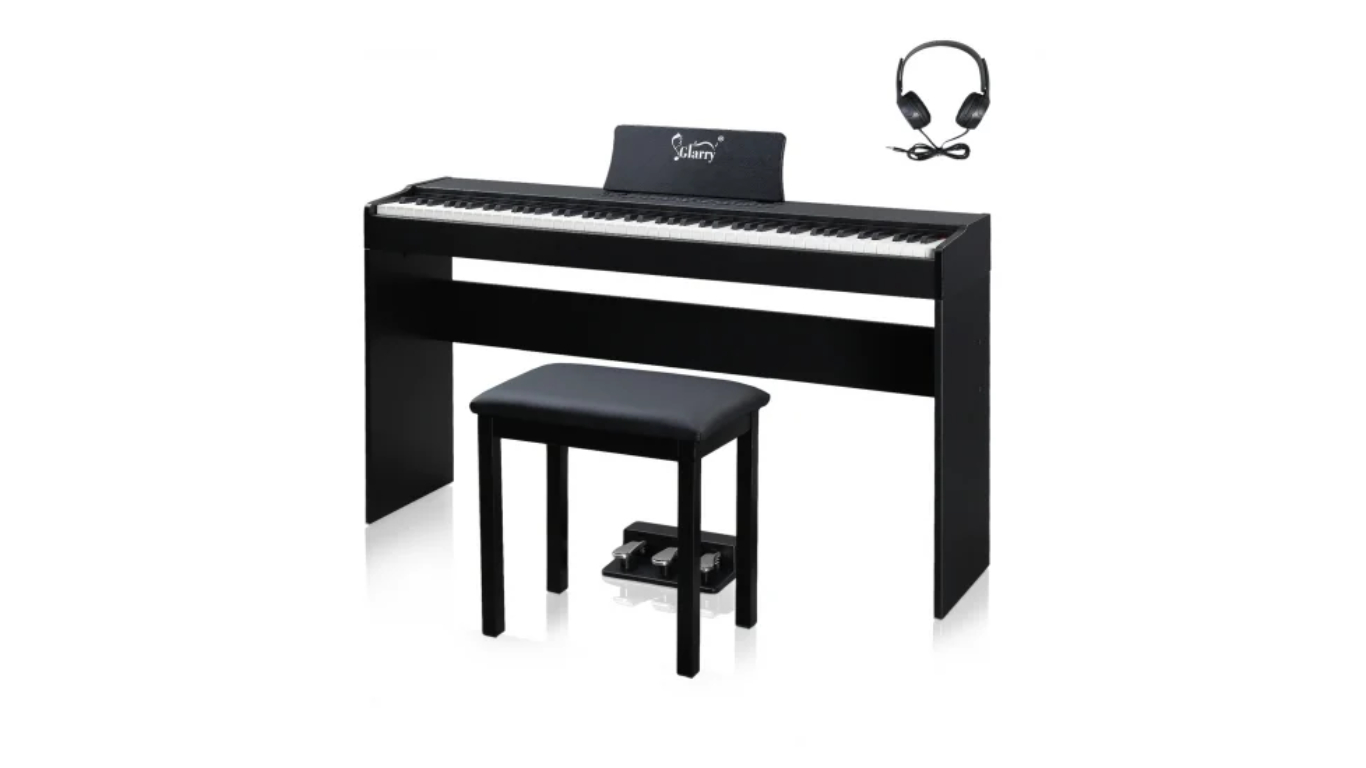
Designer knock-off appeal meets flip-phone sound quality.
Glary’s marketplace bundles advertise 88-key weighted or hammer-action keyboards with stands, benches, pedals, and headphones. The packages look impressive in listing photos, delivering the visual suggestion of a complete studio setup. Reality arrives during unboxing: generic actions feel stiff and hollow, while basic sound chips produce lifeless tone. Glary’s product lineup varies by listing, so model naming and exact specifications differ across marketplace sellers. The “built down to a price” approach prioritizes complete packages over instrument quality, leaving buyers with functional accessories attached to underwhelming pianos. Return and warranty terms matter critically here; anyone considering a Glary bundle should verify support coverage and test the actual keyboard action before assuming the attractive package delivers equivalent playing experience to established-brand instruments.
5. UISCom 88-Key Weighted Digital Pianos
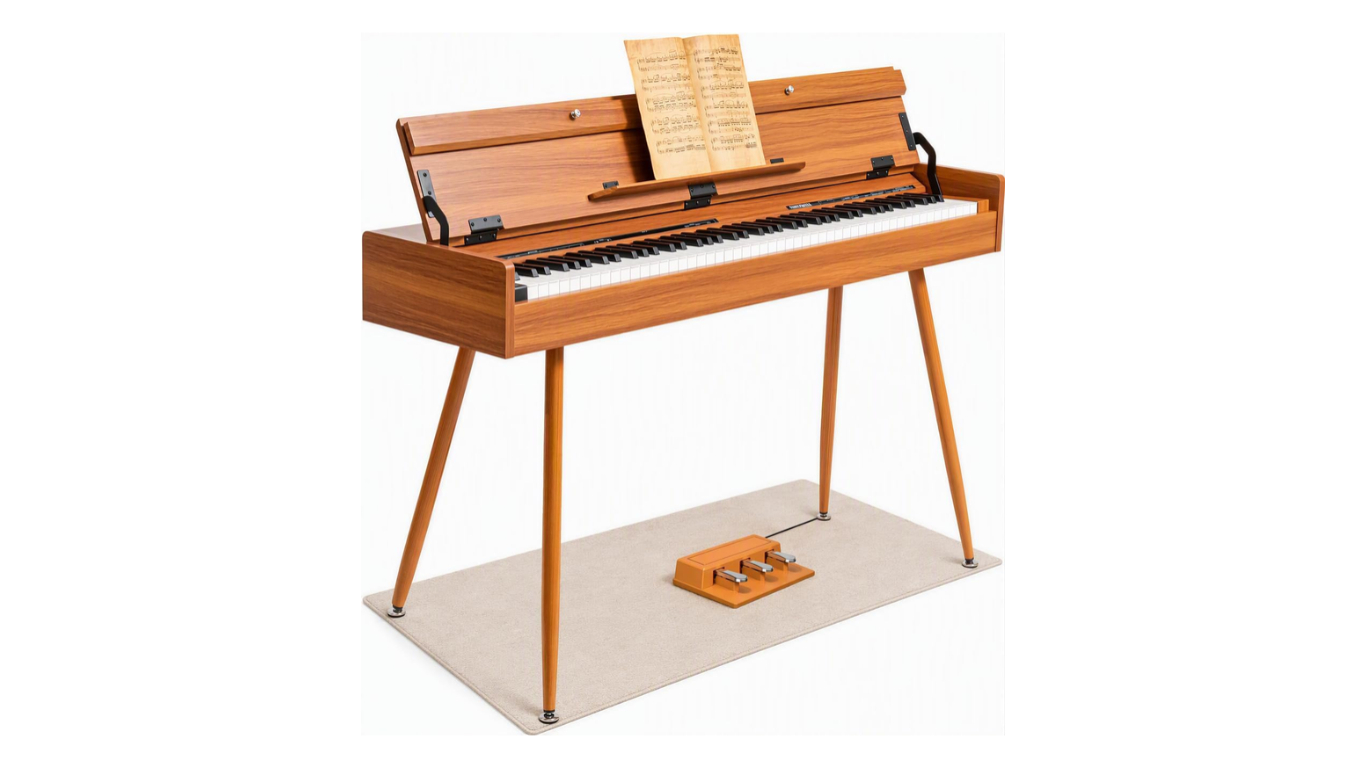
Marketplace bundles sell the sizzle, not the steak.
UISCom appears in marketplace listings for 88-key digital-piano packages advertised with weighted keys, cabinets, multiple pedals, benches, and headphones. Bundles typically retail between $280 and $400, promising complete setups at prices well below established brands. The instruments use generic, off-the-shelf actions that deliver uneven resistance and hollow feel compared to purpose-built piano mechanisms. Sound chips produce basic tones lacking the harmonic depth and dynamic range of mid-tier digital pianos. USCom represents the broader category of marketplace brands rather than a single standardized product line, meaning specifications and quality vary by listing. Buyers should identify the exact model, verify warranty coverage, and confirm return policies before purchasing, because the low bundle price often reflects component quality rather than hidden value.
6. Yamaha P-225 Deluxe Furniture Bundle
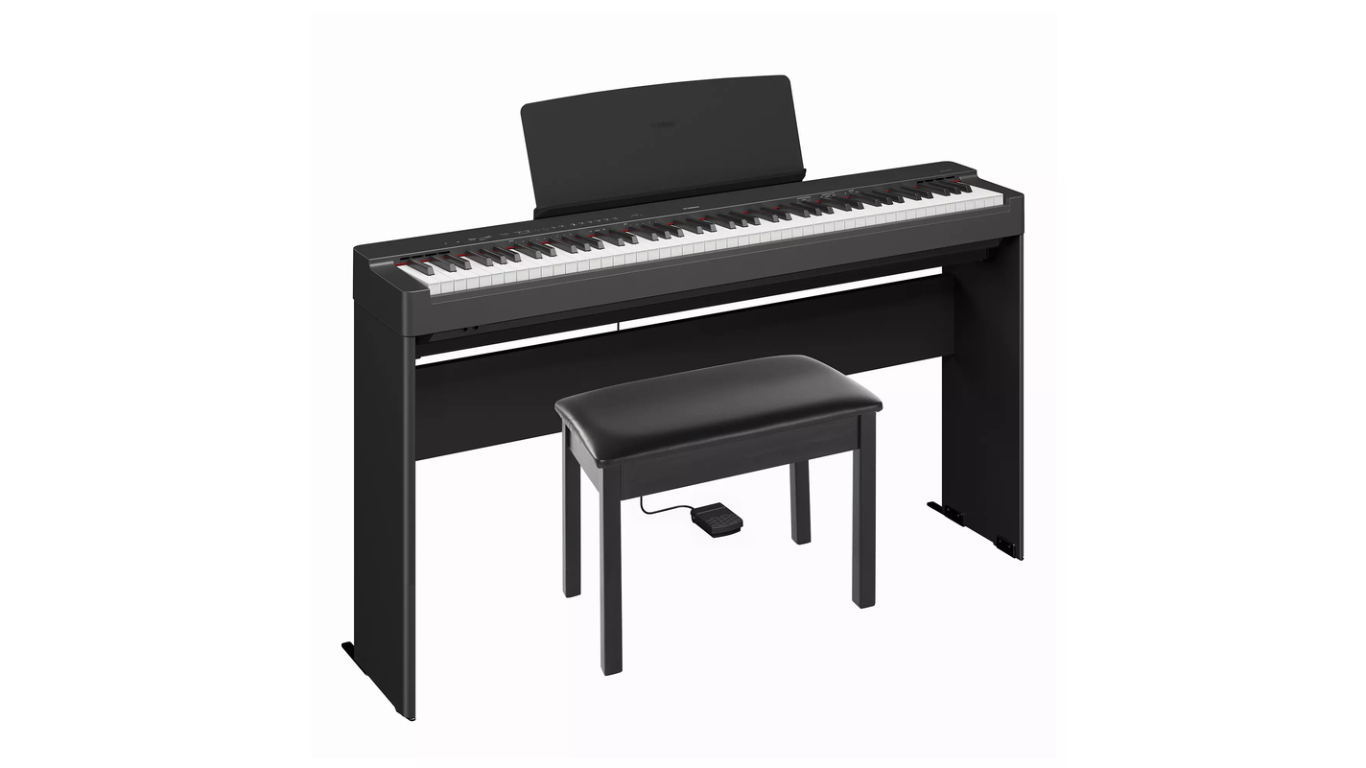
Convenience markup transforms portable value into fixed-furniture pricing.
Yamaha’s deluxe bundle includes the P-225, matching furniture stand, piano bench, music rest, and sustain foot switch. The package converts the portable instrument into a more permanent home setup while adding coordinated appearance and seating. Yamaha lists the combined piano-and-stand weight at 45 lb 3 oz, compared with 25 lb 6 oz for the piano alone. Bundle retail pricing appears near $920, though exact figures vary by color, market, and seller. Purchasing the components separately typically costs $90–$110 less than the bundle, meaning the convenience and coordinated aesthetics carry a premium. Buyers prioritizing portability or budget flexibility should compare bundle pricing against separate accessory purchases, because the furniture-style package increases both cost and permanence while the core P-225 specifications remain identical across configurations.
Grab These
1. Yamaha P-225
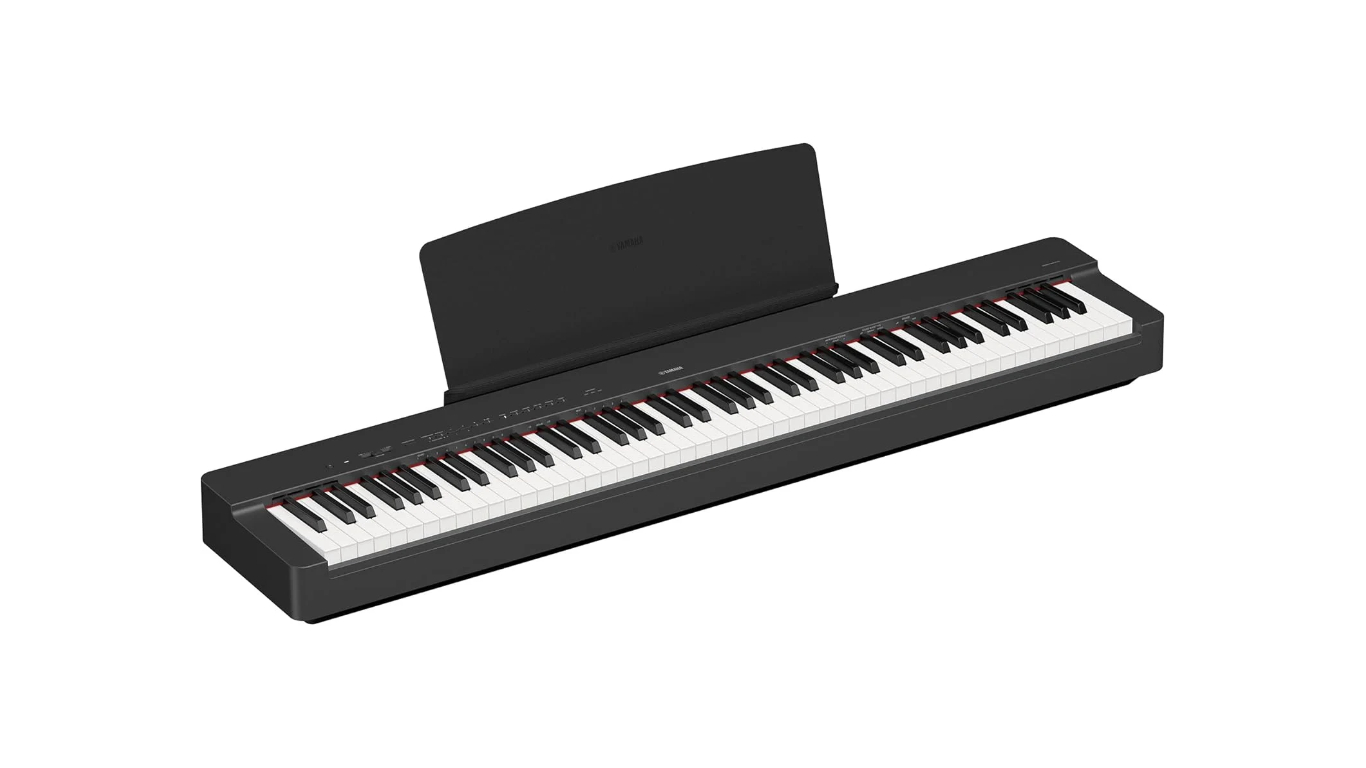
Concert-grand samples meet apartment-friendly portability.
This 88-key portable digital piano integrates Yamaha’s Graded Hammer Compact keyboard, CFX concert-grand piano voice, and VRM Lite technology that models the tonal shifts of an acoustic grand. Weighing 25 lb 6 oz, the P-225 moves easily between practice spaces without sacrificing weighted touch or sound quality. Yamaha’s CFX voice delivers detailed tone that doesn’t collapse into flatness under sustained play. Bluetooth audio connectivity eliminates cable clutter, while compatibility with the optional L-200 stand and LP-1 three-pedal unit allows permanent or portable setups. Retail listings show prices around $750–$770, positioning it as a serious instrument for beginners who want foundation-building tools rather than shortcuts. The GHC action provides piano-style resistance that translates directly to acoustic playing, unlike lighter mechanisms that feel closer to toy keyboards than real pianos.
2. Roland FP-30X
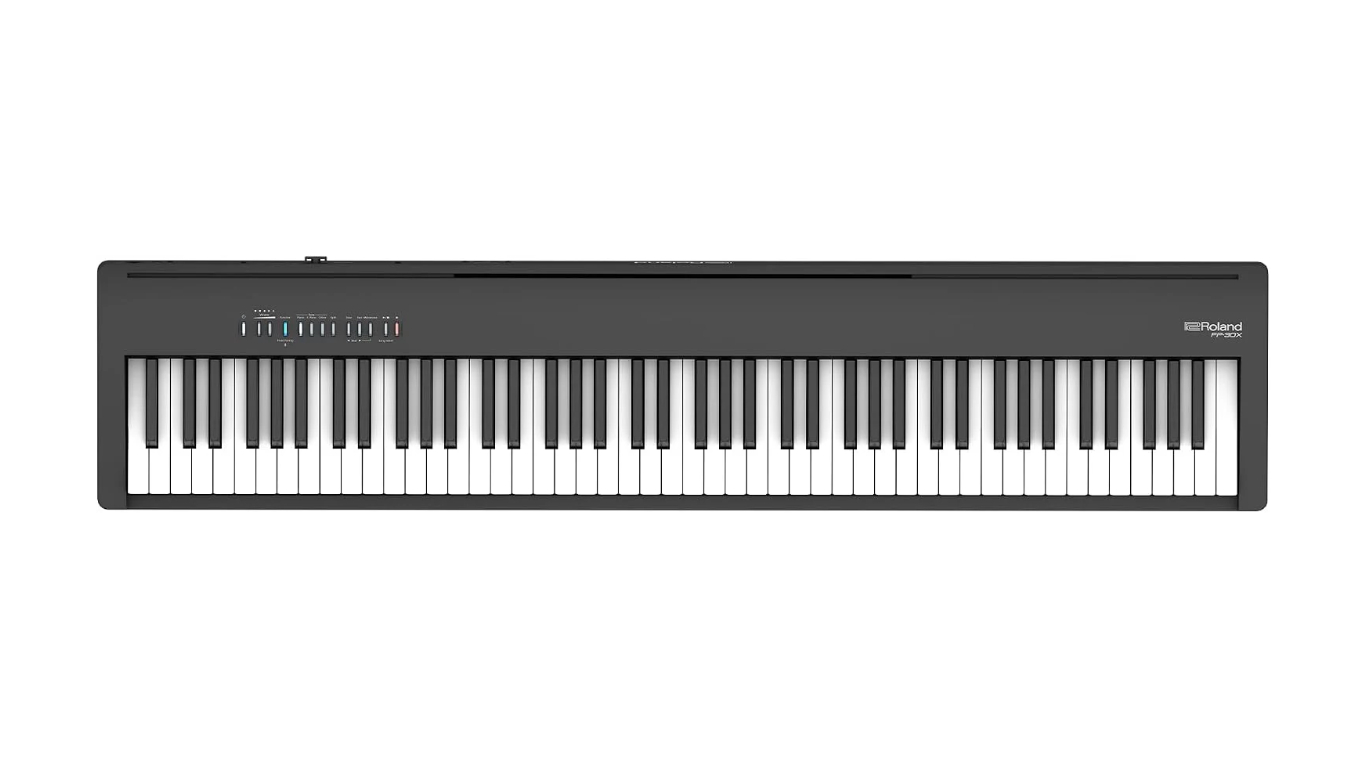
256-note polyphony in a 33-pound frame.
Roland’s FP-30X packs the PHA-4 Standard keyboard with escapement and ivory-feel surfaces into a portable 88-key chassis. The sound engine offers 256-note maximum polyphony and 321 total tones, allowing complex passages and layered sounds without note-stealing or cutoff. Bluetooth audio and MIDI plus USB connectivity deliver flexibility that older models require dongles and adapters to match. The stereo speaker system, rated at 11 W × 2, pushes enough volume for small-room practice and intimate performances. Retail listings commonly show the FP-30X near $650, though pricing varies by seller and date. Roland’s KSC-70 stand and KPD-70 pedal board convert the portable instrument into a console-style setup. The combination of escapement action, generous polyphony, and connectivity options creates a value proposition that challenges instruments priced significantly higher.
3. Yamaha P-145
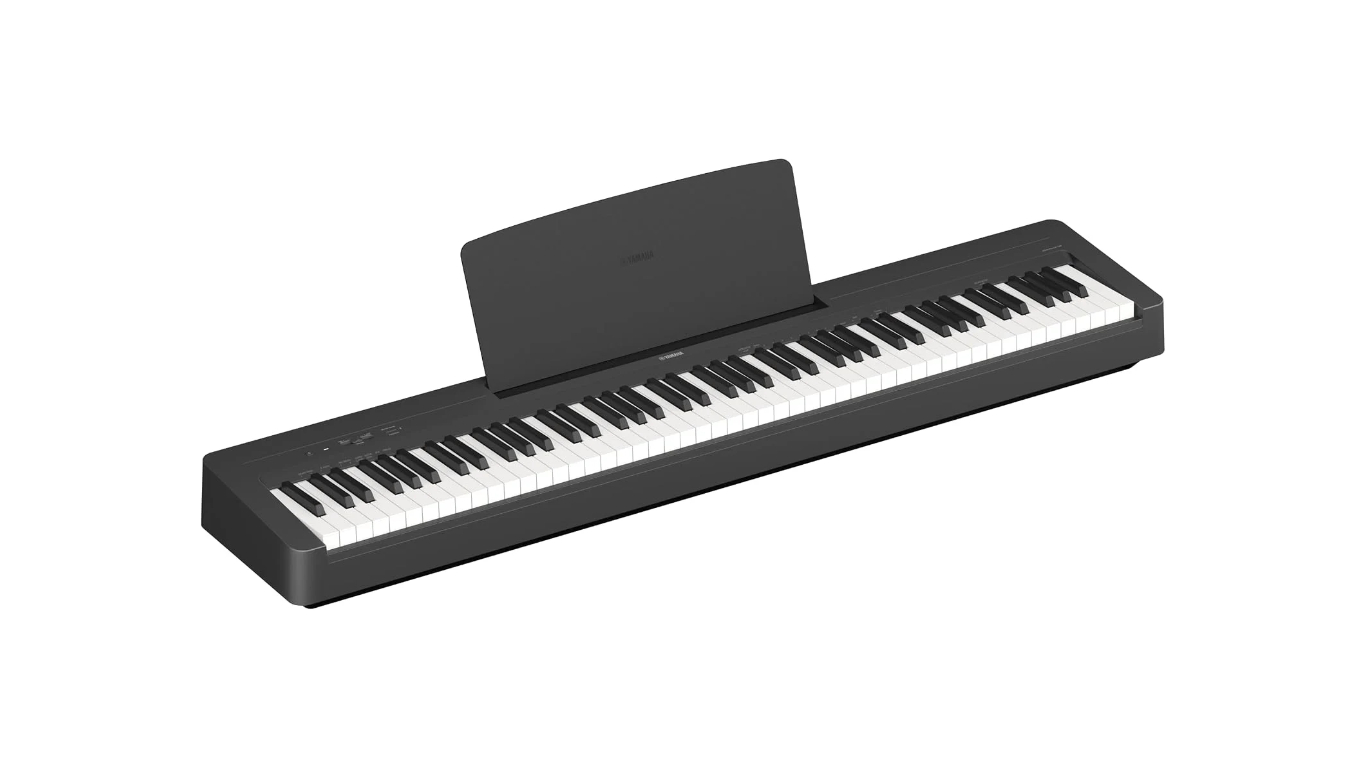
Entry-level portability without the furniture markup.
The P-145 is an 88-key portable digital piano positioned at the entry level of Yamaha’s P Series. Its compact design eliminates the bulk and weight of furniture-style instruments, making storage and transport practical for small spaces and frequent movers. Yamaha lists compatible stands and pedal options that allow customization without locking buyers into permanent configurations. Regional models may use different action systems; the P-145BT specification lists Yamaha’s Graded Hammer Compact keyboard. Retail listings show pricing around $470–$530, varying by model variant and seller. The P-145 serves beginners seeking legitimate Yamaha build quality and sound without furniture-style premiums or advanced features they won’t immediately use. Its portability advantage matters most in apartments, shared housing, and situations where floor space changes regularly.
4. Kawai ES120
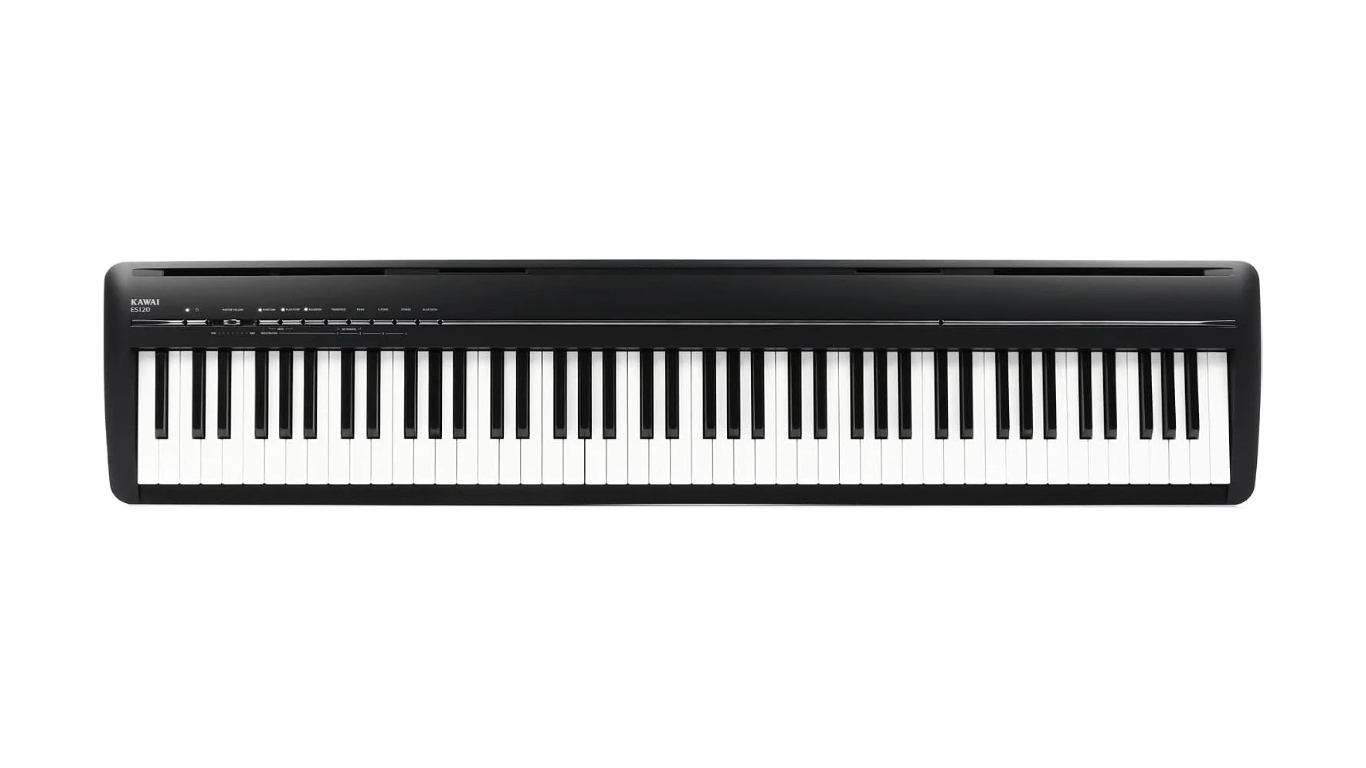
Responsive Hammer Compact action in a lesson-ready package.
Kawai’s ES120 is an 88-key portable digital piano built around the Responsive Hammer Compact action, designed to deliver graded, piano-style resistance in a transportable chassis. The action prioritizes touch response for players who want acoustic-like feel without upright or grand dimensions. Optional stand and pedal accessories allow the ES120 to function as either a portable instrument or a more permanent home setup. Retail pricing typically appears near $850, though exact figures vary by region and seller. The ES120 targets students and home players who prioritize key action quality over feature count, making it a practical choice for lesson-focused practice. Kawai’s compact action mechanism competes directly with Yamaha’s GHC and Roland’s PHA-4 systems in the portable 88-key category.