


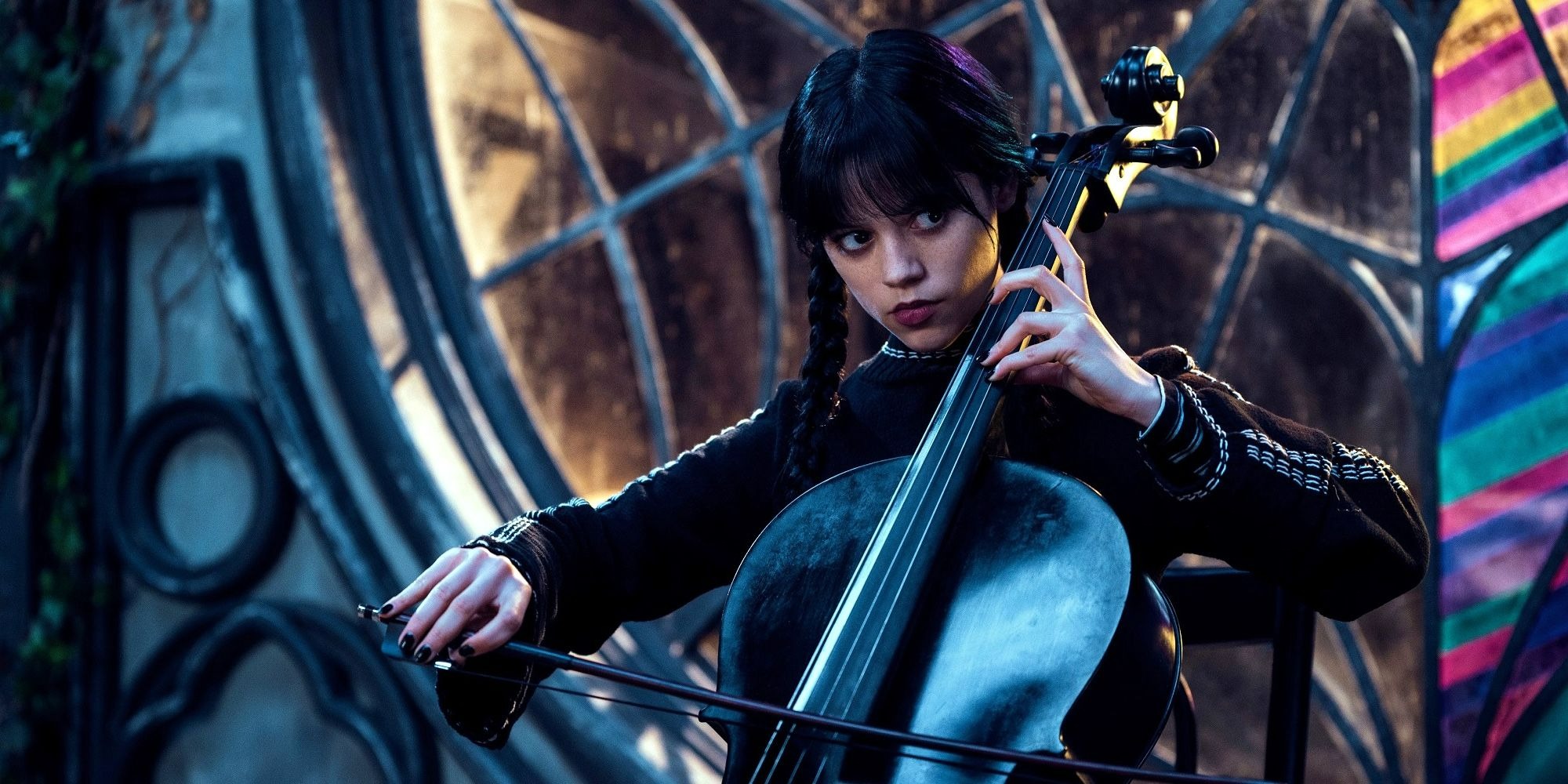
When Wednesday Addams sits down with her cello in Season 2’s opening episode, she doesn’t reach for generic spooky music. Instead, she launches into Prokofiev’s “Dance of the Knights” from Romeo and Juliet—a choice that instantly announces this show’s musical sophistication.
Netflix’s music supervisors understand something crucial about gothic storytelling. The best dark atmosphere doesn’t come from horror movie clichés, but from classical repertoire that already carries centuries of dramatic weight. These aren’t random classical name-drops—they’re surgical character studies disguised as background music.
The Prokofiev Power Play
That opening cello moment showcases why Wednesday’s musical identity works so well. Prokofiev’s menacing march from his ballet score perfectly captures Wednesday’s controlled intensity—elegant but dangerous, like a perfectly sharpened knife. The Milan Records soundtrack credits this performance to “Wednesday Addams, Nevermore Academy Orchestra,” acknowledging both Jenna Ortega’s visual commitment and the professional musicians who deliver the actual audio.
Ortega’s Season 1 cello training pays off here—her bow technique looks convincing enough that social media clips of this scene are generating serious engagement. The choice reveals something deeper about Wednesday’s character: she gravitates toward music that matches her internal complexity, not just surface-level darkness. For those inspired by her dedication, understanding the path to become a classical musician requires similar commitment to mastering both technique and emotional expression.
Classical Anchors Across Episodes 1-4
These selections paint emotional landscapes that pure gothic scoring never could. The way music reshapes our neural pathways helps explain why these classical pieces feel so emotionally resonant in contemporary contexts.
- Mozart’s “Voi che sapete” (Le nozze di Figaro) – Morticia’s fundraising soirée gets elegant opera house sophistication that highlights her social performance skills
- Verdi’s “Dies Irae” (Requiem) – Wednesday hijacking Enid’s driving lesson with apocalyptic grandeur turns a comedy beat into something genuinely unsettling
- Mozart Symphony No. 34 “Andante” – Uncle Fester’s art class receives unexpectedly serene underscoring that makes their family bond feel genuine rather than eccentric
- Wagner’s “Ride of the Valkyries” – Battle sequence between Nevermore students and “normies” leans into cinema’s most famous war cry, but the context makes it fresh rather than cliché
Beyond Gothic: The Tango Connection
Classical darkness meets Latin romance in ways your Spotify algorithm could never predict.
Episode 3’s romantic centerpiece features “La Cumparsita,” the classic tango that underscores Morticia and Gomez’s passionate dance. This callback to their iconic Addams Family Values moment proves the show’s musical curation extends beyond Wednesday’s personal soundtrack into family mythology.
The juxtaposition works brilliantly—classical darkness meets Latin romance, creating emotional texture that pure gothic scoring couldn’t achieve. Your typical teen drama would throw a pop ballad at this moment and call it emotional depth. Like the best cover songs, these classical recontextualizations breathe new life into familiar works.
These selections demonstrate how streaming-era television can elevate familiar classical works into character development tools. Wagner’s Valkyries aren’t just background music; they’re Wednesday’s worldview made audible. Mozart’s elegance contrasts perfectly with Prokofiev’s menace, painting Nevermore Academy as a place where beauty and danger coexist naturally.
The show’s classical curation succeeds because it treats these pieces as living emotional language rather than museum artifacts. When Wednesday draws her bow across those cello strings, she’s not just playing music—she’s translating her inner world into sound that actually makes sense.