



Imagine whipping up percentages in your head as easily as scrolling through TikTok. No calculator needed! Mental math transforms you into the human equivalent of Excel—but without crashing when things get complicated. You’ll breeze through shopping discounts, restaurant tips, and budget planning faster than your friends can unlock their phones. (And yes, they’ll be impressed when you split the check before anyone finds the calculator app.) This skill builds your number confidence similar to how learning chords builds guitar skills—each calculation makes the next one easier. Before long, you’ll be crunching numbers with surprising speed, wondering why you ever reached for your phone.
The Core Technique: Dividing by 100 (or 10 Twice)
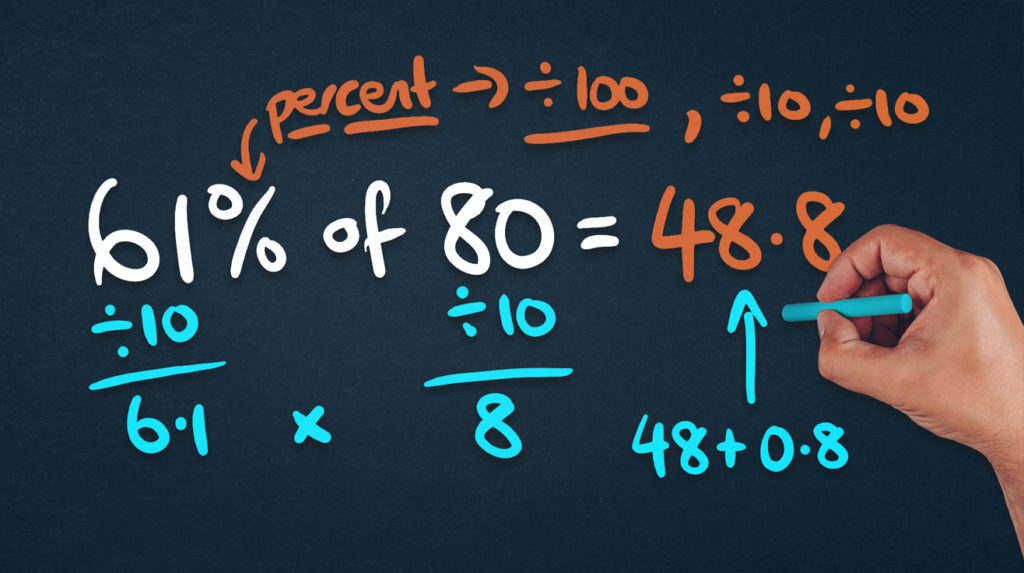
Understanding percentages is basically learning the cheat code to mental math. Percentages mean “per 100,” so finding 25% of something is just finding 25/100 of it. The hack? Just divide by 100 at some point in your calculation—which is simply moving the decimal point two spots left. Too big a jump? Divide by 10 twice instead, similar to breaking a complex game level into smaller achievements. So 400 ÷ 100 = 4, or you could do 400 ÷ 10 = 40, then 40 ÷ 10 = 4. Master this technique and you’ve unlocked the foundation for all percentage magic—no wand required.
Example 1: 61% of 80
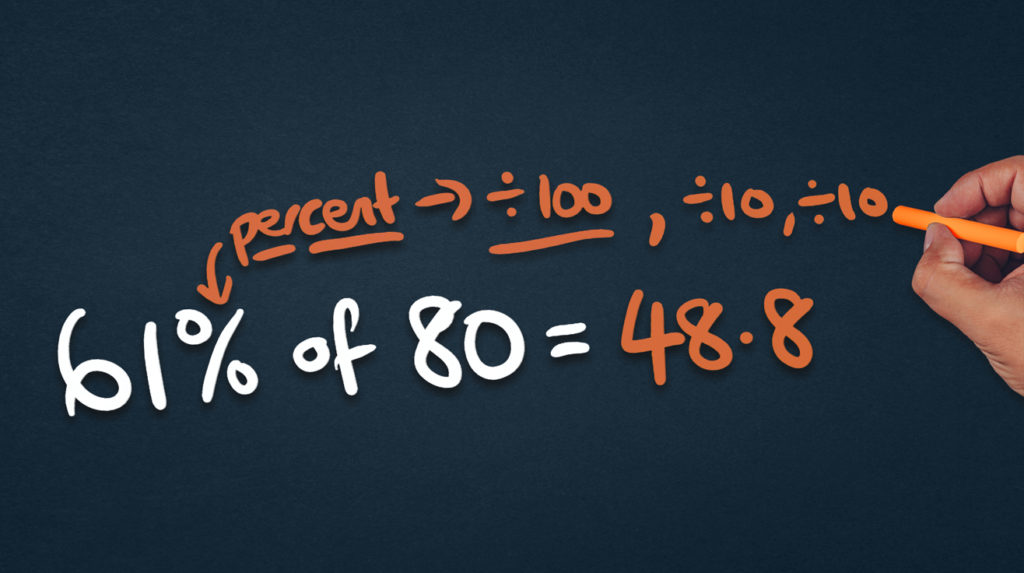
Calculating 61% of 80 might seem harder than explaining the plot of Inception, but it’s actually straightforward. Picture calculating a 61% discount on those $80 sneakers you’ve been eyeing. First, divide 80 by 10 to get 8. Do the same with 61 to get 6.1. Now multiply 6×8=48. Then 0.1×8=0.8. Add them together: 48+0.8=48.8. Boom! The discount is $48.80, meaning you’d pay just $31.20. Sweet deal! This mental shortcut works similar to how DJs break down complex beats—by separating the elements and then mixing them back together.
Example 2: 3% of 400
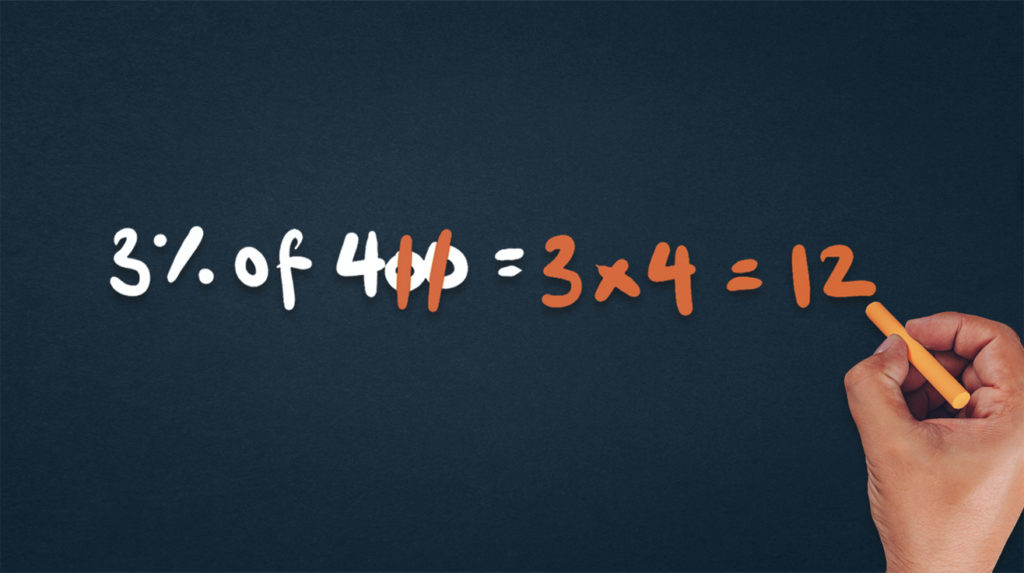
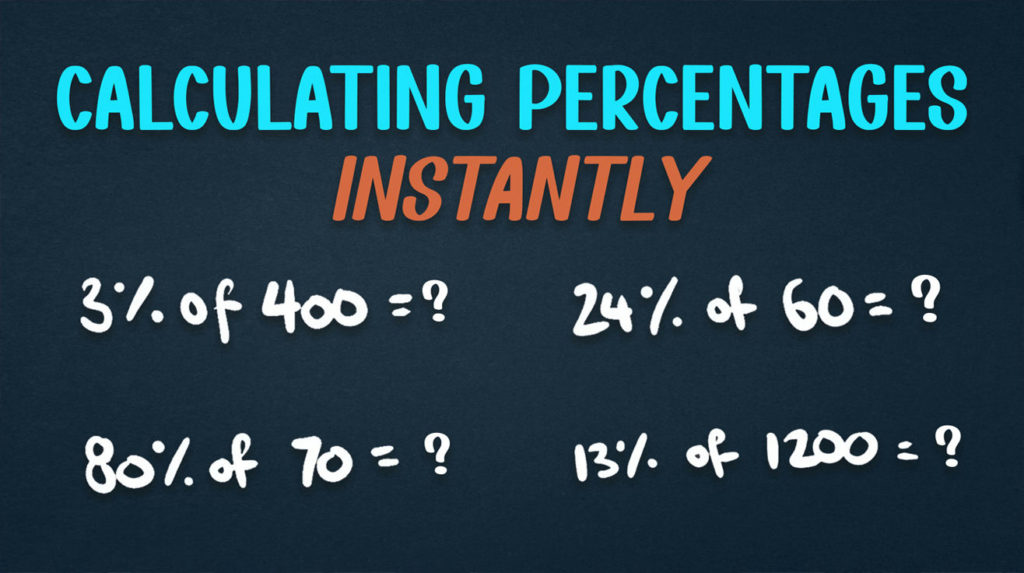
Small percentages pop up everywhere—tips, taxes, interest rates—yet they trip people up worse than unexpected plot twists. Take 3% of 400 as practice. This calculation is easier than deciding what to watch on Netflix. Simply move the decimal point in 400 two places left (or divide by 100) to get 44. Then multiply 3×4=12. That’s it! So 3% of 400 equals 12. This could be the tax on a $400 purchase or the interest on a small loan. The brain processes these tiny calculations similar to how your taste buds immediately recognize salt—once you know what to look for, it becomes second nature.
Example 3: 80% of 70
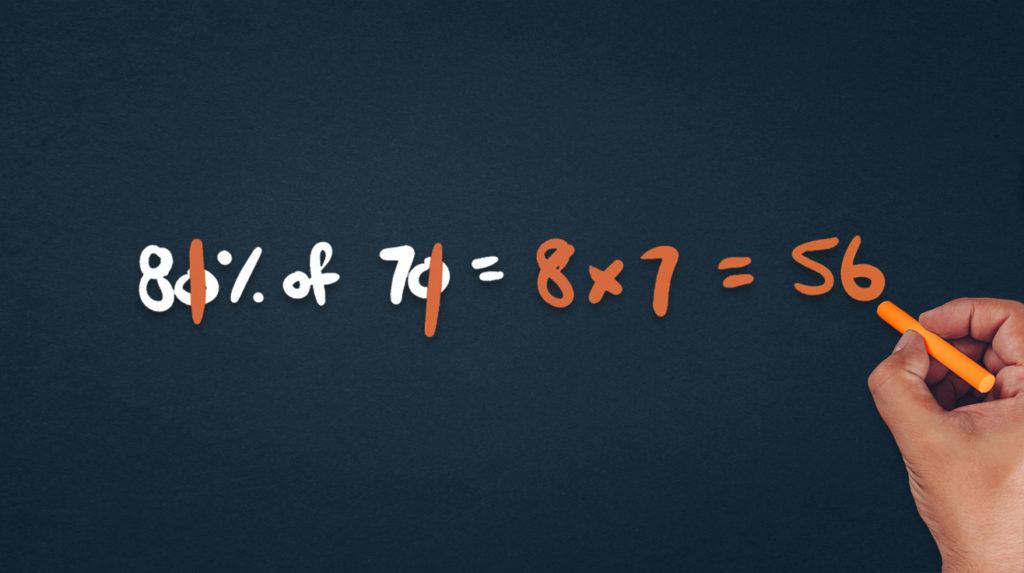
Working with common percentages like 80%80% feels as satisfying as landing the final piece in Tetris. To find 80% of 70, divide each number by 10 first. So 80÷10=8, and 70÷10=7. Multiply 8×7=56. Voilà! 80% of 70 equals 56. This could represent how much of your $70 gas budget you’ve already spent or the portion of a 70−minute class that wasn’t spent daydreaming. The calculation flows as smoothly as your favorite playlist, with each step naturally leading to the next without any mental roadblocks.
Example 4: 24% of 60
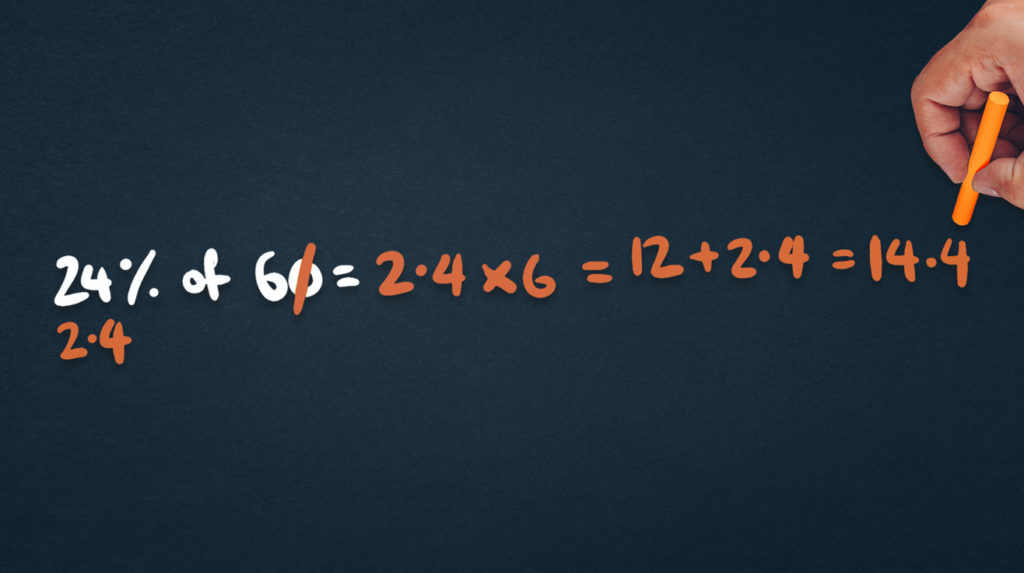
Ever needed to calculate a tip or tax percentage while your friend stares at you expectantly? Computing 24% of 60 is your new party trick. Break 60 into 6 by dividing by 10. Next, turn 24 into 2.4 the same way. Multiply 2×6=12, then 0.4×6=2.4. Add them: 12+2.4=14.4. So 24% of 60 equals 14.4. This mental math flows like the choreography in a Marvel fight scene—each move connects purposefully to the next.
Example 5: 13% of 1200
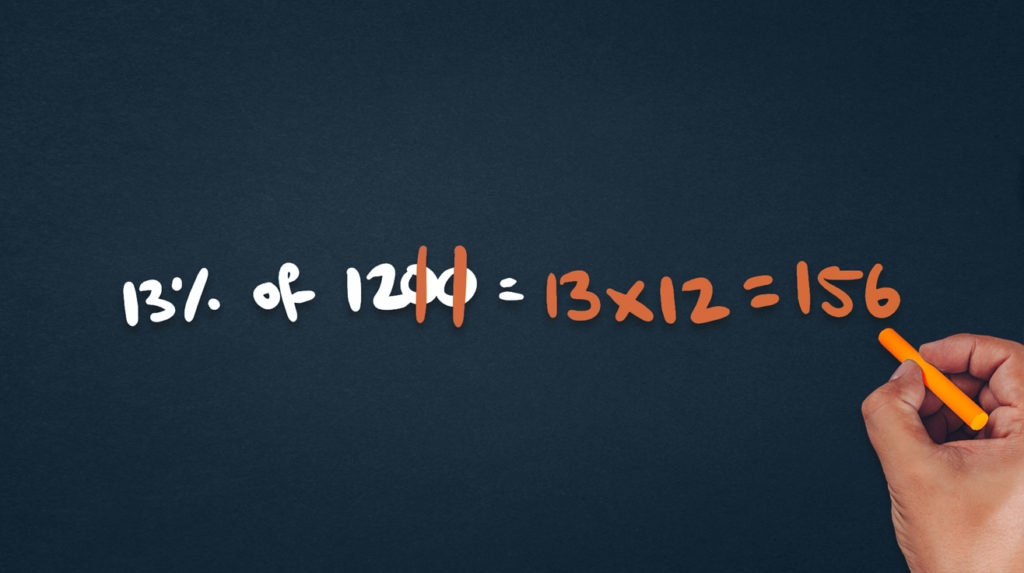
Larger numbers with odd percentages might seem scarier than the opening scene of a horror movie, but mental math makes them manageable. To find 13% of 1200, divide 1200 by 100 to get 12. Then multiply 13×12=156. Done! 13% of 1200 equals 156. This could represent the tax on a major purchase or the tip on a fancy dinner bill. The calculation works similar to how a DJ samples different tracks—breaking down complex numbers into simpler components that flow together naturally. Practice these mental shortcuts and you’ll soon calculate percentages faster than people can type them into a search bar.