


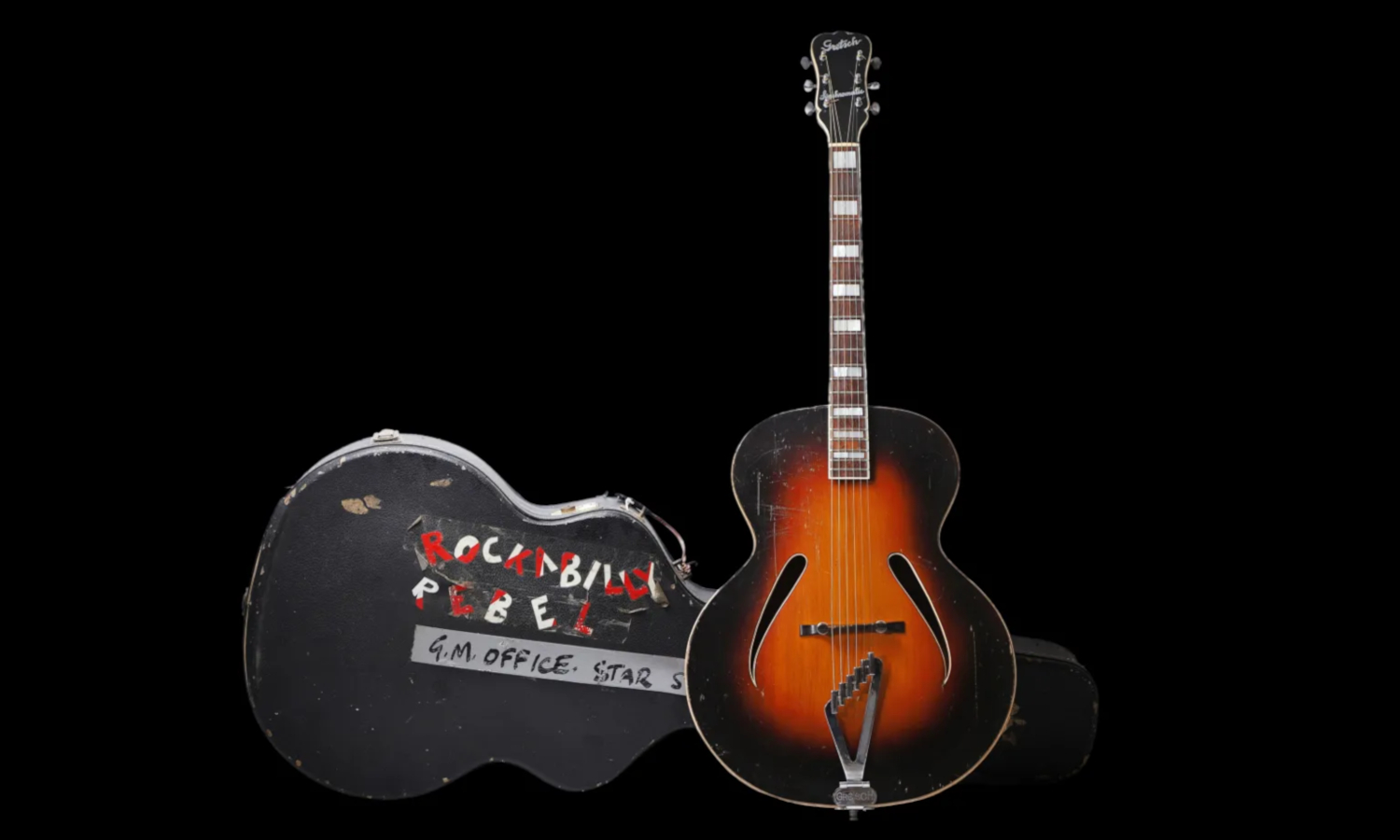
That Gretsch guitar belongs to a very specific moment in pop history. George Michael — leather-jacketed, strumming against a stark backdrop in the 1987 “Faith” video — was shedding the Wham! glitter and becoming something else entirely. When the instrument sold at Sworders Fine Art Auctioneers on 29 October 2026 for a hammer price of £180,000 (£234,480 including the buyer’s premium and fees), the result spoke for itself. The family of the woman who preserved it for decades had a harder time celebrating.
A Personal Archive Goes Public
The sale exposed a painful gap between legal entitlement and the wishes a family believes their late sister would have expressed.
Siobhan Bailey served as George Michael’s personal assistant for approximately 20 years, with the research brief citing a period spanning 1984 to 2004. She died in 2014 without a will, leaving her estate — including this collection — to her legally surviving husband Ian Belcher. His right to sell has not been disputed. What her brother Gerard Bailey challenged was how Sworders framed the 32-lot “Faith & Fame” sale: under Siobhan’s name, not Belcher’s.
According to BBC reporting, Gerard asked Sworders to either halt the auction or relist it under Belcher’s name, describing the sale as a breach of his sister’s privacy. In the BBC’s account, he said she “would be horrified at the prospect of the auction being held in her name and that her personal, cherished possessions are being sold off to the highest bidder.”
Notable lots from the sale included:
- Gretsch guitar from the “Faith” video — estimated £60,000–£120,000; hammer price £180,000
- Wham! “Wake Me Up Before You Go-Go” gold disc — £4,500
- Signed Queen “Five Live” EP — £7,000
- Málaga City Council award presented to Michael — £1,300
Storage Doesn’t Wait
Auctioneer Guy Schooling argued that preserving the collection meant dispersing it — not keeping it in storage indefinitely.
Schooling’s rationale was pragmatic: prolonged storage posed its own preservation risk, and the items could not be held indefinitely without the prospect of deterioration. His position, as reported by Sworders, amounted to preservation through dispersal.
The distinction Gerard Bailey drew is worth holding onto. Accepting Belcher’s legal right to sell while objecting to Siobhan’s name headlining the catalogue is not a contradiction — it is a grievance about consent and posthumous representation, and a legitimate one at that.
This dispute is unlikely to be the last of its kind. When personal assistants, former partners, or trusted intermediaries hold celebrity artifacts and no will exists to clarify intent, the gap between legal ownership and moral custodianship has a way of becoming very expensive — and very public.