


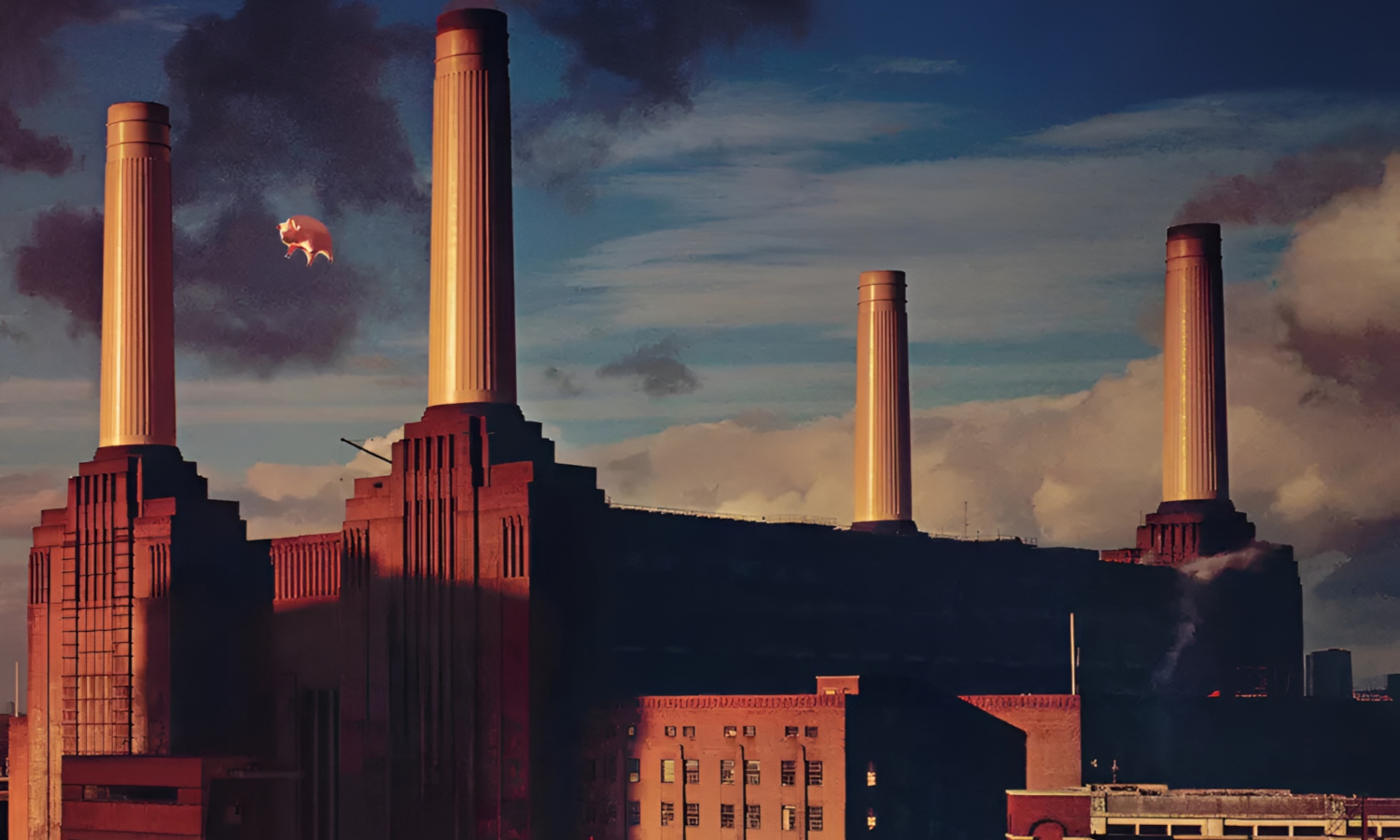
In December 1976, Roger Waters photographed a 40-foot inflatable pig between Battersea Power Station‘s chimneys for a shoot that would become one of rock’s most recognizable album covers. The pig broke free from its moorings, drifted across south London, raised concerns for nearby air traffic, and eventually landed in Kent. Nearly 50 years later, Apple has installed 48 spatial-audio speakers inside the same building. Both events feel equally surreal. Apple announced Apple Music Hall on September 22, 2026 — a 600-capacity live venue scheduled to open September 28, sitting inside a structure that rock mythology claimed long ago — a legacy cemented by a Pink Floyd Classic.
From Album Cover to Arena-Grade Stage
The building’s rock credentials were earned the hard way — one runaway pig at a time.
Roger Waters chose Battersea because it was near his home and delivered the imposing industrial weight he wanted. Hipgnosis designers Storm Thorgerson and Aubrey Powell helped execute the concept. The pig — nicknamed “Algie” — was photographed over multiple days during that December shoot. The final Animals cover was assembled as a composite of two separate images rather than a single clean exposure — a hallmark of the era’s ambitious 70s Rock Albums. That chaos produced one of rock’s most enduring visuals, and the building has carried that identity ever since. Apple now shares the address; its European headquarters occupies the station alongside the new hall.
Here’s what Apple Music Hall actually delivers:
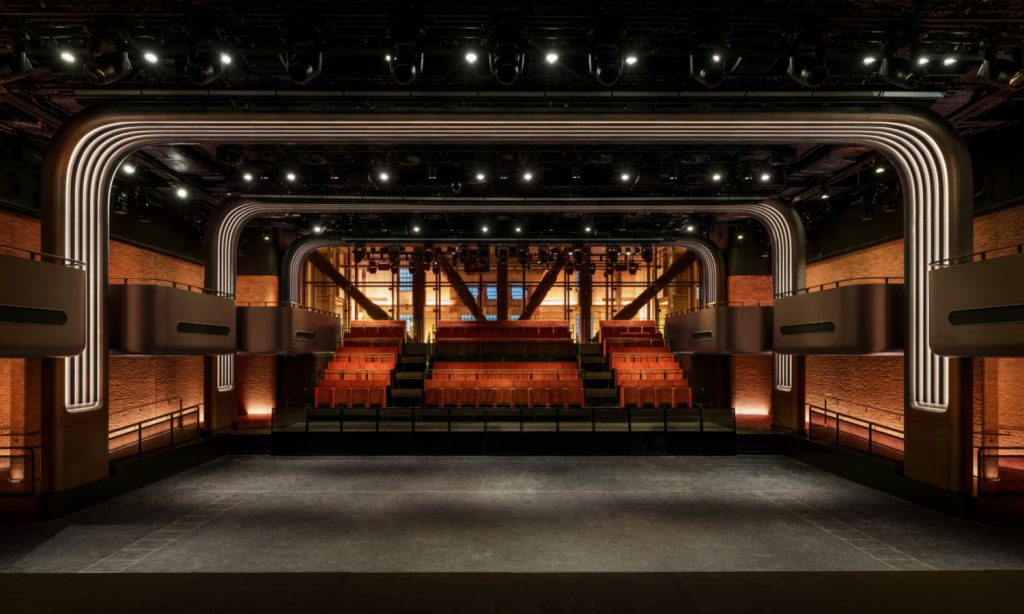
- 600-person capacity; 38-foot-wide stage configurable front-facing or in-the-round
- 48-speaker spatial-audio system — sound placed throughout the room, not just projected from the stage
- 16 or more broadcast cameras plus multitrack audio capture, enabling global livestreams
- Heritage architecture intact: exposed brickwork, fluted arches, bronze balconies, glass wall overlooking the river concourse
- Announced September 22, 2026; opens September 28, 2026
The Hybrid Venue Model – Intimate Room, Global Reach
Six hundred seats in London; potentially millions watching everywhere else.
Apple describes the hall as “state-of-the-art,” which is accurate and says almost nothing. The real story is the pipeline. Six hundred people in the room, arena-level production wrapping them in spatial audio, 16 or more cameras capturing performances for worldwide distribution — a setup reminiscent of the most dramatic moments played out live in front of fans. Apple frames this as a commitment to artists and fans. The commercial reading is equally straightforward: the venue strengthens Apple Music’s exclusive-content strategy in ways that algorithm spending alone cannot replicate. The building’s cultural credibility does heavy lifting that money cannot buy outright. Both things are true simultaneously, and neither cancels the other out.
No opening lineup has been confirmed. No ticket pricing, either. No word on whether anything inside references the Animals cover directly.
What’s certain: a structure that helped define rock’s visual language in 1977 is now purpose-built for spatial-audio concerts in the streaming era. Whether that’s the most fitting development in the building’s history or the most surreal depends entirely on your tolerance for irony — and probably on which artists actually show up.