




The acoustic guitar market is a minefield of questionable craftsmanship and inflated promises. Anyone shopping for their first six-string (or upgrading from a clunker) needs a guitar that inspires instead of one that actively fights back. This guide identifies instruments delivering genuine value while sparing the frustration of buzzing frets and dead tones. Those flaws feel about as welcome as a surprise auto-tune effect on a live album.
Many guitars trade purely on reputation or rock-bottom prices. However, true quality lives in the wood, the bracing, and a proper setup. This guide cuts through the hype to show where to truly invest cash. Forget the glossy ads and find an acoustic that truly resonates.
This content may contain affiliate links. If you wish to support us and use these links to buy something, we may earn a commission.
Skip These
12. Esteban American Legacy
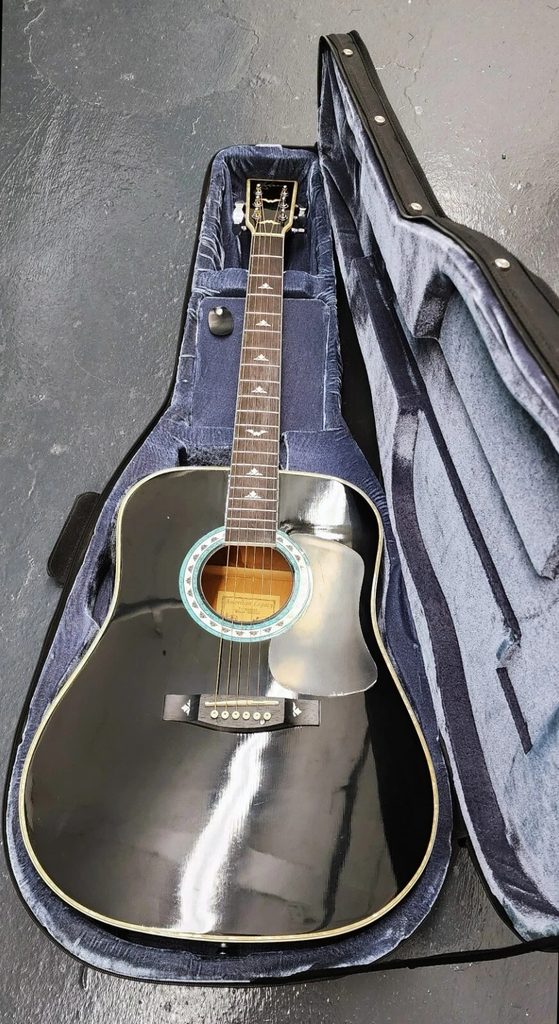
When infomercial guitars meet federal court.
Court records show HSN sold about 70,000 Esteban-branded guitars in late 2006, a staggering figure that painted a picture of widespread musical aspiration. Stephen Paul, known as Esteban, claimed a connection to classical legend Andrés Segovia. This lent his mass-marketed acoustic bundles instant (if questionable) prestige. These laminate-topped dreadnoughts with maple necks and basic onboard preamps often became a harsh reality for buyers.
The illusion shattered with the 2007 Fishman Transducers lawsuit for false advertising. HSN sold roughly 70,000 guitars claiming Fishman electronics that were never supplied. Owners reported frets falling off, bodies bulging like a bad TikTok filter, and warping necks. High action rendered them unplayable. The “affordable” instrument quickly revealed a hidden cost; a musical catfish for hopeful players.
11. Rogue RA-090 Dreadnought Acoustic Guitar
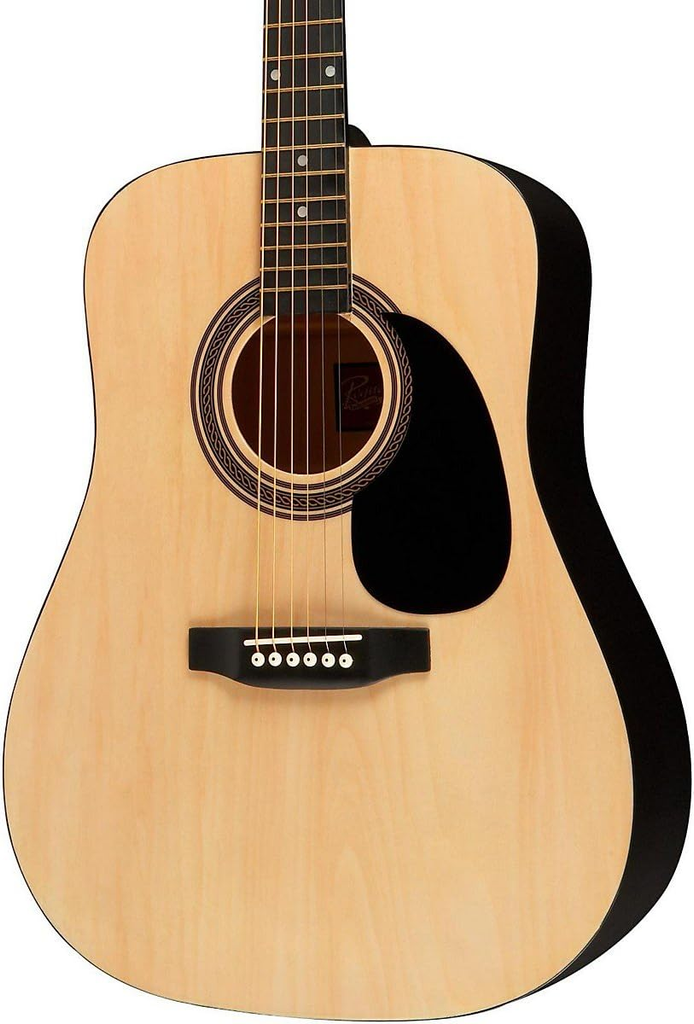
Entry-level doesn’t have to mean finger torture.
This entry-level steel-string dreadnought employs fully laminate whitewood construction across its top, back, and sides. It pairs this with a nato neck, painted maple fretboard, and plastic nut and saddle. These material choices give it a 25.5-inch scale length, approximately 1-2/3-inch nut width, and 20 frets.
Cost-cutting creates significant hurdles. High action demands excessive finger strength to form basic chords, akin to learning ballet in steel-toed boots. Beyond the difficult action, expect tuning instability that makes holding a note a constant fight. Dead frets silence notes and sharp fret ends can literally slice fingers.
This factory setup transforms the simple joy of playing into a painful chore. It effectively teaches new musicians that guitar is an unrewarding endeavor, ensuring many quit before learning their first chord, let alone a TikTok smash.
10. First Act Discovery Acoustic Guitar
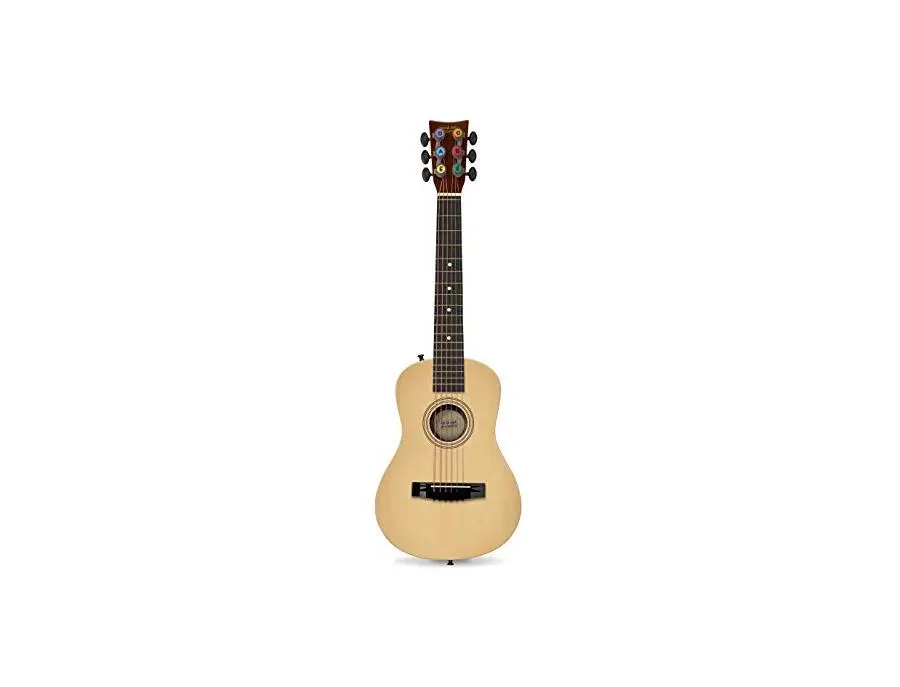
Big-box toy or actual instrument? The answer disappoints.
First Act Discovery acoustics are widely available at mass retailers like Target and Walmart as low-cost beginner instruments. These models often feature a 30-inch scale, aimed squarely at children or first-time players. Their construction relies on composite woods, painted fingerboards, and plastic hardware, making them less a musical instrument and more a plastic toy attempting a full-size guitar’s job.
Reviewers consistently flag problems: unstable tuning, action so high it doubles as a medieval torture device, and fret ends sharp enough to work as a tiny cheese grater. This makes playing painful while producing sounds like a busted karaoke machine. Anyone who’s watched a beginner struggle with subpar gear knows this pushes new guitarists to abandon the dream, convinced they lack talent when the real villain is shoddy craftsmanship.
9. Vintage Kay/Harmony/Silvertone Catalog Acoustics (1960s-70s)
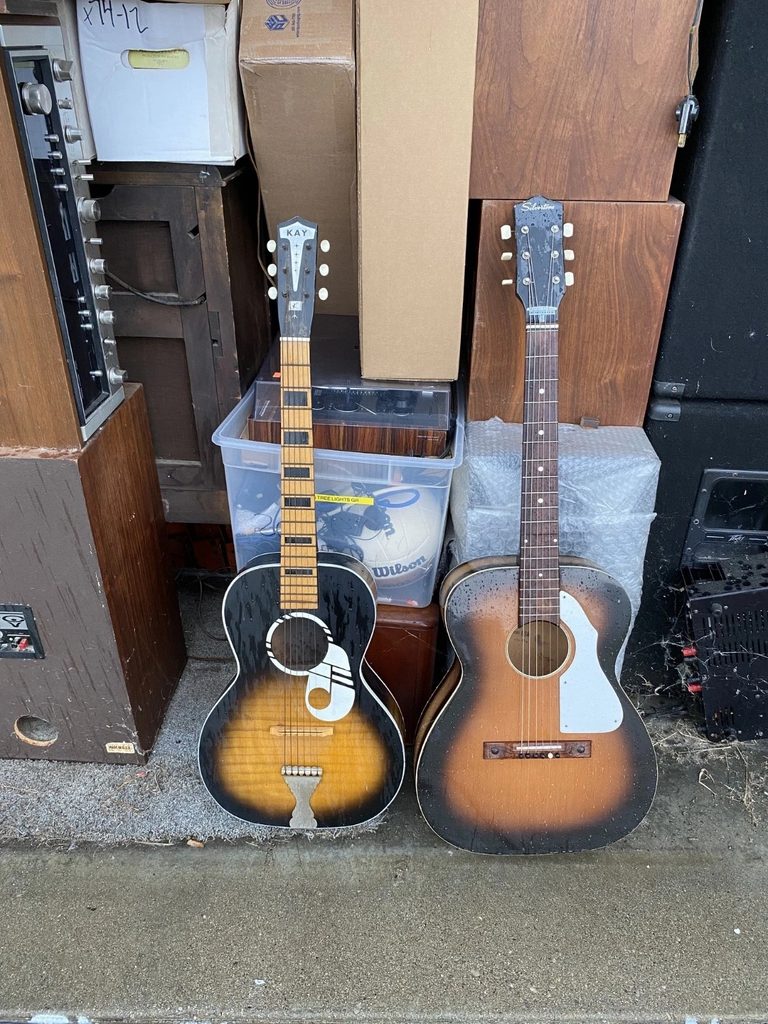
Nostalgia looks better on a wall than it sounds in your hands.
Kay and Harmony, Chicago-based manufacturers, flooded the market with budget acoustic guitars throughout the 1960s and 70s. Silvertone, Sears’ house brand, often came off the same assembly lines. These instruments commonly featured a “steel reinforced neck,” industry code for a non-adjustable steel bar or aluminum U-channel instead of a modern truss rod.
This design choice proved a critical flaw. Decades of steel-string tension led to irreversible neck bowing, rendering many instruments unplayable. Corrective repairs, like fretboard removal or full neck resets, often cost more than the guitar’s market value, turning nostalgia into a financial black hole.
Today, these vintage guitars largely serve as wall art, or for light-duty strumming with nylon strings if anyone can overlook the high action. Modern sellers list many of these “as is” for good reason.
8. Fender FA-115 Dreadnought Pack
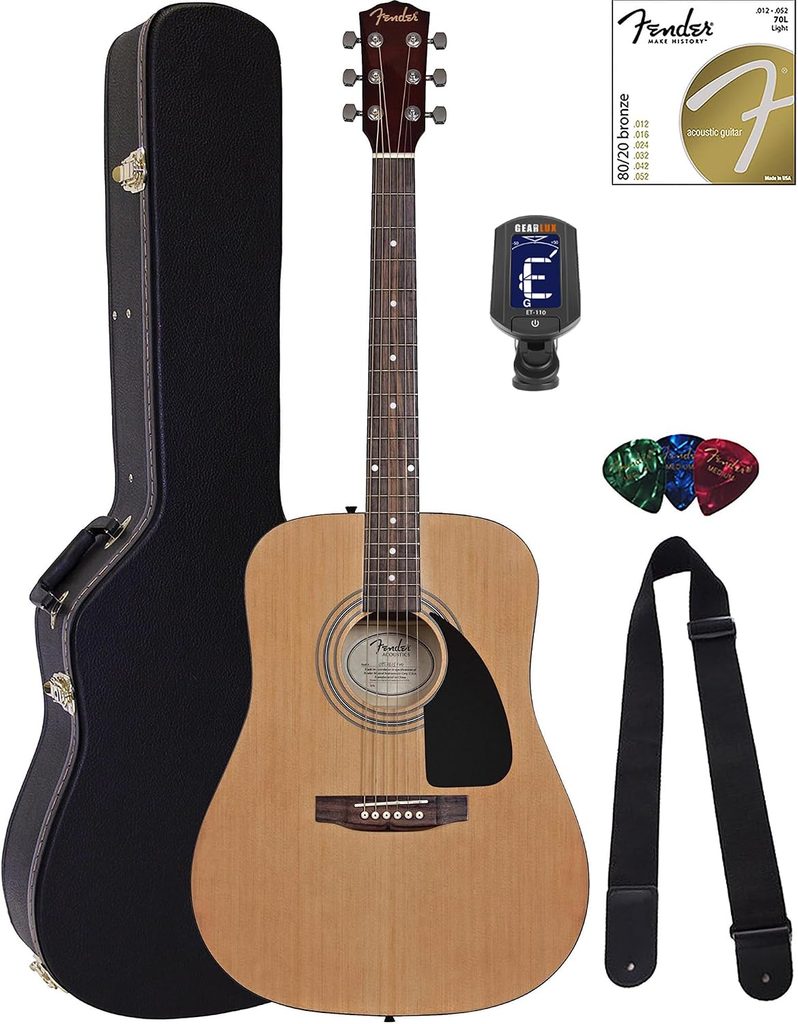
A famous logo doesn’t guarantee playable strings.
The FA-115 Dreadnought Pack sits firmly in entry-level territory despite its Fender pedigree. This budget acoustic starter kit, priced around $150 to $200 (as of 2025), uses a laminated spruce top with laminated mahogany or basswood back and sides. Construction includes a nato neck, a laminated hardwood or walnut fingerboard, and a plastic nut and saddle. Specifications include a 1.69-inch nut width and a 25.3-inch scale length.
Out of the box, expect high action that feels like finger gymnastics and factory strings already corroded; a truly TikTok-worthy moment of disappointment. Uneven fretwork often requires a professional setup just for basic playability.
This guitar’s raw performance struggles against the Yamaha FG-800, which offers a solid top and superior quality control from the jump. A logo shouldn’t cost extra when the fundamentals fail.
7. Fender FA-125 Dreadnought Beginner Pack
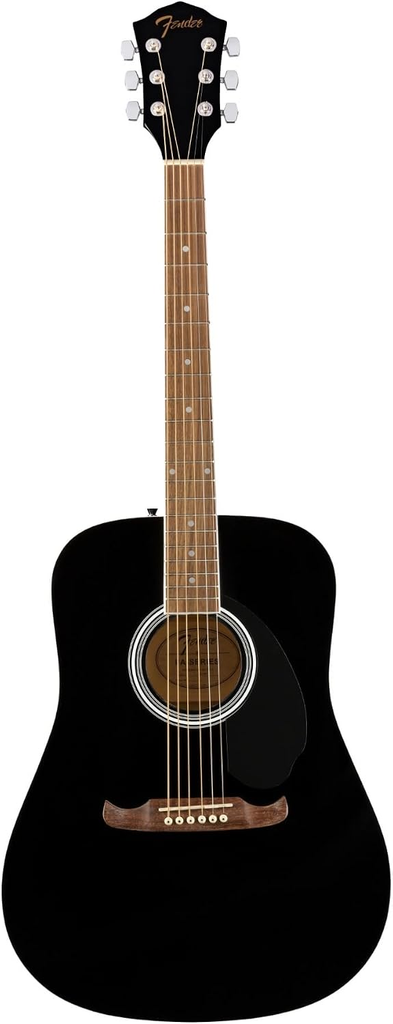
All-laminate construction meets all-too-familiar frustration.
The Fender FA-125 Dreadnought Beginner Pack, often bundled with accessories, is an entry-level acoustic designed for new players. Its construction features an all-laminate body: laminated spruce top paired with laminated basswood back and sides, a nato neck, and a walnut fingerboard and bridge. The guitar has a 25.3-inch scale length and a 1.69-inch nut width.
Customer feedback notes acceptable sound for the price but recurring problems plague the factory setup. String height runs too high, fret edges are often rough, and tuning stability proves elusive.
This setup makes the guitar feel less like a tool for learning and more like a wrestling match with a particularly stubborn octopus. Anyone who’s excitedly unboxed new gear only to face immediate setup headaches knows this potentially discourages aspiring musicians before they even truly begin.
6. Maestro by Gibson MA-41
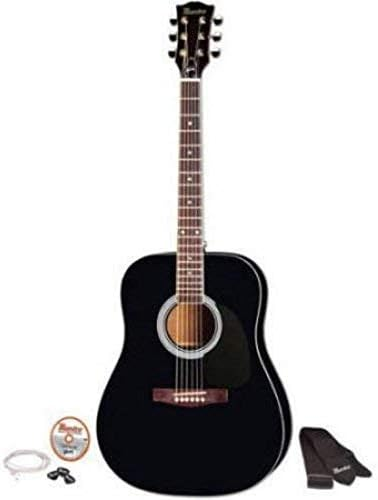
When heritage becomes a marketing exercise.
For decades, the Gibson logo represented the pinnacle of American guitar craft, a badge worn by rock gods. Then came Maestro by Gibson, a budget sub-brand designed for mass retailers like Walmart and Best Buy. Its MA-41 full-size dreadnought, often sold in starter kits, sells for under $150, a price point far removed from its legendary heritage.
This guitar features a laminated spruce top and laminated nato or mahogany back and sides. The build continues this budget narrative with its plastic nut and saddle, plus die-cast tuners; much like finding off-brand cereal in a designer box. Best Buy’s listing notes a 21-fret rosewood fingerboard and nato neck.
Independent reviewers consistently confirm the all-laminate construction severely caps the MA-41’s tonal complexity. Buyers are almost universally advised to immediately upgrade the plastic components and factory strings for any passable sound, potentially adding another $50 to the initial cost. This underscores the true cost of prioritizing a logo when genuine performance matters.
Get These Instead
5. Yamaha FG800 Dreadnought Acoustic Guitar
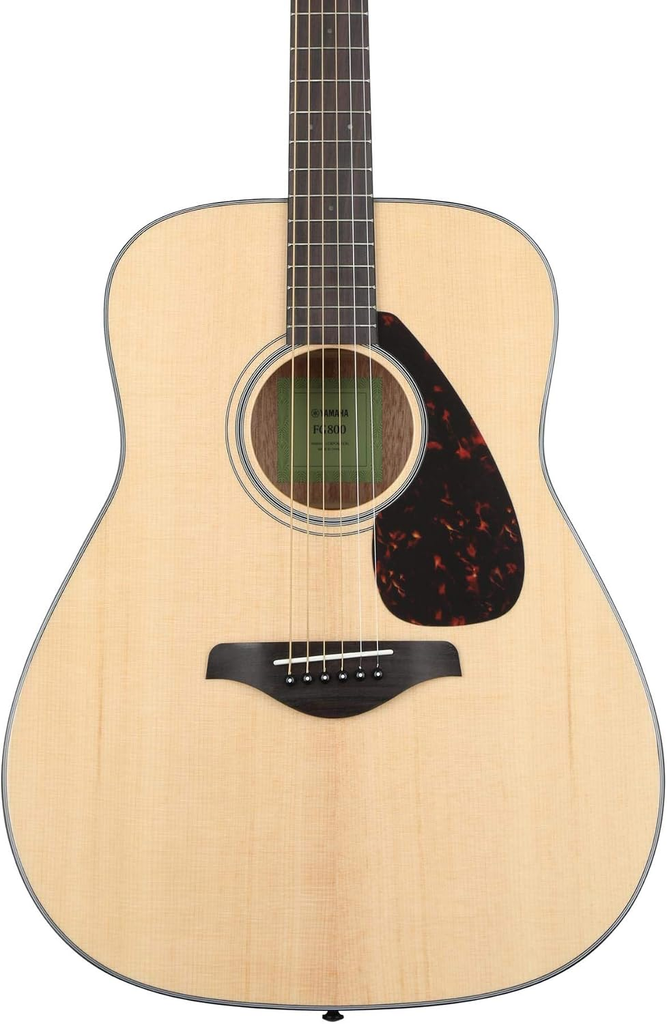
Solid proof that budget and quality can coexist.
The Yamaha FG800, introduced in 2016, swiftly became the benchmark for budget acoustics, retailing around $230 as of 2025. This dreadnought boasts a genuine solid Sitka spruce top with scalloped X-bracing, a feature typically found on guitars twice its price, ensuring superior projection and resonance that punches above its weight class.
It features laminate nato and okoume back and sides, a nato neck, and a rosewood fingerboard, all crafted in Indonesia under Yamaha’s consistent quality control. Its 1.69-inch (43 mm) nut width offers a comfortable playing experience.
While the plastic nut and saddle are common upgrade points (like replacing the factory-installed apps on a phone), the performance far exceeds the price. Guitar World, Music Radar, Guitar Chalk, and Gearank consistently rank the FG800 as a “best budget dreadnought.” This guitar proves true value often beats marketing hype, setting a bar shoppers should expect from others.
4. Seagull S6 Original
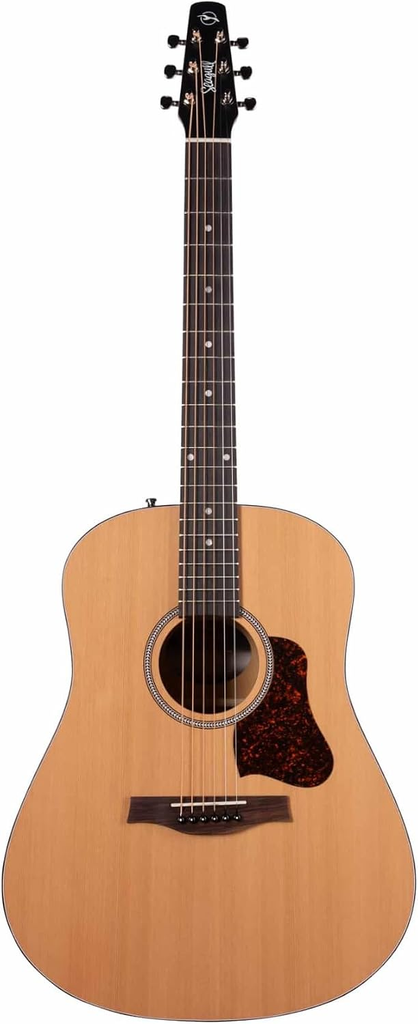
Canadian craftsmanship that rewrote the value equation.
Out of La Patrie, Quebec, Canada, emerged the Seagull S6 Original in 1982 from Robert Godin, effectively throwing a wrench in the notion that great acoustics must come with a mortgage payment. This guitar features a select pressure-tested solid cedar top; a detail that feels like finding a vintage Arcade Fire track on a playlist full of Top 40 fluff.
Its laminated wild cherry back and sides, silver leaf maple neck, and rosewood fingerboard deliver a warm, articulate voice with a 25.5-inch scale. Builders include a Graph Tech TUSQ nut and compensated saddle (not flimsy plastic), plus a dual-action truss rod and a generous 1.8-inch nut width, which is like getting VIP seating for fingers.
For roughly 30 years, the S6 has remained a ‘best value pick,’ credited with pushing the industry towards affordable solid-top acoustics. Build quality always trumps brand recognition; anyone shopping for genuine tone instead of Instagram-worthy logos already knows this.
3. Eastman E1D Dreadnought Acoustic Guitar
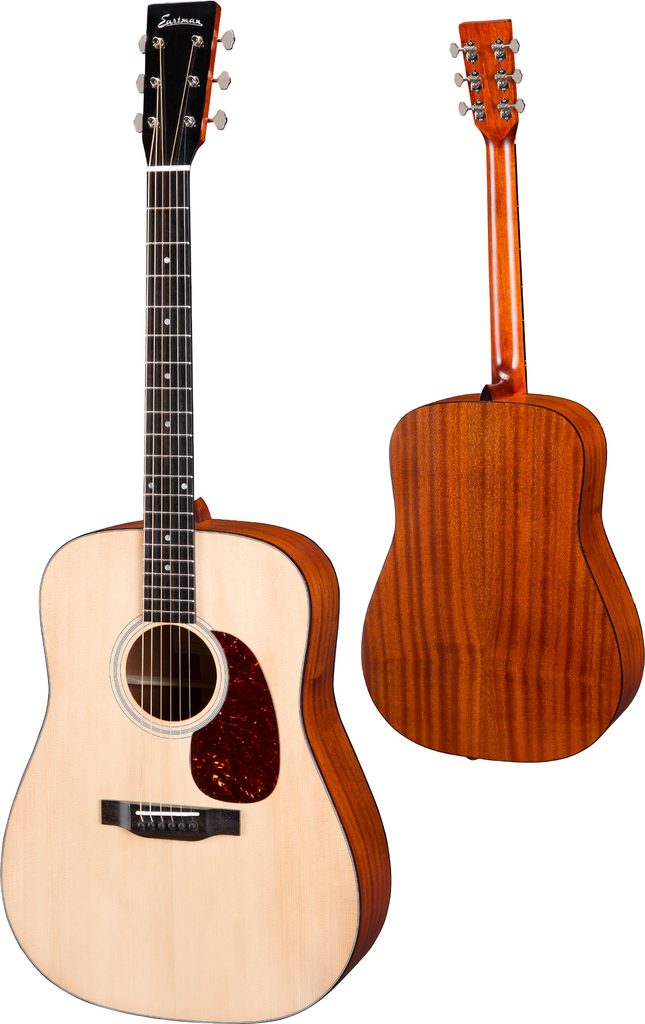
When violin-making precision meets acoustic ambition.
Many acoustic guitars under $500 compromise on materials, but the Eastman E1D Dreadnought bucks that trend. It boasts all-solid wood: a thermo-cured Sitka spruce top and solid sapele back and sides. Eastman, founded in 1992 from violin-making, employs trained luthiers in Beijing who hand-build each guitar. Craftsmanship well beyond typical mass production is the result.
Construction includes a mahogany neck with an ‘Even C’ profile, a 25.4-inch scale length, and a 1-3/4-inch bone nut. An ebony fingerboard and bridge, hand-scalloped X-bracing, and open-gear Ping tuners are standard.
This spec list, at roughly $499–$600, would make wallets weep like a TikTok influencer losing their brand deal. The E1D delivers acoustic depth that embarrasses guitars triple its price; a testament to what happens when luthiers prioritize wood over hype.
2. Taylor GS Mini (Spruce/Sapele version)
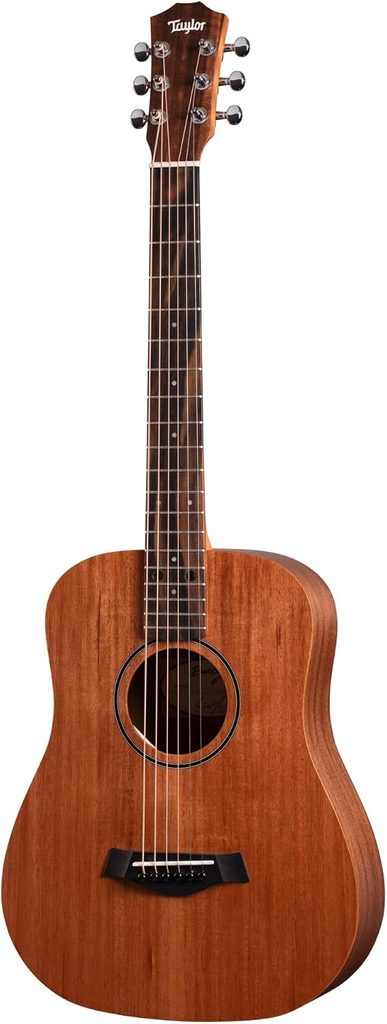
Short scale, big sound, zero compromises on the road.
Launched in July 2010, the Taylor GS Mini emerged from Taylor’s Tecate, Mexico factory, a brainchild of co-founder Bob Taylor and David Judd. This wasn’t a casual downsize; it was a deliberate engineering feat for portability. Construction includes a scaled-down Grand Symphony body with a solid Sitka spruce top, paired with layered sapele back and sides. This layered construction provides impressive structural stability and humidity resistance, giving it road-warrior durability without the usual bulk.
Its 23.5-inch short scale length delivers surprising playability and a voice that punches far above its weight class, like a scrappy indie band headlining a festival. The West African ebony fingerboard, TUSQ nut, and Micarta compensated saddle ensure precise intonation, supported by Taylor’s patented bolt-on neck system.
Anyone who’s ever tried to cram luggage and a full-size acoustic into an overhead bin already knows this is the answer. The GS Mini confidently serves as both a road companion and a primary instrument; a true sonic chameleon that simply works.
1. Vintage Yamaha FG-180 “Red Label” (Nippon Gakki era)
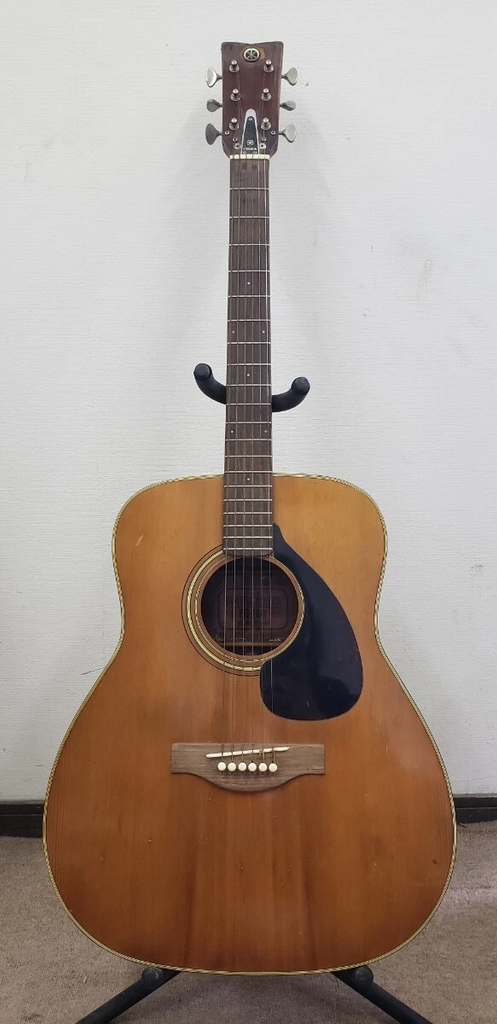
The poor man’s Martin that Elliott Smith made legendary.
The Vintage Yamaha FG-180 “Red Label” carries a cult status that defies its humble origins, securing its spot as the ‘poor man’s Martin.’ Launched in Japan around 1966, export versions with the distinctive red label arrived in American music stores by the late 1960s. Production at Yamaha’s Nippon Gakki factory in Japan marked the earliest and most coveted examples.
Shoppers might expect a solid top for such a revered instrument, but it actually features a laminate spruce top. This sets it apart from ‘S’ suffix models. It uses an all-tonewood three-ply laminate and notably light X-bracing, allowing it to vibrate with an unexpected depth. This makes it sound like a seasoned session musician showing up in faded denim who still outplays everyone.
This unique construction gives it a tone often mistaken for a solid-top guitar, delivering a warmth and projection that belies its budget status. Artists like Elliott Smith famously embraced a red label FG-180 (a Taiwan-made version) for his intimate, groundbreaking work. Anyone who’s chased a sound without blowing a mortgage payment understands this appeal.
On the used market, these relics sell for roughly $300 to $700 as of 2025. Be warned: age brings its own caveats. These guitars often carry the battle scars of decades, yet their enduring sound quality makes them worth the hunt; a true analog find in a digital world.