


Prince George’s County voted 8–0 to authorize financing for a Sphere-format venue at National Harbor, putting immersive concert technology within driving distance of Washington, Baltimore, and Philadelphia.
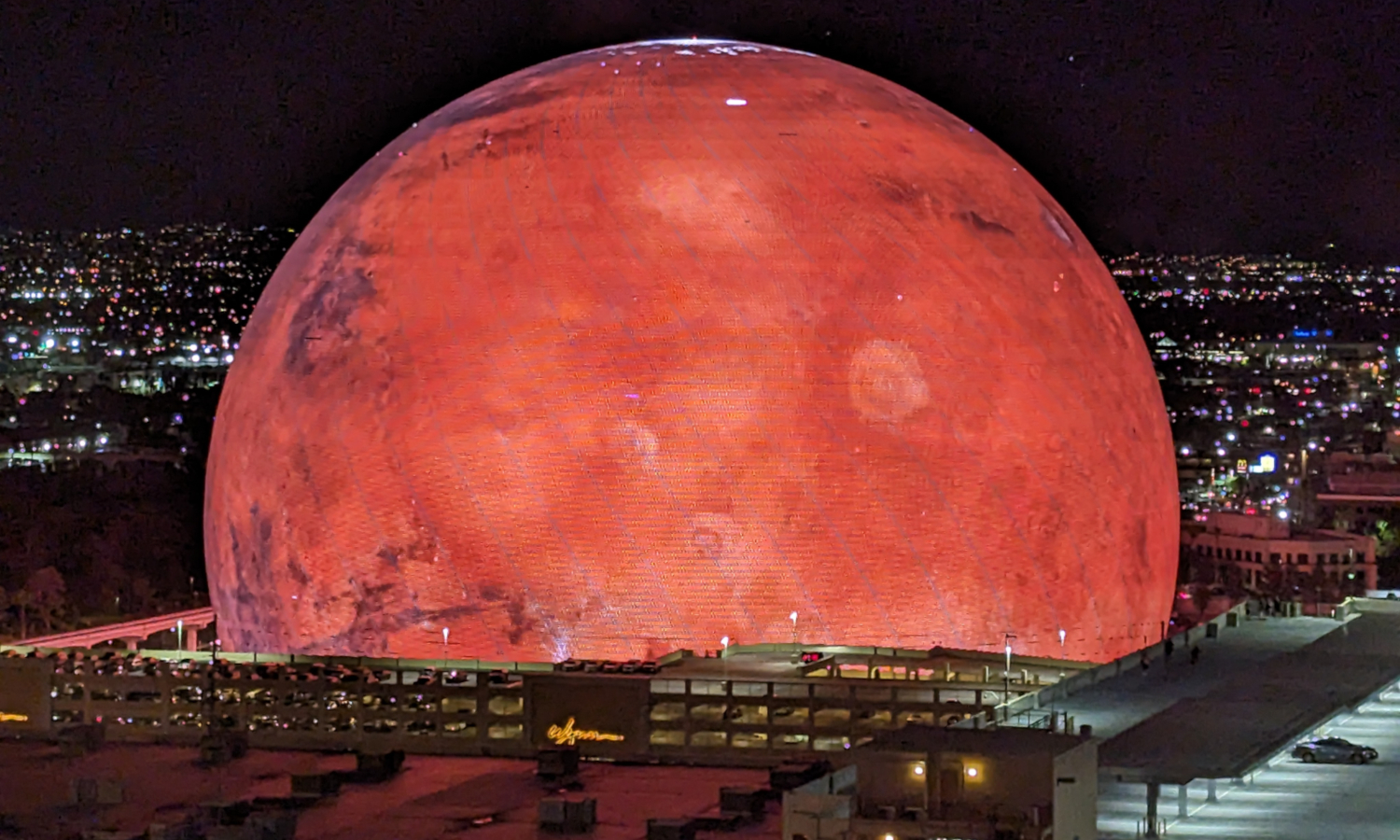
On October 27, 2026, the Prince George’s County Council voted 8–0 to authorize up to $215 million in special-obligation bonds for Sphere National Harbor. The planned venue — designed to seat approximately 6,000 people on the Potomac River — would bring the Las Vegas Sphere’s format to a region that has never had anything quite like it. For anyone tempted by the Vegas original but reluctant to book cross-country flights, Maryland just shortened the commute considerably.
Not a Screen. The Room.
A planned 16K-by-16K interior display and haptic seating set this apart from any conventional arena in the region.
The Las Vegas Sphere seats somewhere between 17,600 and 20,000 people. Sphere National Harbor is planned for approximately 6,000. That is not a consolation prize — it may be an advantage. At that scale, a 16K-by-16K interior display stops being a screen and becomes the room itself, wrapping the audience rather than simply performing for it. Haptic seating — chairs designed to vibrate in sync with the performance — paired with advanced audio and environmental effects means the building is conceived as part of the show, not unlike the Revolutionary Instruments reshaping live music more broadly. Smaller capacity keeps that proposition honest for every seat in the house.
Key project facts, according to WTOP, NBC Washington, WJLA, and the Washington Examiner:
- 8–0 council vote, October 27, 2026; up to $215 million in special-obligation bonds tied to project revenues, not Prince George’s County’s general fund
- Total development cost: approximately $1.4 billion, including a planned $40 million parking garage and roughly $13.5 million in Maryland state contributions
- An Ernst & Young analysis projects nearly 8,000 full- and part-time jobs and approximately $1.58 billion in annual economic activity by year three; County Executive Aisha Braveboy separately projects $63 million in annual tax revenue and $1.3 billion in economic impact for Prince George’s County, per NBC Washington
The Money and the Labor Fight
Public financing and a rejected union-labor proposal mean this project carries real political weight alongside its ambition.
Supporters frame Sphere National Harbor as a regional tourism catalyst with projected tax upside. The counterargument deserves equal space. The council approved a labor peace agreement allowing Sphere employees to organize after the venue opens — but rejected a proposal requiring 40% of construction labor to come from unionized workers. That distinction matters. Public-backed financing makes accountability non-optional, and the treatment of the construction workforce is a legitimate measure of who the economic benefits actually reach. The broader concert industry’s accountability gaps are also under scrutiny, with Ticketmaster facing new regulatory pressure over its market practices.
No artist roster or opening lineup has been announced. The planned 6,000-seat format suggests residencies, immersive films, and visually driven concerts, but programming details remain unconfirmed.
2030 Is the Target. Nothing Is Guaranteed.
Construction reportedly aims for 2027, with a potential opening around 2030 — pending final development and financing agreements.
If the format works at this scale, it answers a real question: whether the Sphere concept requires Las Vegas-sized capacity to deliver its core proposition. A building that performs alongside the artist is either a compelling idea or it isn’t. Around 2030, the Mid-Atlantic may get to find out.