


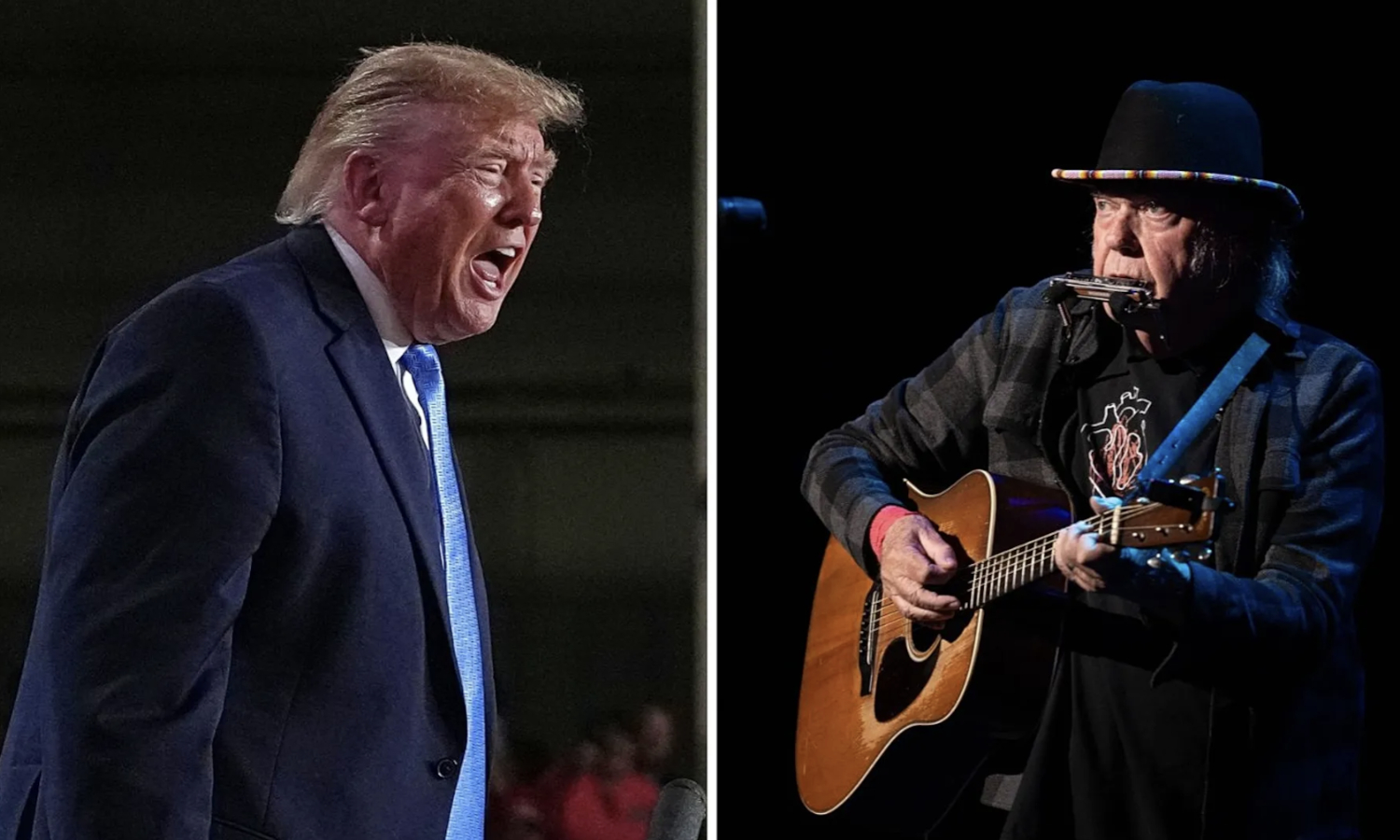
A settlement existed. The song played anyway. Neil Young filed a $10 million copyright-infringement lawsuit against Trump 47 Committee Inc. — along with five pseudonymous “Doe” defendants — in the U.S. District Court for the Eastern District of Virginia. The complaint alleges that “Rockin’ in the Free World” played before Donald Trump took the stage at an October 12 rally in Youngstown, Ohio. The filing also alleges the song appeared at other rallies designed to encourage Republican votes in the midterms. Trump is not named as an individual defendant.
A Settlement, Then the Same Song Again
This dispute stretches back nearly a decade — and a prior legal agreement makes the new allegations especially pointed.
Young first objected publicly in 2015 when Trump used the track at his campaign launch at Trump Tower. A 2020 lawsuit against Donald J. Trump for President Inc. — covering “Rockin’ in the Free World” and “Devil’s Sidewalk” — eventually settled, with the campaign reportedly agreeing not to use the song again without Young’s license and permission. Now a different campaign entity stands accused of the same conduct.
Key allegations from the complaint:
- Filed in the U.S. District Court for the Eastern District of Virginia
- Seeks $10 million in damages plus an injunction barring future use
- Alleges the song played at multiple midterm-focused rallies, not just Youngstown
- States Trump knew a license was required and knew Young had not authorized use
- Names Trump 47 Committee Inc. and five “Doe” defendants; Trump is not personally named
What the Song Actually Says — and Why That Matters
Young’s complaint argues the song’s meaning directly conflicts with the political context in which it was used.
According to the complaint, “Rockin’ in the Free World” is an ironic critique of poverty, homelessness, addiction, and social decay — not the triumphalist pump-up anthem campaigns apparently hear when they queue it up. That characterization is Young’s legal and artistic position, not an established legal conclusion. The argument does, however, surface something real: once a song becomes a campaign backdrop, its original meaning gets overwritten by the political brand it accompanies — a change no disgraced artist can undo after the fact.
Political campaigns sometimes cite venue blanket licenses from ASCAP or BMI to justify music use, but whether such licenses override an existing settlement agreement is a legal question this case may force into focus. The Trump 47 Committee has not issued a substantive public response in available reports; its legal defenses remain unknown.
What Comes Next — and Why This Case Matters Beyond One Song
The procedural clock hasn’t started yet, but the broader implications are already in motion.
No hearing date has been set. The defendant must be served before any response is required. The outcome will likely hinge on:
- Copyright ownership
- The scope of any blanket performance license
- The precise terms of that 2020 settlement — specifically whether its provisions bind a successor campaign entity like Trump 47 Committee Inc.
That last question is the one artists across the industry are watching. The case may sharpen how political campaigns approach music clearances going forward, according to reporting from Billboard and Variety.
For any musician whose work gets conscripted into political messaging without consent, the stakes are concrete. If prior settlements don’t bind reorganized campaign entities, the legal protections artists believed they had may amount to considerably less than advertised.