


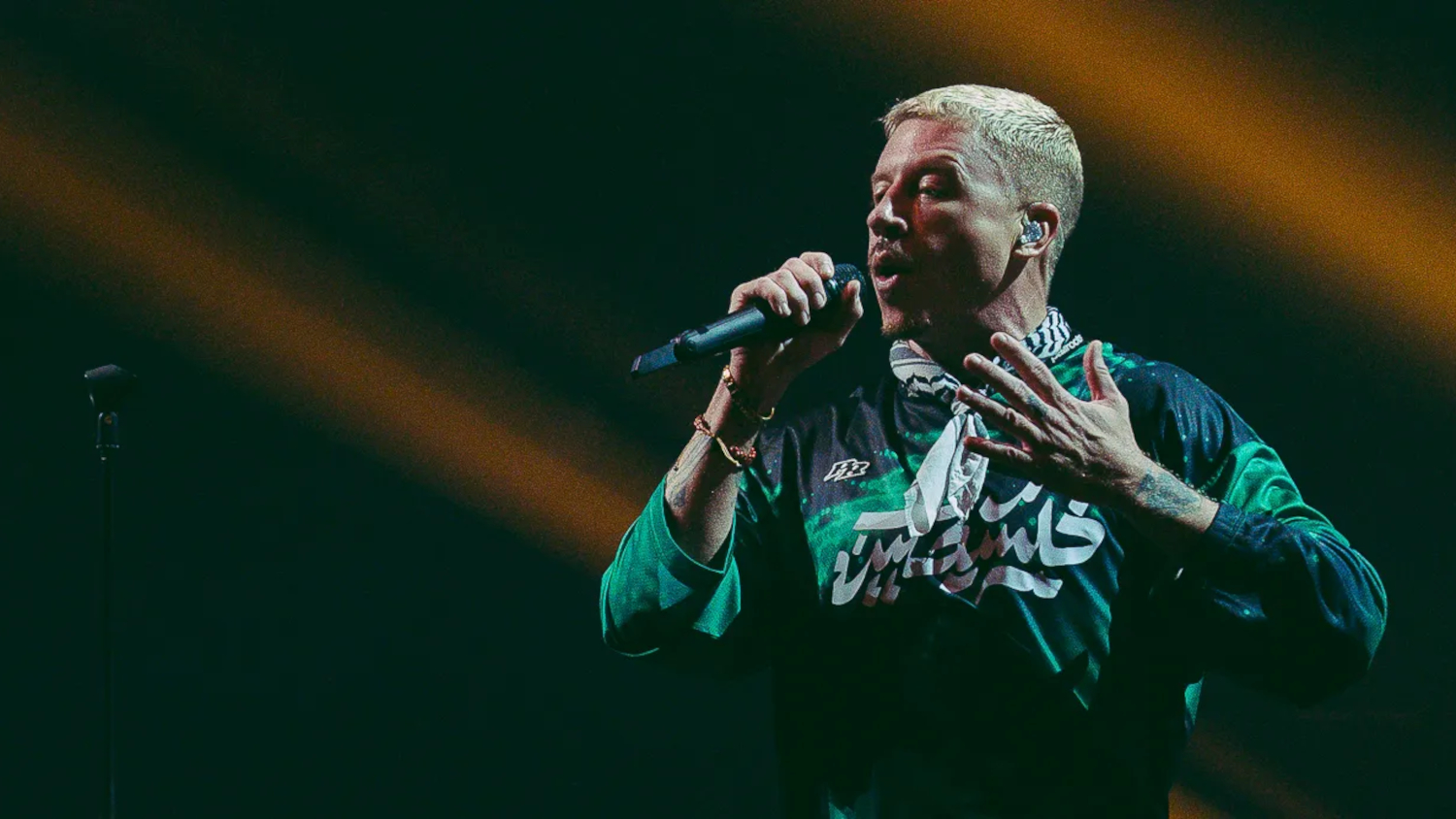
Macklemore is associated with crossover hits like “Thrift Shop” and “Can’t Hold Us.” Now, according to his own account, some of those same buildings don’t want him — at least not for this. In an Instagram statement posted November 6, the rapper alleged that nine major U.S. arenas initially showed available dates for his proposed “Free Palestine” benefit tour, then withdrew those dates after learning proceeds would support Palestinian humanitarian aid. These are his allegations. No independent reporting has confirmed the venues’ actual reasoning.
The nine arenas he named:
- Madison Square Garden and UBS Arena in New York
- Prudential Center in Newark
- Barclays Center in Brooklyn
- Intuit Dome and Kia Forum in Inglewood
- Crypto.com Arena in Los Angeles
- Chase Center in San Francisco
- Climate Pledge Arena in Seattle
The Venues Named — and the One That Responded
Of all nine arenas Macklemore called out, only MSG Entertainment put a public explanation on record.
MSG Entertainment’s spokesperson said its venues have “extremely limited availability” and that Macklemore is “not an arena-level act.” That is a business-capacity argument — not a confirmed account of what happened across all nine rejections. Representatives for the other eight venues were contacted for comment; no substantive public responses were available at time of reporting.
- Macklemore alleged available dates were withdrawn after venues learned the shows would benefit Palestinians — his account, unverified by independent reporting.
- MSG Entertainment disputed the political-motivation framing, citing “extremely limited availability” and stating Macklemore is “not an arena-level act.”
- Representatives for the other eight venues were contacted for comment; substantive public responses were not available at time of reporting.
- The proposed U.S. dates would have followed three European benefit concerts in Dublin, Paris, and London.
- Macklemore stated he intends to continue organizing U.S. benefit shows, potentially outside traditional arena infrastructure.
Worth noting: when a venue has no interest in an act, silence is the standard industry move. A formal withdrawal of available dates is a different signal — which is precisely why Macklemore’s account raises questions that a single spokesperson’s quote cannot fully resolve.
What Came Before, and What He Says Comes Next
Dublin, Paris, and London audiences showed up — now Macklemore says U.S. venues will not.
Those three European shows, which Macklemore described as among the most meaningful performances of his career, raised funds for Palestinian humanitarian relief. The U.S. leg was intended as the next step. According to his statement, it stalled before a single date was confirmed.
Macklemore framed the U.S. rejections as part of broader pressure on artists who publicly support Palestinians. That is his political interpretation, not an independently established pattern. He said he intends to keep organizing U.S. benefit shows, potentially outside traditional arena infrastructure — settings that don’t require the institutional sign-off that, by his account, has become the obstacle.
The booking decisions remain unexplained by most of the named venues in available reporting. Whether politics shapes live-music access in America is a question with real stakes — and right now, no clean answer.