


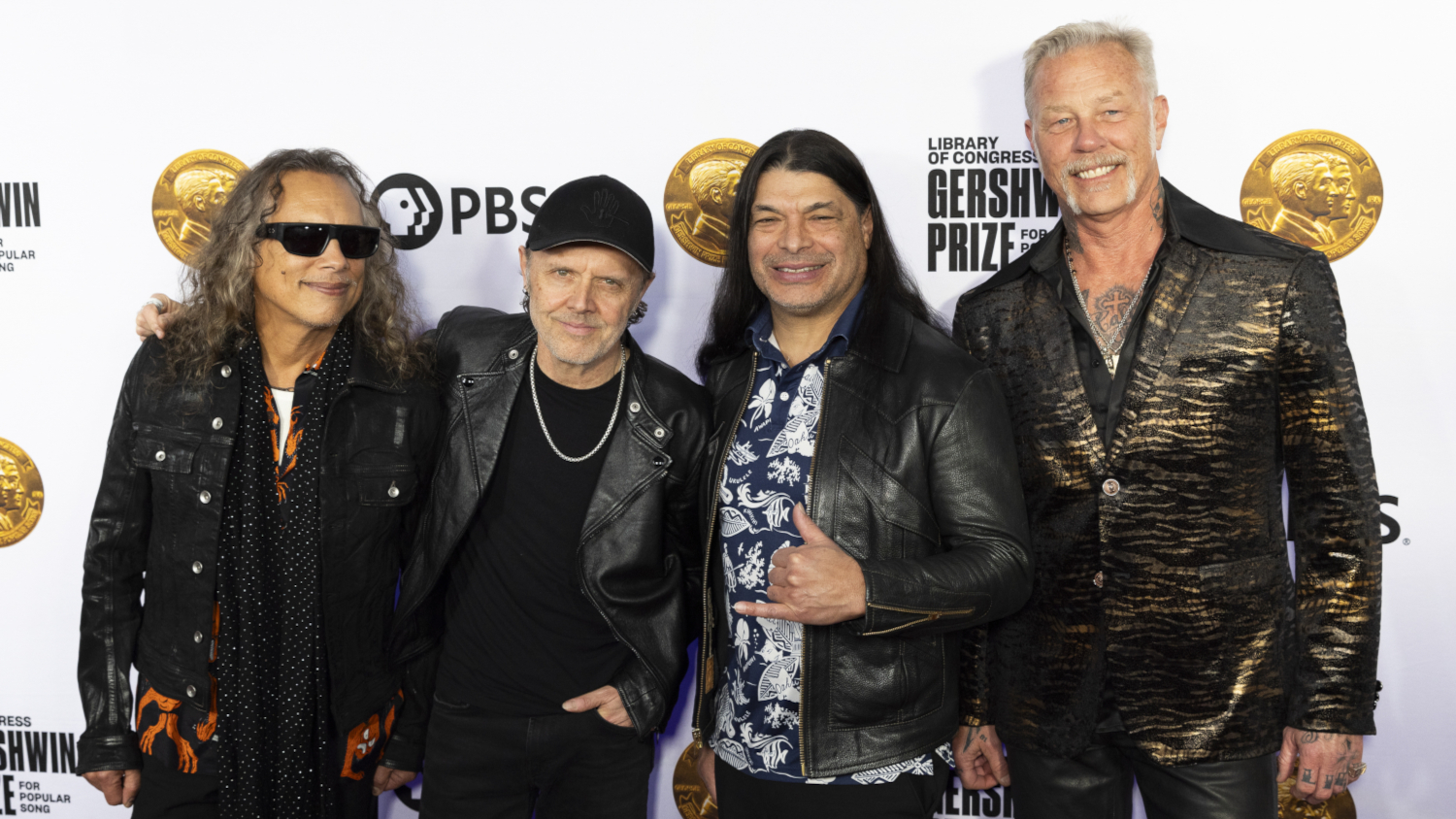
Rehearsing from 11:30 p.m. until 4 a.m. sounds like a college band’s basement schedule. For Metallica, it’s the unglamorous reality behind their 24-show Life Burns Faster residency at Sphere in Las Vegas. The reason is both absurd and completely logical: Sphere’s resident production took priority over the band’s rehearsal access. Bassist Robert Trujillo summed it up during a Trunk Nation interview, later reported by Louder Sound: “The Wizard of Oz is our boss” — the immersive presentation occupying the venue’s primary schedule, leaving Metallica to claim the stage once Dorothy called it a night, much as they did for their second Sphere show.
A Month of Prep Before a Single Overnight
Getting to Las Vegas was only half the battle — the real work started weeks earlier and several states away.
The overnight grind didn’t begin at Sphere. Trujillo, speaking to Bravewords, described roughly a month of preparation before the Vegas sessions started. Week one took place at the band’s own headquarters, where members revisited the planned setlist and reacquainted themselves with rarely performed material — including “Devil’s Dance” and “The Outlaw Torn.” Week two moved to a radio arena in Santa Rosa, California, where the focus shifted to physical orientation: stage geography, monitor placement, and movement. No final Sphere visuals, no spectacle. Just musicians learning where their feet belong before the screens light up.
Three production realities drove that groundwork:
- Backing tracks and loops require a precise plan of attack — a mistimed cue on a screen roughly 100 feet across doesn’t go unnoticed by anyone holding a ticket
- Crew worked approximately 9 p.m. to 6 a.m.; post-rehearsal meetings sometimes pushed the band’s day to 4:30 or 5 a.m.
- Trujillo and Kirk Hammett developed a separate duet segment combining deep cuts, original material, and backing tracks — adding significant rehearsal load beyond the main set
“The Wizard of Oz is our boss.” — Robert Trujillo
While Hetfield and Ulrich reportedly found some downtime during the preparation period, Trujillo said he was home only once a week — the Hammett duet required it. He acknowledged that rehearsing at 2 or 3 a.m. was “a lot,” but noted the unusual hours eventually pushed him into a sharper, more focused state rather than a depleted one. At this scale, a live concert operates less like a performance and more like a film production: layered, synchronized, and unforgiving of a mistimed move.
What Sphere Actually Demands From Every Artist Who Books It
The venue’s dual-production calendar isn’t a quirk — it’s the defining condition any residency act has to work around.
Metallica stepped into a schedule already shaped by an immersive Wizard of Oz presentation — complete with haptic effects, scents, and large-format sound — and built their rehearsal windows around it rather than the other way around. That’s not a scheduling inconvenience. It’s the structural reality of a venue designed to run cinematic and concert productions in overlapping cycles. Trujillo characterized the Life Burns Faster residency as challenging but worthwhile, noting it keeps any single show from settling into routine. The 24 shows split across 2026 and a second run from January 28 through March 13, 2027, mean that production discipline has to hold across dozens of nights — the kind of live in front of an audience precision that separates legend from disaster.
For Metallica, the overnight shift was never punishment. It was simply the price of the stage.